AI Agents: The Future of Intelligent Automation
AI Agents: The Future of Intelligent Automation
Meta Title
AI Agents: Meaning, Benefits, Use Cases, and Future of Agentic AI
Meta Description
Discover what AI agents are, how they work, their key benefits, real-world use cases, and why agentic AI is shaping the future of automation and business productivity.
Introduction
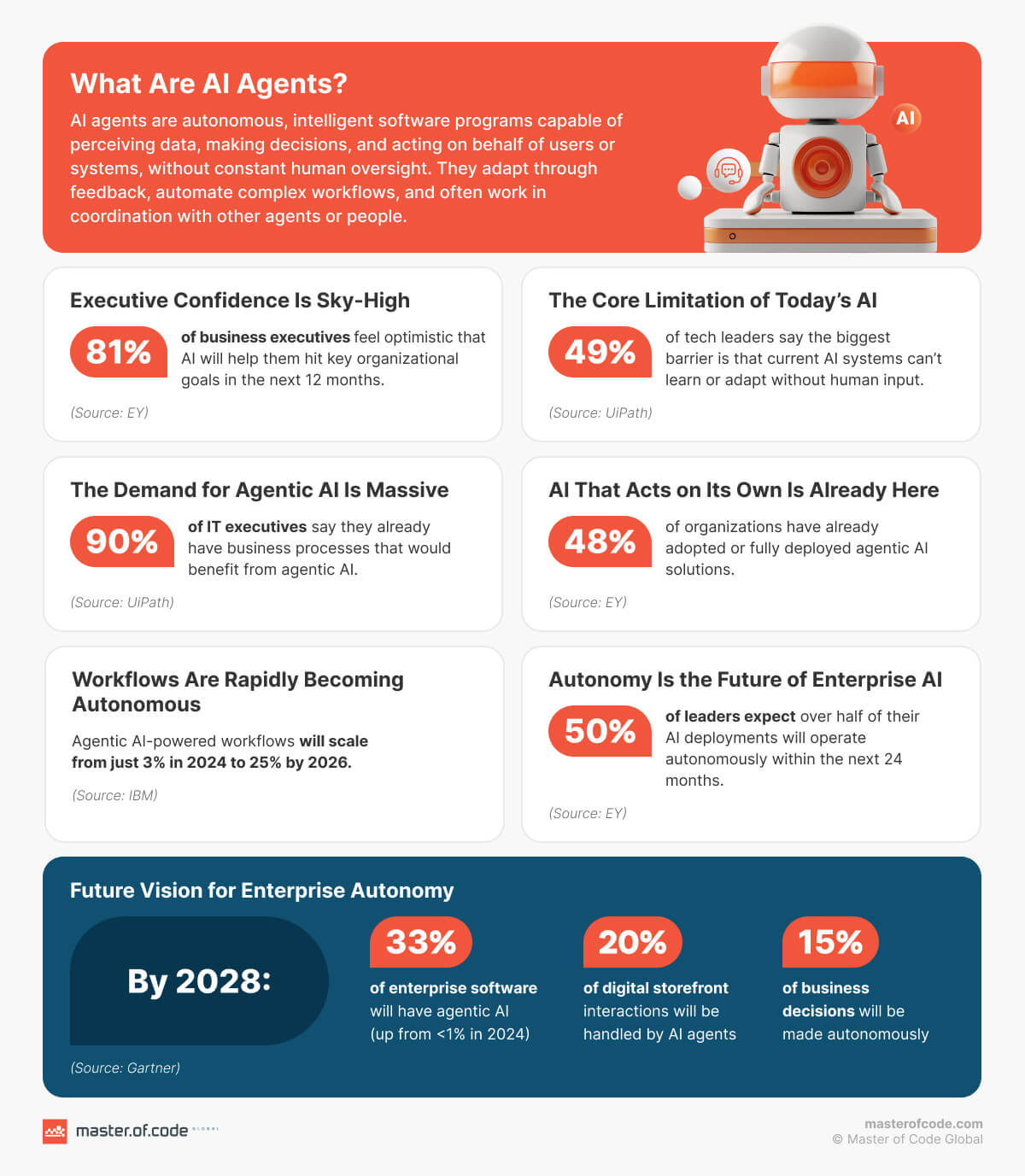
Artificial Intelligence is evolving rapidly, and one of the most important developments in this space is the rise of AI agents. An AI agent is an intelligent software system that can understand goals, make decisions, take actions, and learn from outcomes with minimal human intervention. Unlike traditional software programs that simply follow fixed instructions, AI agents can analyze situations, choose the best course of action, and complete tasks in a more autonomous way.
Today, businesses and individuals are using AI agents to improve productivity, automate repetitive work, support customers, manage data, conduct research, and even make strategic recommendations. As AI technology continues to advance, AI agents are becoming more capable, more reliable, and more valuable across industries.
This article explains what AI agents are, how they work, their benefits, popular use cases, challenges, and why they are considered a major step toward the future of intelligent automation.
What Is an AI Agent?
An AI agent is a digital system powered by artificial intelligence that can perceive information, reason about it, and perform actions to achieve a specific goal. In simple terms, an AI agent acts like a smart assistant that can make decisions and complete tasks on behalf of a user or organization.
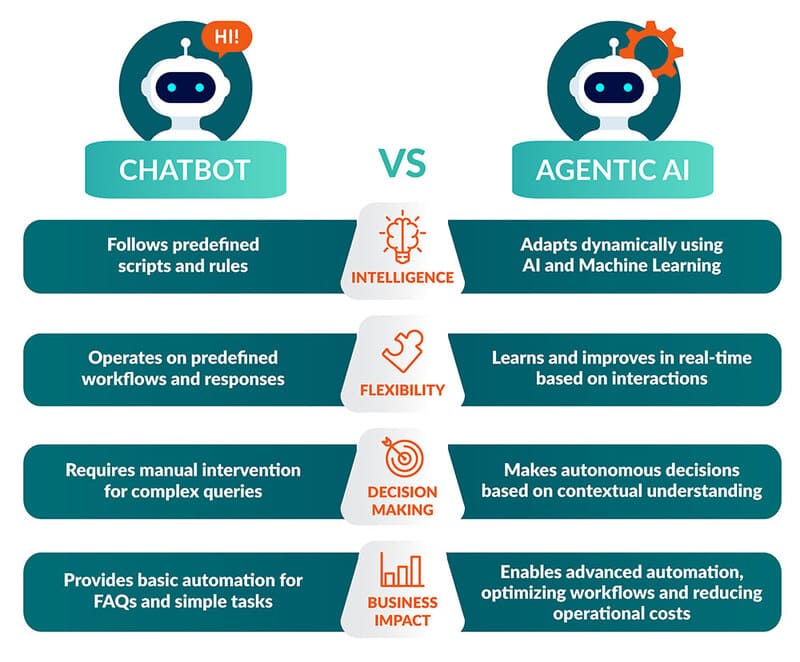
For example, a basic chatbot may only answer questions based on predefined responses. An AI agent, however, can go further. It can understand a user’s request, search for information, compare options, make recommendations, complete a form, send an email, schedule a meeting, or trigger another software process.
AI agents often use technologies such as:
- Machine learning
- Natural language processing
- Large language models
- Automation tools
- APIs and software integrations
- Data analysis systems
- Decision-making algorithms
The main goal of an AI agent is to reduce manual effort while improving speed, accuracy, and efficiency.
How Do AI Agents Work?
AI agents typically work through a cycle of perception, reasoning, action, and learning. This process allows them to operate intelligently and adapt to different situations.
1. Perception
The first step is gathering information. An AI agent collects data from different sources such as user input, databases, websites, documents, sensors, business software, or APIs. For example, a customer service AI agent may read a customer message and identify the issue being reported.
2. Understanding and Reasoning
After collecting information, the AI agent interprets the data. It identifies the user’s intent, understands the problem, and evaluates possible solutions. Advanced AI agents can reason through multiple steps, compare alternatives, and choose the best action based on the goal.
3. Taking Action
Once the AI agent decides what to do, it performs an action. This may include responding to a customer, updating a record, generating a report, sending a notification, booking an appointment, or executing a workflow.
4. Learning and Improvement
Some AI agents can learn from feedback and past results. Over time, they become better at predicting needs, avoiding errors, and improving performance. This learning ability makes AI agents more powerful than traditional automation systems.
Types of AI Agents
There are different types of AI agents, depending on their level of intelligence and autonomy.
1. Simple Reflex Agents
Simple reflex agents respond to specific inputs using predefined rules. They are useful for basic tasks but cannot handle complex situations. For example, a rule-based email filter that marks certain messages as spam is a simple AI agent.
2. Model-Based Agents
Model-based agents maintain an internal understanding of the environment. They can make better decisions because they consider current conditions and past information.
3. Goal-Based Agents
Goal-based AI agents act to achieve a specific objective. They evaluate different actions and choose the one most likely to reach the desired goal. For example, a route-planning AI agent finds the fastest way to a destination.
4. Utility-Based Agents
Utility-based agents choose actions based on the best expected outcome. They do not just aim to complete a task; they try to complete it in the most beneficial way. For example, an investment AI agent may compare risk and return before suggesting a financial decision.
5. Learning Agents
Learning agents improve their performance over time. They use feedback, user behavior, and data patterns to become more accurate and effective.
6. Multi-Agent Systems
A multi-agent system includes several AI agents working together. Each agent may have a specific role, and together they solve larger problems. This approach is useful in logistics, robotics, finance, and enterprise automation.
Key Features of AI Agents
AI agents are powerful because they combine multiple intelligent capabilities. Some of their most important features include:
Autonomy
AI agents can work independently without constant human instruction. Once given a goal, they can plan and execute steps to complete it.
Adaptability
AI agents can adjust their behavior based on new information or changing conditions.
Decision-Making
They can analyze data, evaluate options, and select the most suitable action.
Natural Language Understanding
Many AI agents can understand and respond to human language, making them easy to use.
Tool Integration
AI agents can connect with external tools, apps, databases, and APIs to complete real-world tasks.
Continuous Learning
Advanced agents can learn from experience and improve over time.
Benefits of AI Agents
AI agents offer many advantages for businesses, professionals, and consumers. They can save time, reduce costs, and improve the quality of work.
1. Increased Productivity
AI agents can handle repetitive and time-consuming tasks, allowing employees to focus on higher-value work. For example, an AI agent can summarize documents, generate reports, organize emails, or schedule meetings automatically.
2. Cost Reduction
By automating manual processes, businesses can reduce operational costs. AI agents can perform tasks that would otherwise require large teams or many hours of human labor.
3. Faster Decision-Making
AI agents can process large amounts of data quickly and provide useful insights. This helps managers and professionals make faster and better decisions.
4. Improved Customer Experience
Customer support AI agents can respond instantly, answer common questions, resolve simple issues, and escalate complex cases to human representatives. This improves response time and customer satisfaction.
5. Better Accuracy
AI agents can reduce human errors in tasks such as data entry, document processing, and compliance checks.
6. 24/7 Availability
Unlike human workers, AI agents can operate continuously. This is especially valuable for customer service, cybersecurity, monitoring, and global business operations.
7. Scalability
AI agents can handle increasing workloads without needing proportional increases in staff. This makes them ideal for growing businesses.
Real-World Use Cases of AI Agents
AI agents are already being used across many industries. Their applications are expanding as technology becomes more advanced.
1. Customer Support
AI agents can answer customer questions, track orders, process refunds, troubleshoot issues, and transfer complex problems to human agents. They help businesses provide faster and more consistent support.
2. Sales and Marketing
In sales, AI agents can qualify leads, send follow-up emails, recommend products, and analyze customer behavior. In marketing, they can create content ideas, segment audiences, optimize campaigns, and personalize messages.
3. Healthcare
AI agents can help schedule appointments, remind patients to take medication, analyze medical records, and support doctors with diagnostic insights. They can also improve administrative efficiency in hospitals and clinics.
4. Finance
Financial AI agents can monitor transactions, detect fraud, generate investment insights, automate accounting tasks, and help customers manage budgets.
5. Human Resources
HR teams can use AI agents to screen resumes, schedule interviews, answer employee questions, manage onboarding, and track performance data.
6. E-Commerce
AI agents in e-commerce can recommend products, manage inventory, answer product questions, personalize shopping experiences, and assist with order tracking.
7. Education
Educational AI agents can act as virtual tutors, provide personalized learning paths, grade assignments, and answer student questions.
8. Software Development
AI agents can assist developers by writing code, debugging errors, reviewing pull requests, generating documentation, and testing applications.
9. Cybersecurity
Cybersecurity AI agents can monitor networks, detect suspicious activity, respond to threats, and alert security teams in real time.
10. Personal Productivity
Individuals can use AI agents to manage calendars, write emails, summarize articles, plan travel, track goals, and organize daily tasks.
AI Agents vs. Traditional Automation
Traditional automation usually follows fixed rules. It works well for repetitive tasks where every step is clearly defined. However, it struggles when situations change or require judgment.
AI agents are more flexible. They can understand language, interpret data, reason through problems, and decide what action to take. This makes them useful for complex workflows that require adaptability.
For example, a traditional automation tool might send a reminder email at a fixed time. An AI agent could analyze the recipient’s schedule, choose the best time, personalize the message, and follow up if no response is received.
This difference makes AI agents a major advancement in business automation.
Challenges of AI Agents
Although AI agents are powerful, they also come with challenges.
1. Data Privacy
AI agents often need access to sensitive information. Businesses must ensure that data is handled securely and complies with privacy regulations.
2. Accuracy and Reliability
AI agents may sometimes make mistakes or produce incorrect results. Human oversight is important, especially for high-risk decisions.
3. Bias
If an AI agent is trained on biased data, it may produce biased outcomes. Regular testing and monitoring are necessary to reduce unfair results.
4. Security Risks
Because AI agents can access systems and perform actions, they must be protected from misuse, hacking, or unauthorized access.
5. Ethical Concerns
Organizations must use AI agents responsibly and transparently. Users should know when they are interacting with AI and how their data is being used.
6. Integration Complexity
Connecting AI agents with existing business systems can be technically challenging. Companies may need proper planning, infrastructure, and expertise.
Best Practices for Using AI Agents
To get the best results from AI agents, businesses should follow practical guidelines.
Define Clear Goals
Before deploying an AI agent, clearly define what it should accomplish. A specific goal leads to better performance.
Start Small
Begin with simple use cases, such as customer FAQs or internal task automation, before expanding to complex processes.
Keep Human Oversight
AI agents should assist humans, not completely replace judgment in sensitive areas. Human review is important for legal, financial, healthcare, and security-related tasks.
Monitor Performance
Track accuracy, response quality, user satisfaction, and task completion rates. Regular monitoring helps improve results.
Protect Data
Use strong security controls, access permissions, and privacy policies to protect sensitive information.
Update Regularly
AI systems should be updated as business needs, regulations, and user expectations change.
The Future of AI Agents
The future of AI agents is highly promising. As artificial intelligence becomes more advanced, AI agents will become more capable of handling complex tasks with less human input. They will likely play a central role in the next generation of digital transformation.
In the future, businesses may use teams of AI agents that collaborate with each other. One agent may research market trends, another may analyze financial data, another may create a marketing plan, and another may execute campaigns. Together, these agents could manage entire workflows from start to finish.
AI agents may also become more personalized. Individuals could have personal AI agents that understand their preferences, schedule, work habits, health goals, and communication style. These agents could help people make better decisions and manage daily life more efficiently.
However, the growth of AI agents will also require strong governance, ethical standards, and responsible development. The best results will come from combining AI efficiency with human creativity, empathy, and judgment.
Conclusion
AI agents are transforming the way people and businesses use technology. They go beyond simple automation by understanding goals, making decisions, taking actions, and learning from results. From customer support and healthcare to finance, education, cybersecurity, and personal productivity, AI agents are creating new opportunities for efficiency and innovation.
As organizations continue to adopt agentic AI, they will be able to automate complex workflows, improve decision-making, reduce costs, and deliver better user experiences. While challenges such as privacy, accuracy, security, and ethics must be carefully managed, the potential of AI agents is enormous.
In the coming years, AI agents will become an essential part of digital business strategy. Companies that understand and use them effectively will be better positioned to compete in an increasingly intelligent and automated world.
SEO Keywords
AI agents, AI agent, agentic AI, artificial intelligence agents, intelligent automation, autonomous AI agents, AI automation, business AI agents, AI assistant, future of AI agents.