Agentic AI and AI Agents: The Biggest AI Trends Shaping 2026

Agentic AI and AI Agents: The Biggest AI Trends Shaping 2026
Artificial intelligence is entering a new era in 2026, driven by the rapid rise of AI agents and agentic AI. While earlier AI systems were mainly used to generate text, answer questions, create images, or automate simple tasks, the next wave of AI is far more proactive, autonomous, and business-focused. Agentic AI systems are designed not only to respond to human prompts but also to plan, reason, make decisions, use tools, complete workflows, and learn from outcomes.
As companies look for faster growth, lower costs, better customer experiences, and smarter operations, AI agents are becoming a major technology trend across industries. From sales and marketing to software development, finance, healthcare, logistics, cybersecurity, and customer support, agentic AI is expected to reshape how digital work gets done.
In 2026, the question is no longer whether businesses should use AI. The bigger question is how they can use autonomous AI agents safely, effectively, and strategically.
What Are AI Agents?
AI agents are software systems powered by artificial intelligence that can perform tasks on behalf of users or organizations. Unlike basic chatbots, AI agents can understand goals, break them into smaller steps, interact with external tools, retrieve information, analyze data, and take action.
For example, a traditional chatbot might answer a customer’s question about an order. An AI agent, however, could check the order status, identify a delivery delay, contact the shipping provider, issue a refund or replacement according to company policy, and update the customer automatically.
This ability to move from conversation to action is what makes AI agents so powerful.
Why AI Agents Are a Major Trend in 2026
The growth of AI agents is being driven by several major factors. First, large language models have become more capable at reasoning, coding, analyzing documents, and understanding natural language. Second, businesses are under pressure to improve productivity and reduce repetitive manual work. Third, modern software tools increasingly support AI integrations, making it easier for agents to interact with business systems.
In 2026, AI agents are expected to move from experimental pilots to practical enterprise adoption. Businesses are beginning to use them as digital workers that can support teams, automate routine operations, and improve decision-making.
Top AI Trends in 2026
1. Enterprise AI Agents Become Mainstream
One of the biggest AI trends in 2026 is the rise of enterprise AI agents. Companies are deploying agents to handle internal business processes such as report generation, meeting scheduling, data entry, invoice processing, HR onboarding, IT support, and compliance monitoring.
2. Multi-Agent Systems Gain Popularity
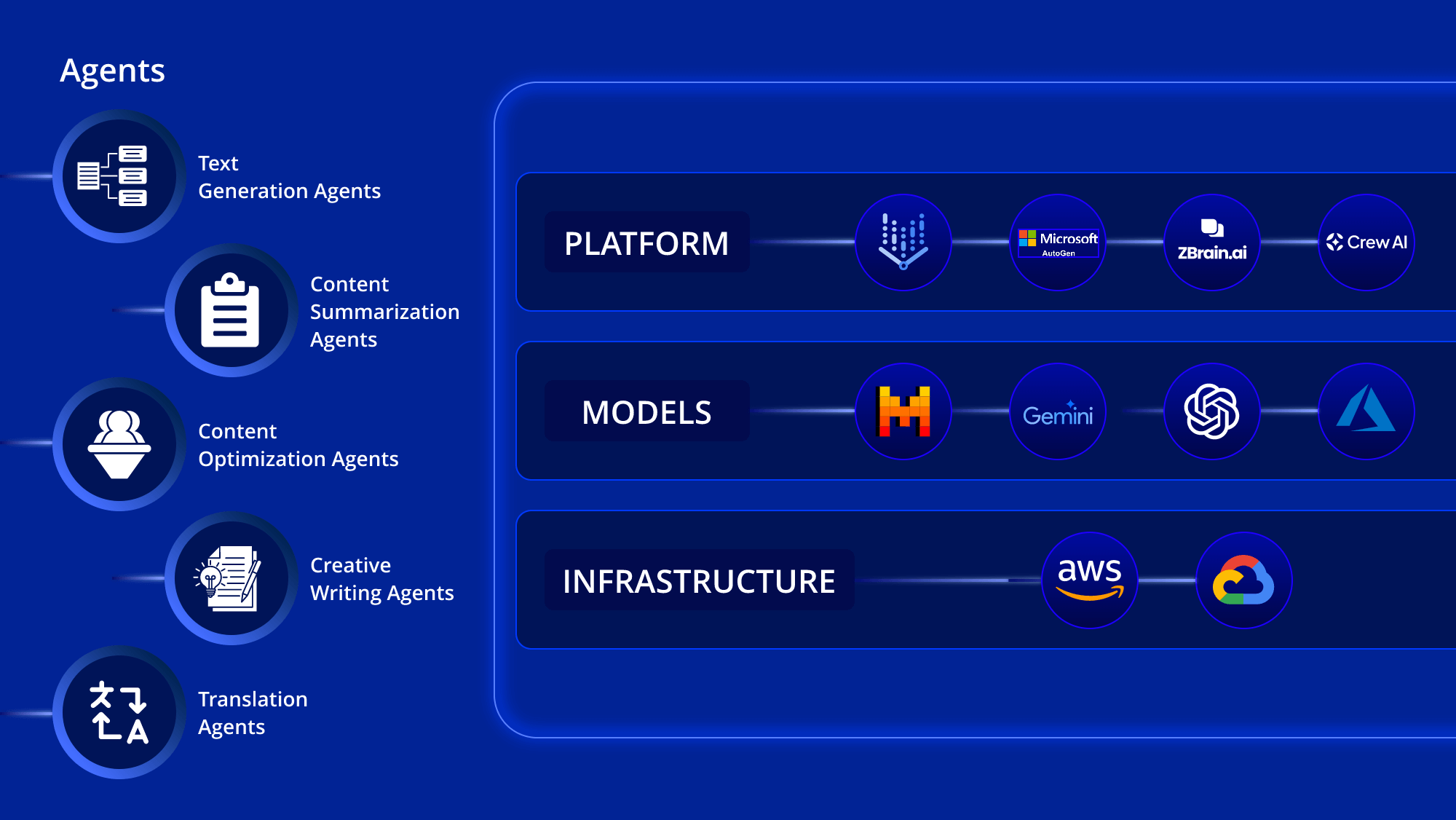
Another major trend is the development of multi-agent AI systems. Instead of relying on one AI agent to do everything, businesses are beginning to use networks of specialized agents that collaborate.
3. AI Agents Transform Customer Service
Customer service is one of the fastest-growing use cases for AI agents in 2026. Traditional chatbots often frustrated users because they provided generic answers and could not solve real problems. AI agents are changing that by offering more personalized, action-oriented support.
4. Agentic AI Improves Software Development
AI coding assistants are already popular, but in 2026 they are evolving into full software development agents. These agents can help plan features, write code, detect bugs, generate tests, review pull requests, update documentation, and even deploy applications.
5. AI Governance and Safety Become Critical
As AI agents become more autonomous, governance becomes essential. Businesses must ensure that AI systems operate safely, ethically, and within approved boundaries.
Benefits of Agentic AI for Businesses
Agentic AI offers several major benefits for businesses in 2026. First, it increases productivity by automating time-consuming tasks. Second, it improves decision-making. AI agents can analyze data, identify trends, and provide recommendations faster than manual analysis. Third, it reduces operational costs by minimizing repetitive labor and streamlining workflows.
Sources & References
15 AI Agents Trends to Watch in 2026

Enterprises are shifting from testing AI agents to letting them run entire workflows, execute decisions, and trigger real-world actions in 2026.
Read More
7 Agentic AI Trends to Watch in 2026
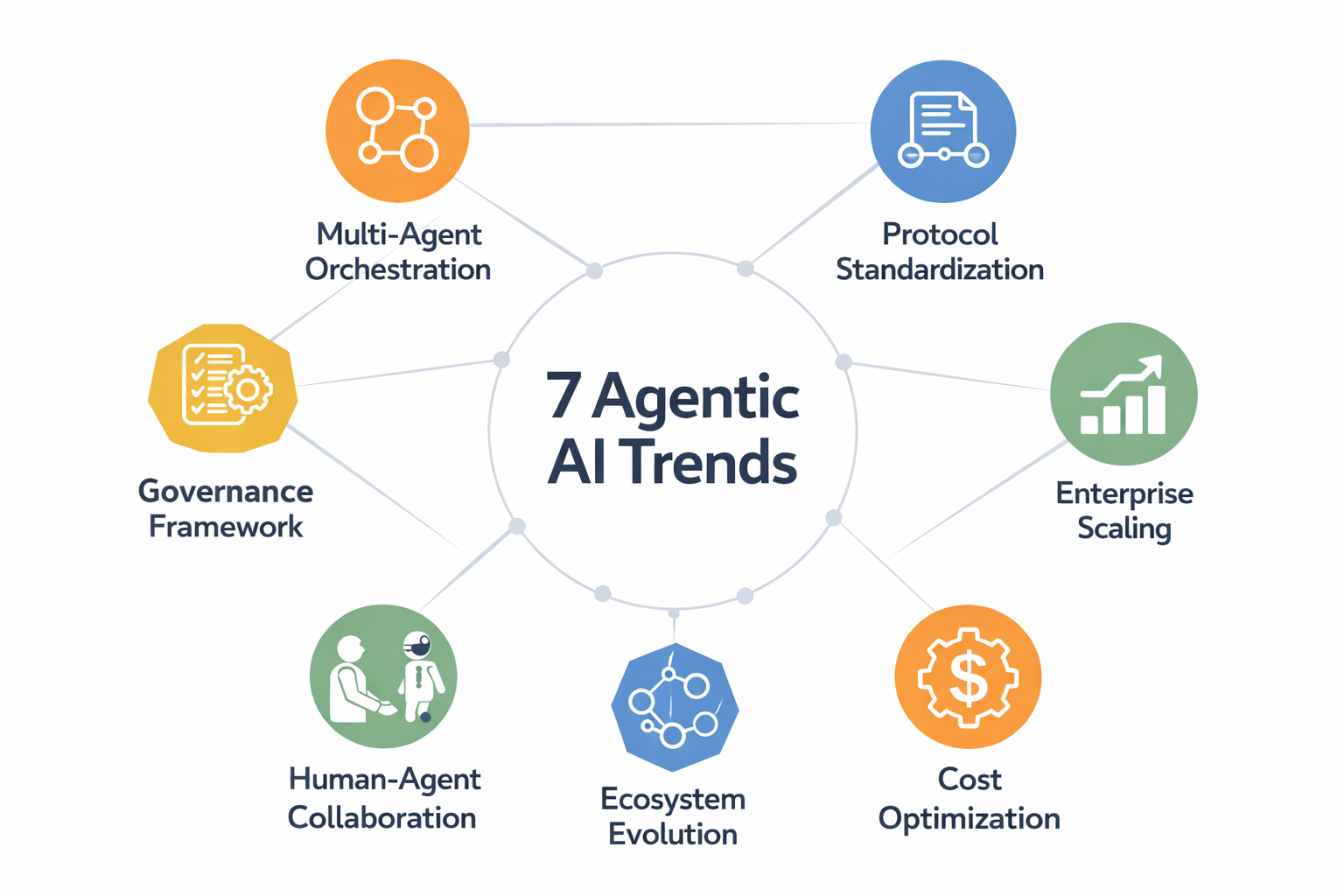
The agentic AI field is moving from experimental prototypes to production-ready autonomous systems. Market projected to surge to $52 billion by 2030.
Read More
AI agent trends 2026 report
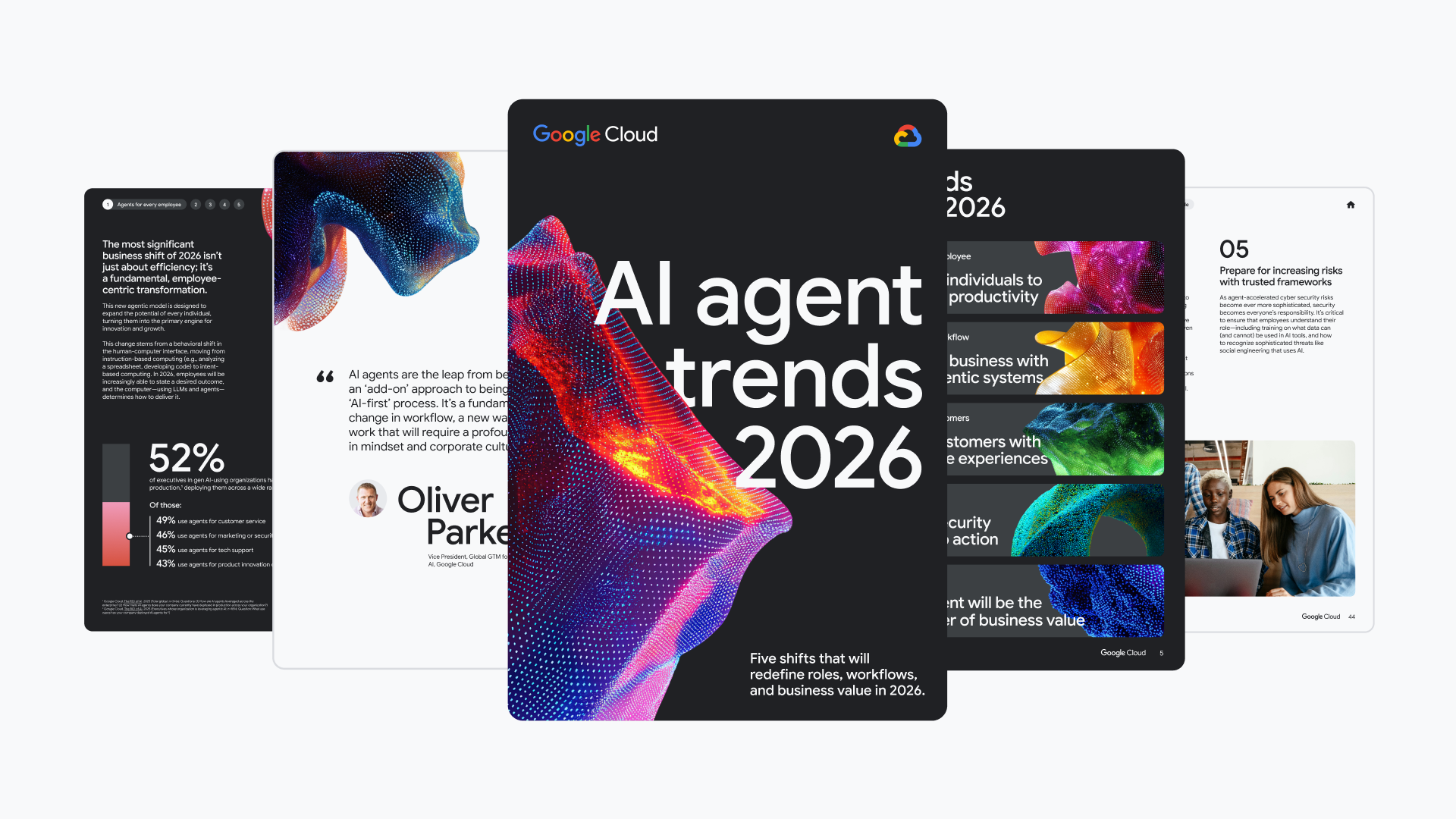
Discover the five trends driving business transformation in 2026 backed by insights from over 3,466 global executives.
Read More
Top Agent AI Trends Shaping 2026

Artificial intelligence (AI) agents are a fast-growing sector, propelled by rapid advances in large language models (LLMs).
Read More
Google Just Revealed 5 AI Agent Trends
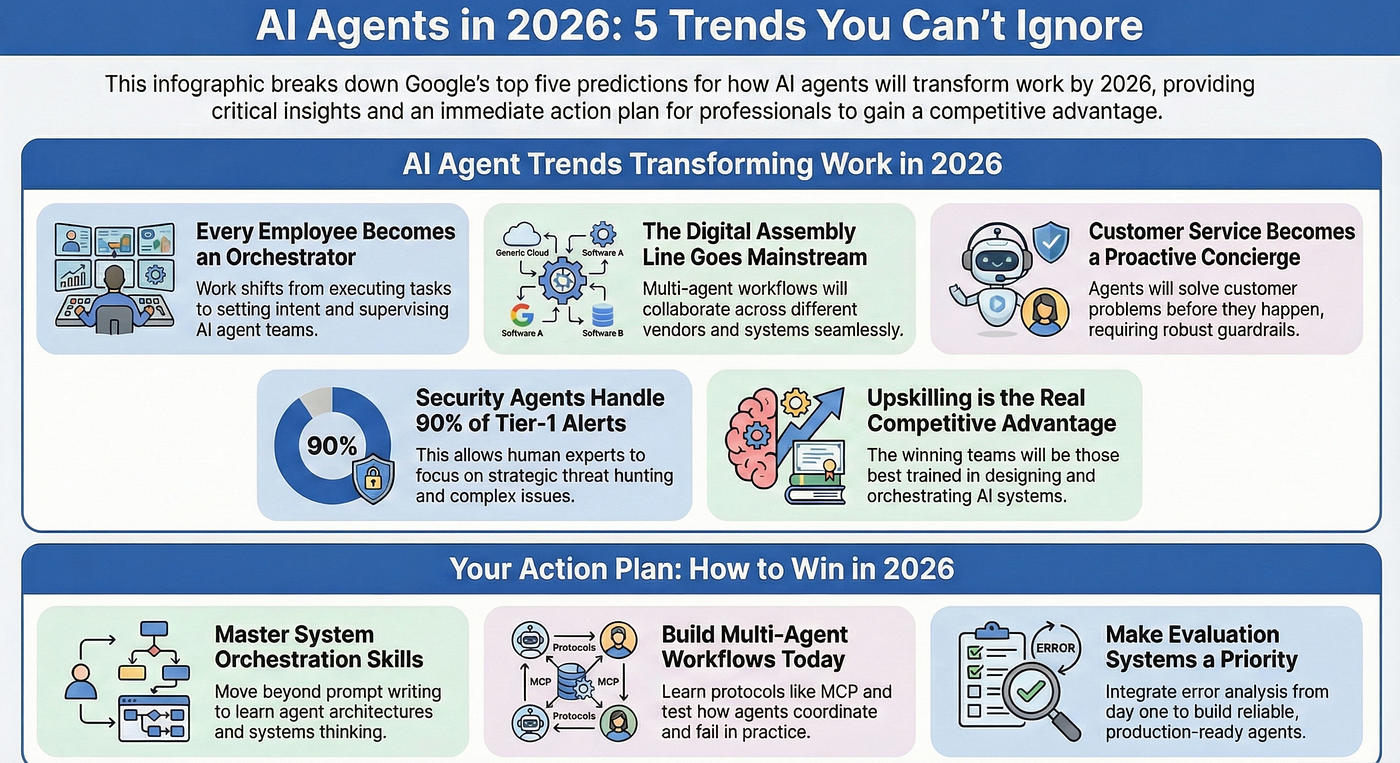
Google keeps dropping AI gems. Today’s drop: AI Agent Trends for 2026. Five predictions about how agents will transform work.
Read More