AI Agents, Agentic AI, and Autonomous Systems: The Future of Intelligent Automation
Agent AI, AI Agents, Agentic AI, and Autonomous Systems: The Future of Intelligent Automation
Artificial intelligence is rapidly evolving from simple rule-based automation into intelligent, goal-driven systems capable of planning, reasoning, acting, and learning. At the center of this transformation are AI agents, agent AI, agentic AI, and autonomous systems. These technologies are reshaping how businesses operate, how people interact with software, and how complex tasks are completed with minimal human intervention.
As organizations look for smarter ways to improve productivity, reduce costs, and enhance decision-making, agentic AI is becoming one of the most important trends in modern technology. Unlike traditional AI tools that simply respond to prompts or analyze data, AI agents can take initiative, use tools, make decisions, complete workflows, and adapt to changing environments.
This article explores what AI agents are, how agentic AI works, the role of autonomous systems, real-world use cases, benefits, challenges, and why these technologies are set to define the next generation of intelligent automation.
What Are AI Agents?
AI agents are intelligent software systems designed to perceive their environment, make decisions, and take actions to achieve specific goals. They can process information, reason through tasks, interact with external tools, and execute actions independently or semi-independently.
In simple terms, an AI agent is not just a chatbot or a prediction model. It is a system that:
- Understand a user’s goal
- Break that goal into smaller tasks
- Decide what actions are needed
- Use tools, APIs, databases, or applications
- Monitor progress
- Adjust its behavior based on results
- Complete the task with limited human guidance
For example, a basic AI chatbot may answer a customer’s question. An AI agent, however, could understand the customer’s issue, check order details, update a support ticket, process a refund, send an email confirmation, and summarize the interaction for a human manager.
What Is Agent AI?
The term agent AI generally refers to artificial intelligence systems built around the concept of agency. In this context, agency means the ability of a system to act with a degree of independence in pursuit of a defined objective.
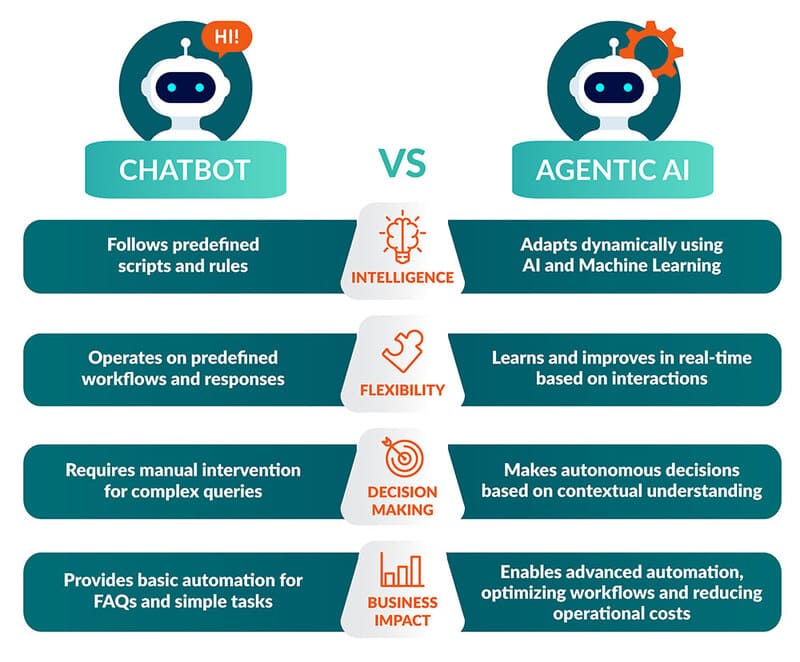
Traditional AI systems are often reactive. They wait for an input and then generate an output. Agent AI is more proactive. It can plan, choose between options, perform tasks, and continue working until a goal is completed.
What Is Agentic AI?
Agentic AI refers to AI systems that show goal-oriented, autonomous, and adaptive behavior. The word “agentic” comes from the idea of agency—the ability to act intentionally toward an outcome.
Agentic AI systems can do more than generate text or analyze information. They can pursue objectives, create plans, execute tasks, and revise their approach when conditions change.
AI Agents vs. Traditional AI
To understand why AI agents are important, it helps to compare them with traditional AI systems.
| Feature | Traditional AI | AI Agents / Agentic AI |
|---|---|---|
| Main function | Responds to input | Works toward goals |
| Behavior | Mostly reactive | Proactive and adaptive |
| Tool usage | Limited or none | Can use external tools and APIs |
| Autonomy | Low | Medium to high |
How Do AI Agents Work?
AI agents typically operate through a cycle of perception, reasoning, action, and learning.
1. Perception
The agent collects information from its environment. This may include user instructions, documents, databases, APIs, sensor data, web pages, emails, or application inputs.
2. Reasoning
The agent interprets the information and decides what it means. It may identify goals, constraints, risks, priorities, and required steps.
3. Planning
The AI agent creates a plan to achieve the objective. Complex goals are broken into smaller tasks, and the agent determines the best order of execution.
4. Tool Use
Modern AI agents can use external tools such as search engines, CRM systems, calendars, spreadsheets, code editors, payment systems, and communication platforms.
5. Action
The agent performs tasks, such as sending messages, updating records, generating reports, scheduling meetings, writing code, or triggering workflows.
6. Feedback and Adaptation
The agent checks whether the action was successful. If something goes wrong, it can revise its plan and try another approach.
Types of AI Agents
There are several types of AI agents, ranging from simple rule-based systems to advanced autonomous agents.
- Simple Reflex Agents: Respond to specific inputs with predefined actions.
- Model-Based Agents: Maintain an internal understanding of the environment to make better decisions.
- Goal-Based Agents: Choose actions based on a desired outcome.
- Utility-Based Agents: Make decisions by comparing the value or benefit of different outcomes.
- Learning Agents: Improve over time by analyzing feedback and outcomes.
- Multi-Agent Systems: Multiple AI agents working together, each with a specialized role.
Real-World Applications of Agentic AI
Agentic AI is already being applied across industries. Its ability to automate complex workflows makes it valuable in business, healthcare, finance, education, logistics, and software development.
- Customer Service: Handle inquiries, resolve issues, process returns, and escalate complex cases.
- Sales and Marketing: Identify leads, personalize outreach, and update CRM systems.
- Healthcare: Assist with scheduling, documentation, and treatment reminders.
- Finance: Fraud detection, risk analysis, and compliance checks.
- Software Development: Write code, debug errors, run tests, and review pull requests.
Sources
What Are AI Agents? Examples, How They Work, How To Use Them
AI Agents are artificial intelligence systems that can interact with the environment and make decisions to achieve goals in the real world without any human guidance or intervention.
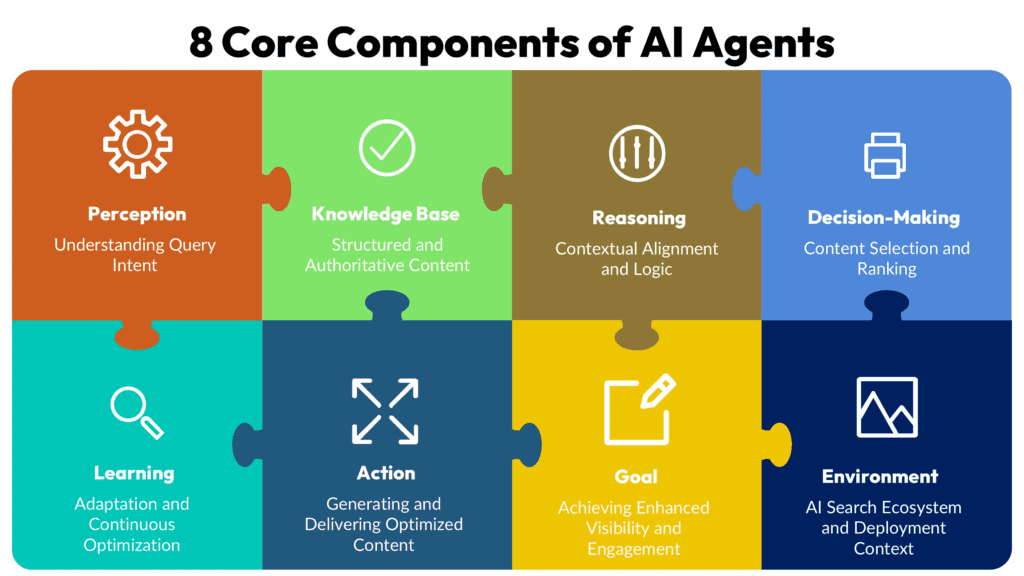
AI Agent Components Power Generative Engine Optimizations
Generative Engine Optimization (GEO) and AI Agents. Understanding these components can empower strategic content creation, optimization, and improved discoverability.
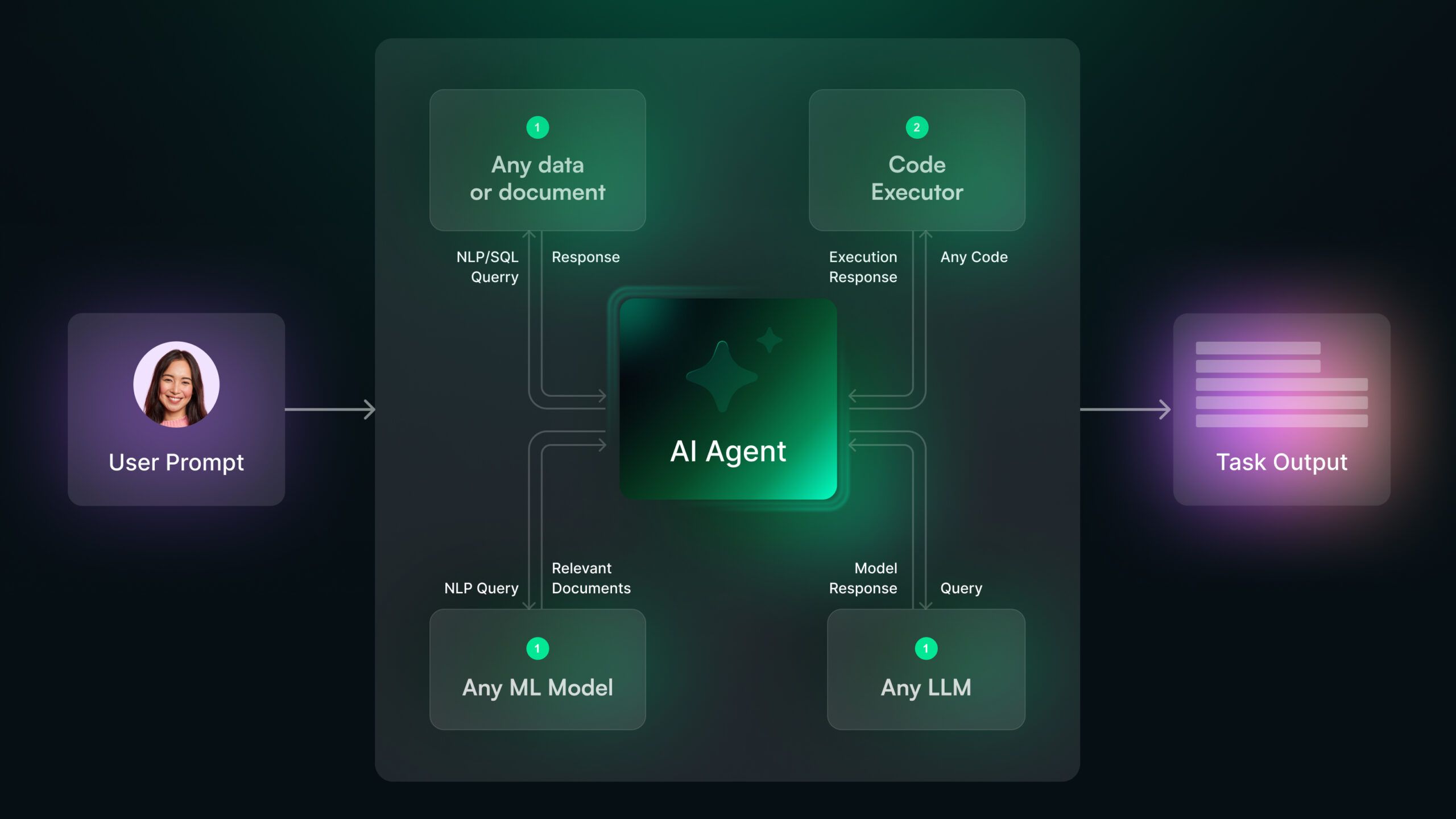
What Is an AI Agent? Guide To Using AI Agents for Your Business
“What is an AI agent?”… if these new, autonomous AI tools have caught your attention, you’re not alone. AI agents are all the hype in the world of artificial intelligence.

AI Agents: Definition, Types, Examples
AI agents are a type of artificial intelligence (AI) system that can understand and respond to customer inquiries without human intervention.
Rank #1 with AI agents for SEO
SEO has always been about doing a hundred small things consistently keyword research, optimizing content, tracking competitors, and chasing backlinks.
AI Agents for SEO: Complete Guide to Agentic Content Automation (2026)
AI agents for SEO do something fundamentally different from AI writing tools. They autonomously plan, execute, and iterate on content strategy.