AI Agents and Agentic AI: The Future of Intelligent Automation

AI Agents and Agentic AI: The Future of Intelligent Automation
Meta Title
AI Agents and Agentic AI: How Autonomous AI Is Transforming Work
Meta Description
Discover what AI agents and agentic AI are, how they work, key use cases, benefits, challenges, and why they are shaping the future of intelligent automation.
Introduction
Artificial intelligence is evolving from simple question-answering systems into intelligent digital workers capable of planning, reasoning, taking action, and learning from outcomes. This new phase of AI is often described using terms such as AI agents, agentic AI, or autonomous AI agents. These systems are designed not only to respond to prompts but also to complete tasks with minimal human intervention.
Businesses, developers, and technology leaders are increasingly exploring AI agents because they can automate complex workflows, connect with external tools, analyze data, and make decisions based on defined goals. From customer service and software development to marketing, finance, research, and operations, agentic AI is becoming a powerful force in digital transformation.
As organizations look for smarter ways to improve productivity and reduce manual work, understanding AI agents is becoming essential. This article explains what AI agents are, how agentic AI works, its benefits, real-world applications, challenges, and its role in the future of work.
What Are AI Agents?
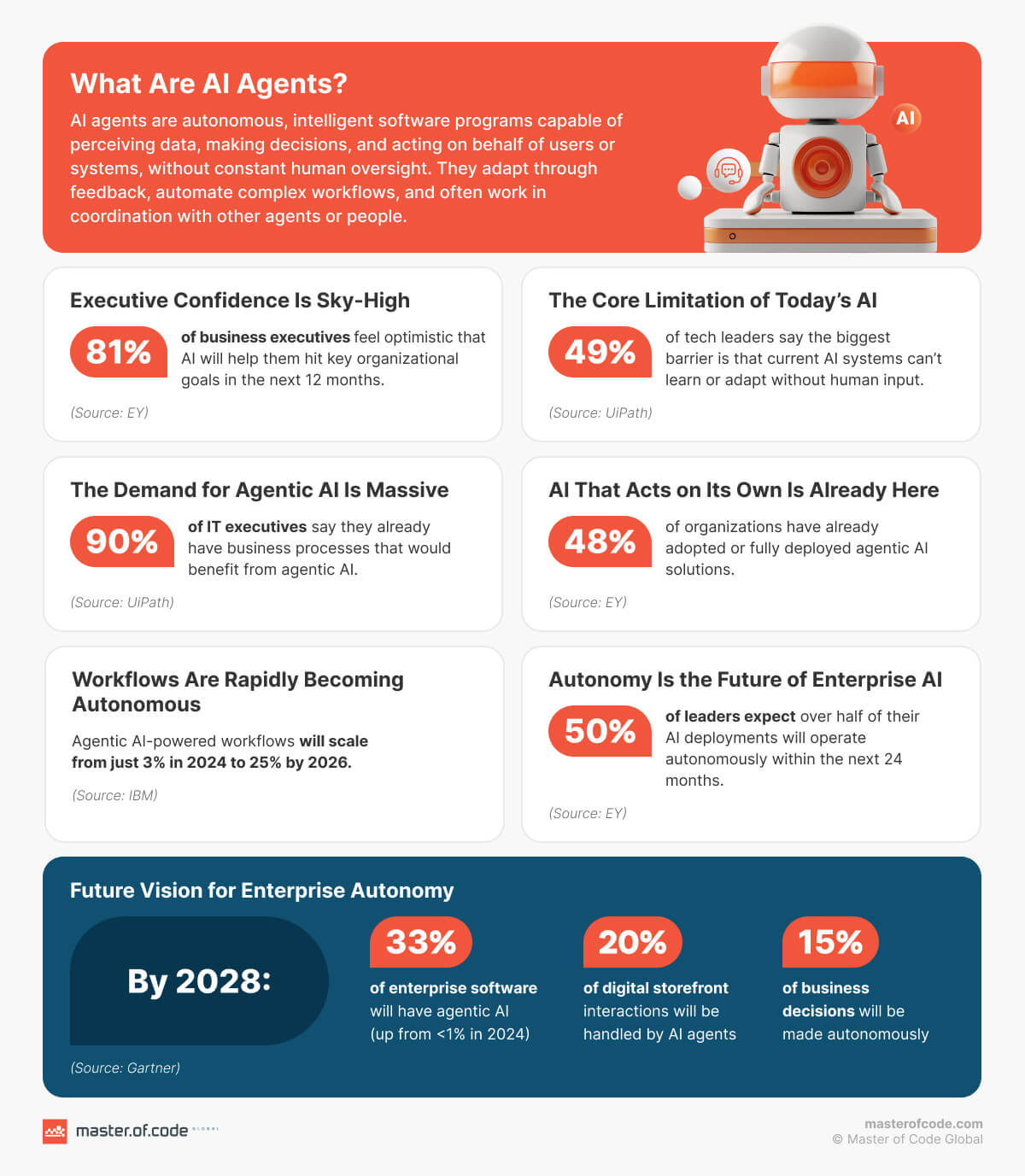
AI agents are intelligent software systems that can perceive information, reason about it, make decisions, and take actions to achieve specific goals. Unlike traditional software programs that follow fixed instructions, AI agents can operate more dynamically. They can interpret inputs, interact with digital environments, use tools, and adjust their actions based on results.
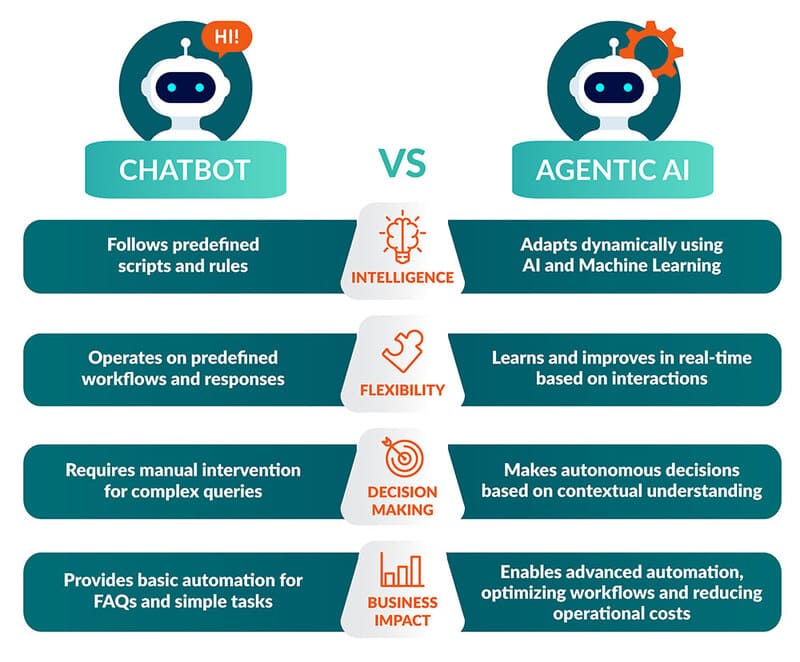
For example, a basic chatbot may answer customer questions based on a knowledge base. An AI agent, however, can go further. It may understand the customer’s issue, check order history, open a support ticket, issue a refund according to company policy, and send a follow-up email. This ability to complete multi-step tasks makes AI agents much more powerful than standard automation tools.
AI agents usually include several core capabilities: Understanding natural language instructions, Breaking large goals into smaller tasks, Using external tools, APIs, databases, or applications, Making decisions based on available information, Monitoring outcomes and adapting actions, Learning from feedback or previous interactions.
In simple terms, an AI agent acts like a digital assistant that can think through a task and execute it rather than merely provide information.
What Is Agentic AI?
Agentic AI refers to artificial intelligence systems that show agency. In this context, agency means the ability to act independently toward a goal. Agentic AI systems are not limited to generating text or answering questions. They can plan, reason, execute, and refine actions.
Traditional AI tools often require a user to provide step-by-step instructions. Agentic AI, on the other hand, can accept a broader objective and determine how to achieve it. For example, instead of asking an AI tool to “write an email,” a user might say, “Plan and launch an email campaign for our new product.” An agentic AI system could research the target audience, create email copy, segment contacts, schedule messages, analyze performance, and recommend improvements.
This shift from reactive AI to proactive AI is what makes agentic AI so important. It moves artificial intelligence closer to autonomous problem-solving.
How Do AI Agents Work?
AI agents typically work through a cycle of perception, reasoning, action, and feedback. This process allows them to operate intelligently in changing environments.
1. Perception
The agent receives input from a user, system, database, website, document, or application. This input becomes the foundation for decision-making. For instance, a sales AI agent may receive customer data, CRM updates, and email responses.
2. Reasoning
The agent analyzes the information and determines what needs to be done. Modern AI agents often use large language models to understand context, identify goals, and generate possible action plans.
3. Planning
Once the agent understands the goal, it breaks the task into smaller steps. For example, if the goal is to prepare a market research report, the agent may plan to gather data, compare competitors, summarize trends, create charts, and draft the final report.
4. Tool Use
AI agents can connect with tools such as search engines, calendars, CRMs, spreadsheets, email platforms, code repositories, project management software, and business applications. Tool use enables agents to move from conversation to action.
5. Execution
The agent performs the necessary actions. This may include sending messages, updating records, generating documents, writing code, analyzing files, or triggering workflows.
6. Feedback and Improvement
After completing an action, the agent reviews the result. If the result is not satisfactory, it can adjust its approach. This feedback loop helps agentic AI systems improve task completion and accuracy over time.
Key Features of AI Agents
AI agents have several defining features that distinguish them from traditional AI assistants and automation software.
Autonomy
AI agents can operate with limited human supervision. While humans may set goals and boundaries, the agent decides how to complete the task.
Goal-Oriented Behavior
Agentic AI is designed to achieve specific objectives. Instead of waiting for every instruction, it works toward a defined outcome.
Context Awareness
AI agents can use relevant data and memory to understand the situation. This enables more personalized and accurate decisions.
Tool Integration
The ability to use tools is one of the most important features of AI agents. By connecting with external systems, agents can perform real business tasks.
Multi-Step Reasoning
AI agents can handle complex tasks that require several steps. They can create plans, follow sequences, and adapt when conditions change.
Continuous Learning
Some AI agents can improve based on feedback, user preferences, and previous outcomes. This makes them more effective over time.
Types of AI Agents
There are different types of AI agents, depending on their complexity and purpose.
Simple Reflex Agents
These agents respond to specific inputs with predefined actions. They are useful for basic automation but have limited intelligence.
Goal-Based Agents
Goal-based agents evaluate possible actions and choose the one most likely to achieve a goal. These are more flexible than simple rule-based systems.
Utility-Based Agents
Utility-based agents consider the best possible outcome among several options. They are useful when trade-offs are involved, such as cost, speed, risk, or quality.
Learning Agents
Learning agents improve their behavior through experience. They can adapt to new data and changing environments.
Multi-Agent Systems
In multi-agent systems, several AI agents work together. Each agent may have a specialized role, such as research, analysis, writing, quality checking, or execution.
Real-World Use Cases of Agentic AI
Agentic AI is already being applied across many industries. Its ability to automate knowledge work makes it valuable for businesses of all sizes.
Customer Support
AI agents can handle customer inquiries, troubleshoot issues, process refunds, update tickets, and escalate complex cases to human agents. This improves response time and customer satisfaction.
Sales and Lead Generation
Sales AI agents can identify prospects, qualify leads, write personalized outreach emails, schedule meetings, and update CRM records. This helps sales teams focus on closing deals.
Marketing Automation
Agentic AI can create content calendars, write blog posts, generate social media captions, analyze campaign performance, and suggest optimization strategies.
Software Development
AI coding agents can write code, review pull requests, detect bugs, generate documentation, and assist with testing. Developers can use AI agents to accelerate repetitive programming tasks.
Finance and Accounting
AI agents can analyze expenses, generate financial reports, detect anomalies, process invoices, and assist with budgeting. This reduces manual data entry and improves accuracy.
Human Resources
HR teams can use AI agents to screen resumes, schedule interviews, answer employee questions, onboard new hires, and manage internal documentation.
Healthcare Administration
In healthcare, AI agents can support appointment scheduling, patient communication, documentation, billing assistance, and administrative workflows. Human oversight remains especially important in sensitive medical environments.
Research and Data Analysis
AI agents can gather information, summarize documents, compare sources, extract insights, and prepare reports. This is useful for analysts, consultants, students, and business leaders.
Benefits of AI Agents and Agentic AI
The rise of AI agents offers several major benefits for organizations and individuals.
Increased Productivity
AI agents can complete repetitive and time-consuming tasks quickly. This allows employees to focus on strategic, creative, and relationship-driven work.
Cost Efficiency
By automating workflows, businesses can reduce operational costs and improve resource allocation.
Faster Decision-Making
Agentic AI can analyze large amounts of information and provide recommendations in minutes. This helps teams make faster and more informed decisions.
Improved Customer Experience
AI agents can provide instant support, personalized responses, and consistent service across multiple channels.
Scalability
Unlike human teams, AI agents can handle many tasks simultaneously. This makes them useful for businesses experiencing rapid growth.
Better Workflow Automation
Traditional automation works well for predictable tasks. AI agents can handle more flexible and complex workflows that require reasoning and adaptation.
Challenges and Risks of Agentic AI
Despite its potential, agentic AI also presents challenges that must be managed carefully.
Accuracy and Reliability
AI agents can make mistakes, especially when dealing with incomplete or ambiguous information. Human review is important for high-impact decisions.
Security and Privacy
Because AI agents may access sensitive systems and data, strong security controls are essential. Businesses must define permissions, monitor activity, and protect confidential information.
Ethical Concerns
Agentic AI systems should be designed to avoid bias, manipulation, and harmful decisions. Transparency and accountability are important.
Over-Automation
Not every task should be fully automated. Organizations need to decide where human judgment is necessary.
Compliance
Industries such as finance, healthcare, and law have strict regulations. AI agents must operate within legal and compliance requirements.
Lack of Control
Highly autonomous systems may behave unpredictably if not properly designed. Clear boundaries, monitoring, and approval workflows help reduce risk.
Best Practices for Implementing AI Agents
Businesses planning to adopt agentic AI should follow a structured approach.
Start With Clear Goals
Identify specific problems that AI agents can solve. Avoid implementing AI simply because it is popular.
Choose Low-Risk Use Cases First
Begin with tasks such as internal documentation, reporting, customer FAQs, or administrative workflows before moving to sensitive operations.
Keep Humans in the Loop
Human oversight ensures quality, safety, and accountability. Critical decisions should involve human approval.
Set Permissions and Boundaries
Limit what an AI agent can access and control. Give it only the permissions required for its task.
Monitor Performance
Track accuracy, efficiency, user satisfaction, and error rates. Regular monitoring helps improve results.
Train Teams
Employees should understand how to work with AI agents, review outputs, and manage risks.
The Future of AI Agents
The future of AI agents is likely to be highly transformative. As models become more capable, AI agents will become more reliable, personalized, and deeply integrated into daily workflows.
In the workplace, employees may manage teams of AI agents that handle research, scheduling, reporting, customer communication, and operational tasks. Instead of doing every task manually, professionals will define goals, review outputs, and make higher-level decisions.
Businesses may also use specialized AI agents for different departments. A marketing agent could manage campaigns, a finance agent could monitor budgets, a support agent could resolve customer issues, and an operations agent could track supply chains.
Over time, agentic AI may become a standard layer across software platforms. Just as cloud computing changed how businesses store and access data, AI agents may change how businesses execute work.
However, the future of agentic AI will depend on responsible development. Trust, safety, transparency, and governance will be essential. Organizations that balance innovation with control will gain the greatest value.
Conclusion
AI agents and agentic AI represent a major step forward in the evolution of artificial intelligence. Unlike traditional AI tools that simply respond to commands, AI agents can understand goals, plan actions, use tools, and complete complex tasks. This makes them valuable for customer support, sales, marketing, software development, finance, HR, research, and many other fields.
The benefits of agentic AI include improved productivity, faster decision-making, better customer experiences, and more scalable operations. At the same time, businesses must address challenges such as accuracy, privacy, security, compliance, and ethical use.
As AI technology continues to advance, agentic AI will play an increasingly important role in the future of work. Organizations that learn how to use AI agents responsibly will be better positioned to compete, innovate, and grow in an increasingly automated digital economy.
Sources integrated from Perplexity research on AI agents and SEO applications.