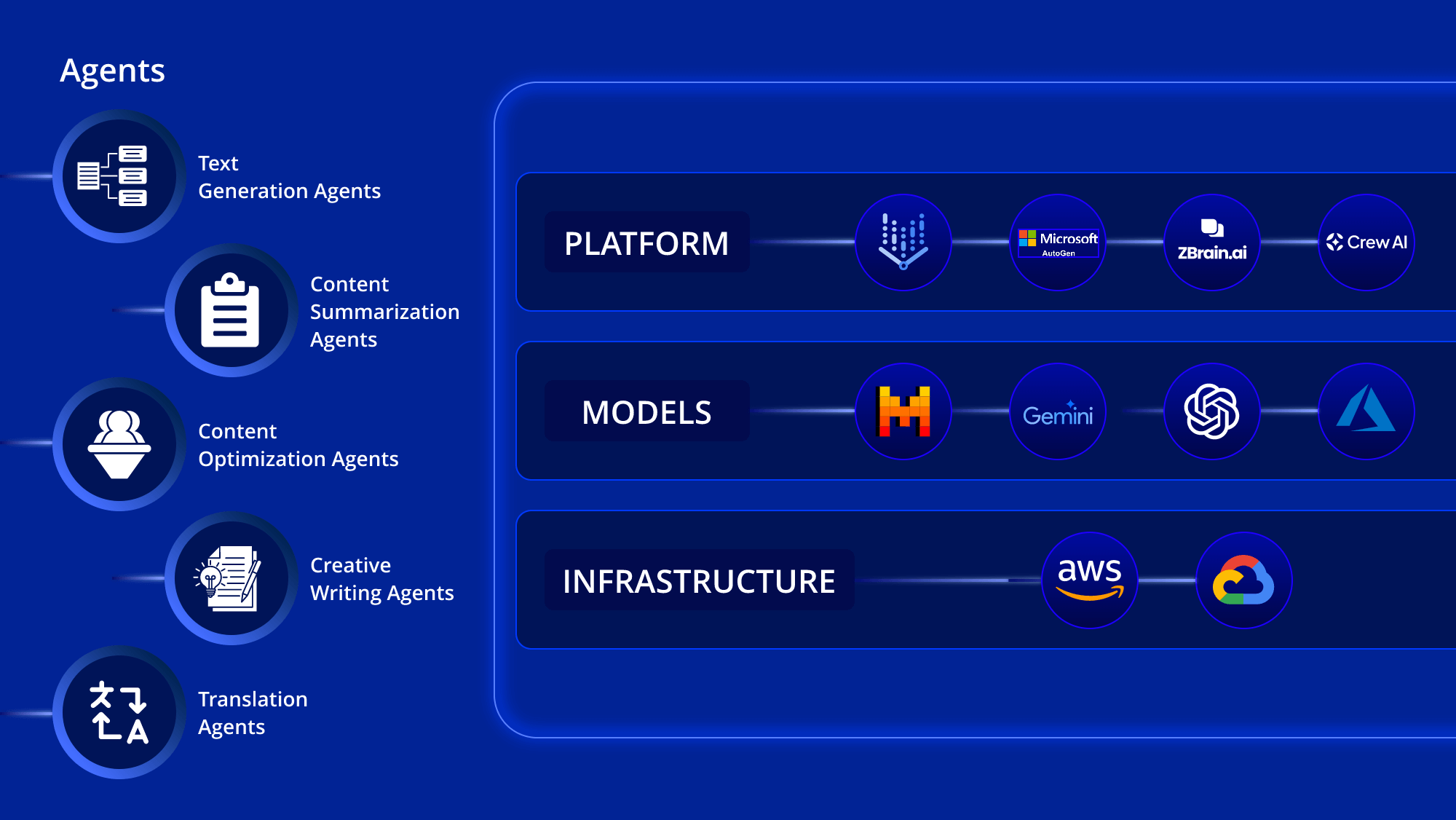
Understanding AI Agents: Their Components and Functionality

Understanding AI Agents: Their Components and Functionality
Artificial Intelligence (AI) agents mark a major advancement in technology, significantly influencing how businesses function and how people engage with tech. These intelligent agents are built to work independently, learning from their experiences and making decisions based on the data they receive. This article will delve into the details of AI agents, their essential components, and their impact on the future of technology.
What Are AI Agents?
AI agents are independent entities that observe their surroundings using sensors and take action through actuators. They can range from simple devices like thermostats to complex systems like self-driving cars. AI agents are engineered to carry out specific tasks by sensing their environment, processing information, and executing actions that enhance their chances of success.
Core Components of AI Agents
To grasp the concept of AI agents fully, it is important to examine the components that enable their intelligent operation. These components include:
- Sensors and Actuators: Sensors act as input devices for AI agents, allowing them to gather information about their environment. This can include cameras, microphones, GPS, and temperature sensors. Actuators are the output devices that execute the agent's decisions, such as motors and speakers.
- Perception: This refers to the agent's ability to interpret the data from its sensors. Perception involves recognizing patterns, identifying objects, and understanding spatial relationships in the environment.
- Reasoning and Decision-Making: AI agents utilize reasoning algorithms to make informed decisions based on collected data. This process applies logic and probability to identify the best actions.
- Learning: Learning is vital for advanced AI agents. Through machine learning algorithms, agents can enhance their performance over time by drawing insights from past experiences and adapting to new challenges.
- Knowledge Representation: This involves organizing information about the world in a way that the agent can comprehend and use. Knowledge representation can include databases, ontologies, or neural networks.
- Communication: Many AI agents are built to interact with other agents or humans. Strong communication skills enable agents to share information and collaborate effectively.
Types of AI Agents
AI agents can be classified based on their capabilities and uses:
- Reactive Agents: These agents rely solely on current perceptions, lacking any internal model of the world or history. They are straightforward but effective for simple tasks.
- Model-Based Agents: These agents maintain a model of the world to inform their decisions. They can plan and anticipate future outcomes based on their actions.
- Goal-Based Agents: More advanced, these agents work towards specific goals by considering the future implications of their actions.
- Utility-Based Agents: These agents aim to maximize a utility function, allowing for more nuanced decision-making that accounts for varying levels of success.
Applications of AI Agents
AI agents have a wide range of applications across various industries:
- Healthcare: They assist in diagnostics, patient monitoring, and personalized medicine, enhancing healthcare delivery and outcomes.
- Finance: In finance, AI agents analyze market trends, automate trading, and manage portfolios, providing valuable insights and efficiencies.
- Automotive: Self-driving cars are a prominent example, where AI agents autonomously navigate and control vehicles.
- Customer Service: Virtual assistants and chatbots improve customer service by delivering quick responses and managing routine inquiries effectively.
The Future of AI Agents
The progress of AI agents is rapidly evolving, driven by advancements in machine learning, natural language processing, and robotics. As these agents become more advanced, they are expected to tackle increasingly complex tasks, integrating more seamlessly into everyday life and business practices.
However, the rise of AI agents also brings ethical and security challenges. It is essential to ensure that AI agents operate in ways that align with human values and respect privacy rights as they gain more autonomy and prevalence.
Conclusion
AI agents are revolutionizing the technology landscape by providing intelligent solutions across various fields. Understanding their components and functions is crucial for harnessing their potential while addressing the challenges they present. As AI technology progresses, the role of intelligent agents will likely expand, offering new opportunities and necessitating careful consideration of their societal impact.