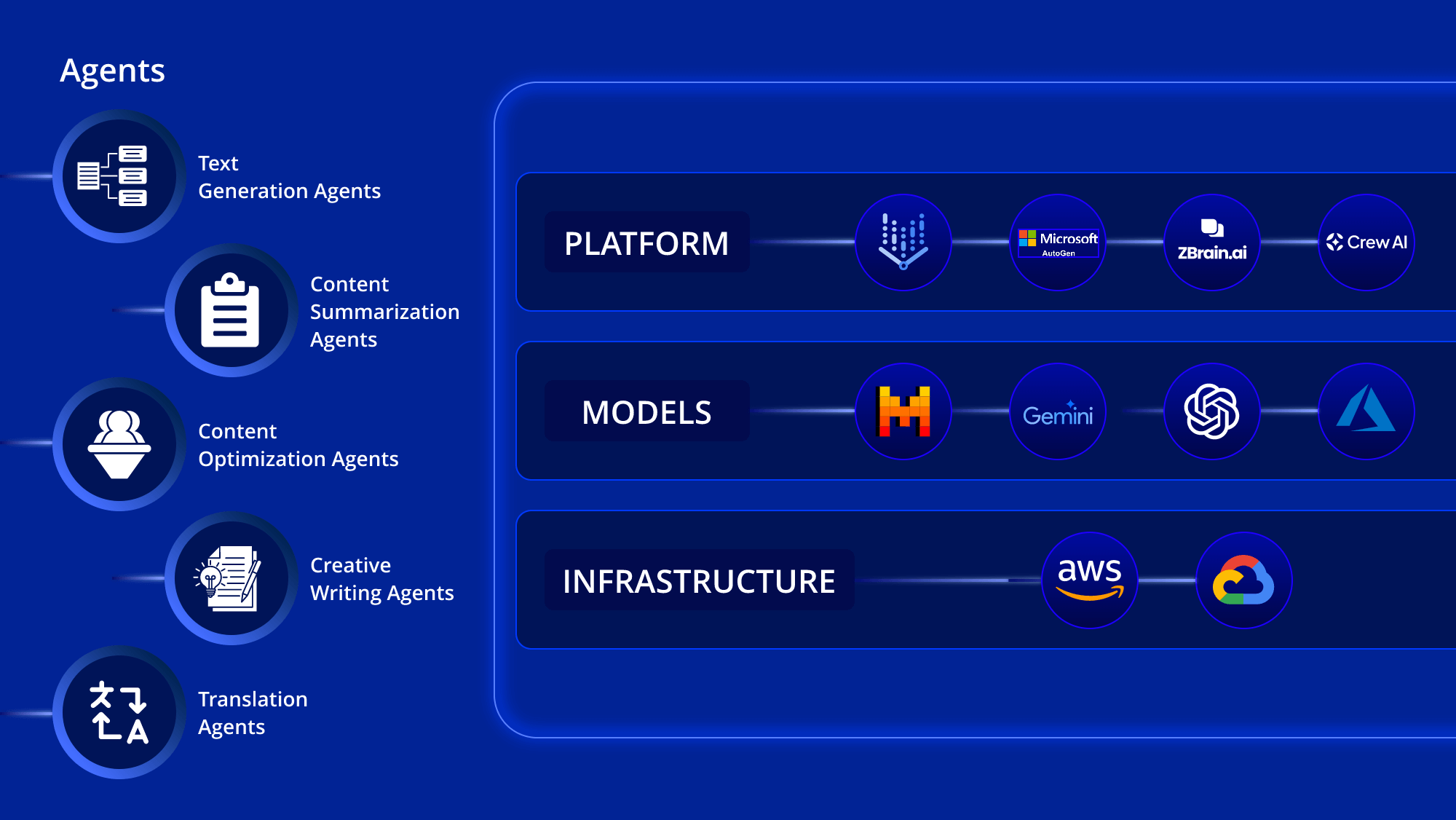
The Rise of AI Agents: Transforming Industries and Enhancing Daily Life

The Rise of AI Agents: Transforming Industries and Enhancing Daily Life
In recent years, the development and integration of Artificial Intelligence (AI) agents have significantly transformed various industries and the way individuals interact with technology. AI agents are software programs that perform tasks autonomously, learning from data and adapting to new information. This article explores the diverse applications of AI agents, their benefits, challenges, and future prospects, providing a comprehensive understanding of their growing significance.
Understanding AI Agents
AI agents are designed to perceive their environment through sensors, process data, and act upon it to achieve specific goals. They range from simple chatbots to complex systems capable of intricate decision-making processes. These agents leverage machine learning, natural language processing, and deep learning technologies to understand and respond to human inputs effectively.
Applications of AI Agents
1. Customer Service and Support
AI agents have revolutionized customer service by providing 24/7 support through chatbots and virtual assistants. These agents handle customer inquiries, troubleshoot problems, and offer personalized recommendations, enhancing customer satisfaction and reducing operational costs for businesses.
2. Healthcare
In healthcare, AI agents assist in diagnosing diseases, recommending treatments, and managing patient data. They analyze medical records, monitor patient progress, and even predict disease outbreaks, leading to improved patient outcomes and efficient healthcare delivery.
3. Finance
AI agents in the finance sector automate trading, assess risks, and detect fraudulent activities. They analyze vast amounts of financial data quickly, providing insights that help in making informed investment decisions and improving financial security.
4. E-commerce
In e-commerce, AI agents personalize shopping experiences by recommending products based on user preferences and behavior. They optimize inventory management, assist in pricing strategies, and enhance customer engagement through targeted marketing campaigns.
5. Autonomous Vehicles
AI agents are the driving force behind autonomous vehicles, enabling them to navigate roads, interpret traffic signals, and make real-time decisions to ensure passenger safety. This technology promises to revolutionize transportation by reducing accidents and improving traffic flow.
Benefits of AI Agents
1. Efficiency and Productivity
AI agents automate repetitive tasks, allowing humans to focus on more complex and creative endeavors. This leads to increased efficiency and productivity across various industries.
2. Cost Reduction
By automating processes, AI agents reduce the need for human intervention, lowering operational costs. Businesses can allocate resources more effectively, leading to increased profitability.
3. Enhanced Decision-Making
AI agents analyze large datasets quickly, providing insights that enhance decision-making. Their ability to process information in real-time allows businesses to adapt to changing market conditions promptly.
4. Personalization
AI agents offer personalized experiences by analyzing user data and preferences. This personalization improves customer satisfaction and loyalty, leading to long-term business success.
Challenges Facing AI Agents
1. Data Privacy and Security
The reliance on data raises concerns about privacy and security. Ensuring that AI agents handle sensitive information responsibly is crucial to maintaining user trust.
2. Ethical Considerations
AI agents must be programmed ethically to avoid biased decision-making. Developers need to ensure that AI systems operate fairly and do not perpetuate existing inequalities.
3. Integration and Compatibility
Integrating AI agents into existing systems can be challenging, requiring significant time and resources. Ensuring compatibility with various platforms is essential for seamless operation.
4. Dependence on Technology
As reliance on AI agents grows, there is a risk of over-dependence on technology. Businesses and individuals need to maintain a balance between human and machine collaboration.
Future Prospects of AI Agents
The future of AI agents is promising, with advancements in technology leading to more sophisticated and capable systems. As AI agents continue to learn and adapt, their applications will expand across new industries, driving innovation and economic growth.
Sources and Images
Source 1: Not all AI agents are the same

Not all AI agents are the same. | Panagiotis Kriaris: AI agents are autonomous systems that perceive their environment, make decisions, and act toward specific goals. Types include Simple Reflex Agents, Model-Based Agents, Goal-Based Agents.
Source 2: Core Components of AI Agents
Core Components of AI Agents: The Five Core Components of AI Agents – How perception, learning, reasoning, action, and communication form the foundation of intelligent AI systems.
Source 3: Understanding AI Agents
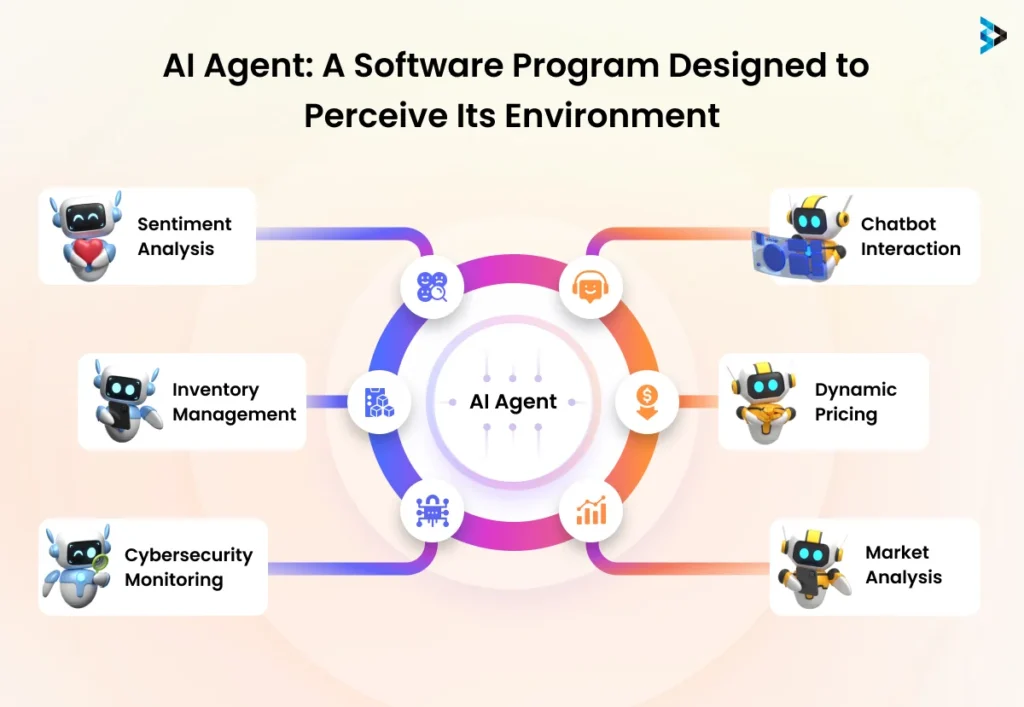
Exploring AI Agents - Capabilities, Use Cases, and ...: An AI agent is a software program that perceives environment, processes information, and takes action to achieve goals.
Source 4: What are AI agents

What are AI agents: Benefits and business applications | SAP: AI agents are artificial intelligence-based applications that make decisions and perform tasks independently with minimal human oversight.
Source 5: AI SEO Agents

AI SEO Agents: How Do They Work? | BrainZ: An AI SEO agent uses artificial intelligence to automate SEO tasks like keyword research, content optimization, technical audits, and competitor analysis.