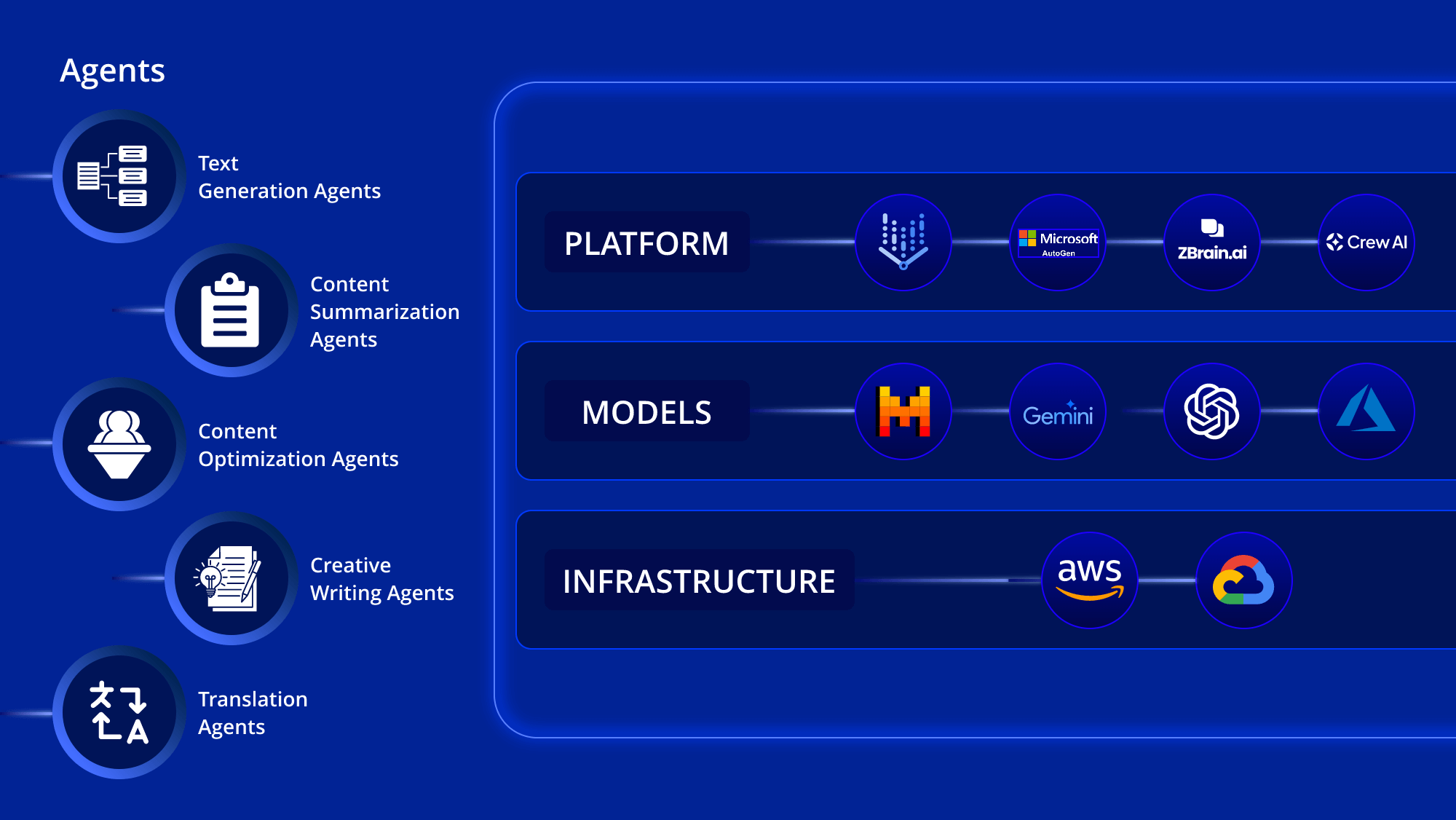
The Rise of AI Agents: Revolutionizing Workflow Automation
In recent years, the progress in artificial intelligence (AI) has led to the development of AI agents, including autonomous agents, intelligent agents, and agentic AI. These technologies are changing how businesses function by improving workflow automation and utilizing generative AI. This article delves into the importance of these AI systems, their uses, and their effects on different industries.
What Are AI Agents and Their Types?
AI Agents are software programs that autonomously carry out tasks for users. They are built to perceive their surroundings, make decisions, and take actions to achieve specific objectives. These agents can vary from simple bots to sophisticated systems that manage complex processes.
Autonomous Agents are a type of AI agent that functions independently without needing human input. They continuously learn from their environment and adjust their actions to enhance performance, making them particularly valuable in situations that require real-time decision-making.
Intelligent Agents are capable of learning from data, reasoning, and solving problems. They use AI methods like machine learning, natural language processing, and computer vision, which allows them to effectively interact with their environment.
Agentic AI refers to AI systems that can act on their own, meaning they can initiate actions based on their goals and the context of their environment. This type of AI is noted for its ability to manage complex tasks independently, make informed choices, and adapt to new circumstances.
AI Agents and Workflow Automation
Workflow automation is essential for modern businesses, aiming to streamline processes, minimize manual work, and boost efficiency. AI agents are crucial in this area by automating repetitive tasks, refining processes, and offering valuable insights.
- Task Automation: AI agents can handle routine tasks like data entry, scheduling, and customer support. By taking over these repetitive jobs, human employees can concentrate on more strategic and creative tasks.
- Process Optimization: Intelligent agents evaluate workflows to pinpoint bottlenecks and inefficiencies. They suggest improvements to ensure optimal resource use and quicker turnaround times.
- Predictive Analytics: Utilizing machine learning algorithms, AI agents can forecast future trends and outcomes. This ability helps businesses make proactive decisions, reduce risks, and seize opportunities.
- Scalability: Autonomous agents can easily scale operations, managing increased workloads without sacrificing performance. This scalability is vital for businesses looking to grow while maintaining quality.
The Influence of Generative AI
Generative AI, a branch of AI focused on content creation, is becoming increasingly popular across various sectors. It employs algorithms to produce text, images, music, and even code, providing endless opportunities for innovation and creativity.
- Content Creation: Generative AI can generate high-quality content at scale, including blog posts, articles, marketing materials, and product descriptions. This feature is essential for businesses striving to maintain a consistent online presence.
- Design and Art: Artists and designers use generative AI to create original artworks and designs. The AI can generate patterns, textures, and complete visual compositions, expanding the limits of traditional art.
- Music and Entertainment: In the music industry, AI agents can compose original tracks, offering composers and producers new ideas and inspiration. Similarly, in gaming, generative AI can create immersive environments and narratives.
- Software Development: Developers leverage generative AI to automate code creation, which shortens development time and enhances software quality. This technology aids in efficiently creating prototypes and testing scenarios.
Industry Applications
The adaptability of AI agents, autonomous agents, intelligent agents, and generative AI allows them to be utilized in numerous industries:
- Healthcare: AI agents help diagnose diseases, manage patient records, and create personalized treatment plans. They also streamline administrative tasks, allowing healthcare workers to prioritize patient care.
- Finance: In finance, intelligent agents analyze market trends, identify fraudulent activities, and optimize investment strategies, providing real-time insights that improve decision-making.
- Retail: Retailers employ AI agents to customize customer experiences, manage inventory, and enhance supply chains. These agents boost customer satisfaction and increase sales through personalized recommendations.
- Manufacturing: Autonomous agents automate production lines, monitor equipment health, and predict maintenance needs, leading to higher productivity and reduced downtime.
- Education: In education, AI agents tailor learning experiences, provide instant feedback, and automate administrative tasks, assisting educators in delivering quality education to students worldwide.
Future Outlook and Challenges
The future of AI agents and generative AI looks bright, with ongoing technological advancements creating new opportunities for innovation. However, challenges such as ethical issues, data privacy, and algorithmic bias must be addressed to ensure responsible AI use.
- Ethical Issues: As AI agents become more autonomous, ethical questions about decision-making, accountability, and transparency arise. Clear guidelines and regulations are essential to ensure AI operates ethically.
- Data Privacy: AI agents depend on large amounts of data to function effectively. Protecting data privacy and security is crucial to prevent unauthorized access and misuse of sensitive information.
- Algorithmic Bias: Bias in AI algorithms can result in unfair and discriminatory outcomes. Ongoing monitoring and refinement of AI models are necessary to reduce bias and promote fairness.
Conclusion
AI agents, autonomous agents, intelligent agents, and agentic AI are transforming workflow automation and enhancing various industries through their capabilities. Generative AI further enhances these advancements by enabling creative content generation. As these technologies continue to develop, businesses must adopt them to remain competitive in a rapidly evolving landscape. By tackling ethical, privacy, and bias challenges, we can fully leverage the potential of AI agents and pave the way for a more efficient and innovative future.