The Rise of AI Agents: Revolutionizing Business in 2026

The Rise of AI Agents: Revolutionizing Business in 2026
Artificial intelligence is rapidly moving beyond simple chatbots and rule-based automation into a new era of AI agents, also known as agentic AI or autonomous agents. These intelligent systems can understand goals, make decisions, take actions, use tools, and complete complex workflows with minimal human supervision. For businesses, this shift represents a major opportunity to improve productivity, reduce operational costs, enhance customer experiences, and scale automation across departments.
As organizations search for smarter ways to compete in digital markets, AI agents for business automation are becoming one of the most important technology trends. From customer service and sales to finance, HR, marketing, IT operations, and supply chain management, autonomous AI agents are transforming how work gets done.
What Are AI Agents?
AI agents are software systems powered by artificial intelligence that can perform tasks on behalf of users or organizations. Unlike traditional automation tools that follow fixed instructions, AI agents can interpret information, reason through problems, adapt to changing conditions, and take action toward a specific objective.
A basic automation tool might send an email when a form is submitted. An AI agent, however, can read the form, understand the customer’s request, check CRM data, prioritize the issue, draft a personalized response, update internal systems, and notify the right team member if human input is needed.
This ability to plan, decide, and act is what makes AI agents different from standard software programs.
What Is Agentic AI?
Agentic AI refers to artificial intelligence systems designed to act with a degree of autonomy. The term “agentic” comes from the idea of agency: the ability to make choices and take action. In business technology, agentic AI describes AI systems that can pursue goals, break tasks into steps, use external tools, learn from outcomes, and interact with digital environments.
For example, an agentic AI system can be given a goal such as “increase qualified sales leads this month.” It may then analyze website traffic, identify high-performing campaigns, generate personalized outreach emails, update lead scores in a CRM, and recommend budget changes for paid advertising.
Agentic AI does not simply answer questions. It helps execute work.
Autonomous Agents Explained
Autonomous agents are AI-powered systems that can operate independently within defined boundaries. They can make decisions without waiting for step-by-step human instructions. In a business setting, autonomous agents can monitor workflows, identify issues, complete repetitive tasks, and even coordinate with other AI agents.
Autonomous agents typically include several key capabilities:
- Goal understanding: They can interpret what needs to be achieved.
- Planning: They can break a goal into smaller tasks.
- Reasoning: They can choose the best next action.
- Tool use: They can connect with software such as CRMs, calendars, databases, and email platforms.
- Memory: They can retain useful information for future decisions.
- Adaptability: They can respond to changes in data, user needs, or business conditions.
These features make autonomous agents especially valuable for business automation.
Why AI Agents Matter for Business Automation
Business automation has existed for decades, but many traditional automation systems are limited. They usually depend on predefined rules, structured data, and predictable workflows. When something unexpected happens, the automation often fails or requires human intervention.
AI agents make automation more flexible and intelligent. They can handle unstructured data, interpret natural language, and manage multi-step processes. This allows businesses to automate work that previously required human judgment.
For example, a traditional automation system may only process invoices that follow a specific format. An AI agent can read invoices in different formats, extract relevant data, compare it with purchase orders, detect discrepancies, request clarification, and route approvals automatically.
This level of automation can save significant time while reducing errors.
Key Benefits of AI Agents in Business
1. Increased Productivity
AI agents can handle repetitive and time-consuming tasks, allowing employees to focus on strategic work. Tasks such as data entry, scheduling, report generation, customer follow-ups, and document processing can be completed faster and more consistently.
2. Lower Operational Costs
By automating manual workflows, businesses can reduce labor costs, minimize delays, and improve process efficiency. AI agents can operate 24/7, making them useful for global businesses and customer-facing operations.
3. Better Customer Experience
Autonomous agents can respond quickly to customer inquiries, personalize interactions, and resolve common issues without long wait times. They can also escalate complex cases to human agents with a full summary of the problem.
4. Improved Decision-Making
AI agents can analyze large volumes of data and provide actionable insights. They can identify trends, detect risks, forecast demand, and recommend next steps based on real-time information.
5. Scalable Automation
Once deployed, AI agents can scale across multiple departments and workflows. A company can use different agents for sales, customer support, finance, HR, and operations while maintaining centralized oversight.
Sources and Further Reading
Databricks - 2026 State of AI Agents

A new report examining enterprise AI trends based on usage data from 20,000+ global organizations.
Analytics Vidhya - 15 AI Agents Trends to Watch
Enterprises are shifting from testing AI agents to letting them run entire workflows and execute decisions.
SoftBlues - AI Agent Trends 2026
Five shifts that will redefine roles, workflows, and business value in 2026, moving to intent-based computing.
Palma.ai - 2026 AI Agent Predictions
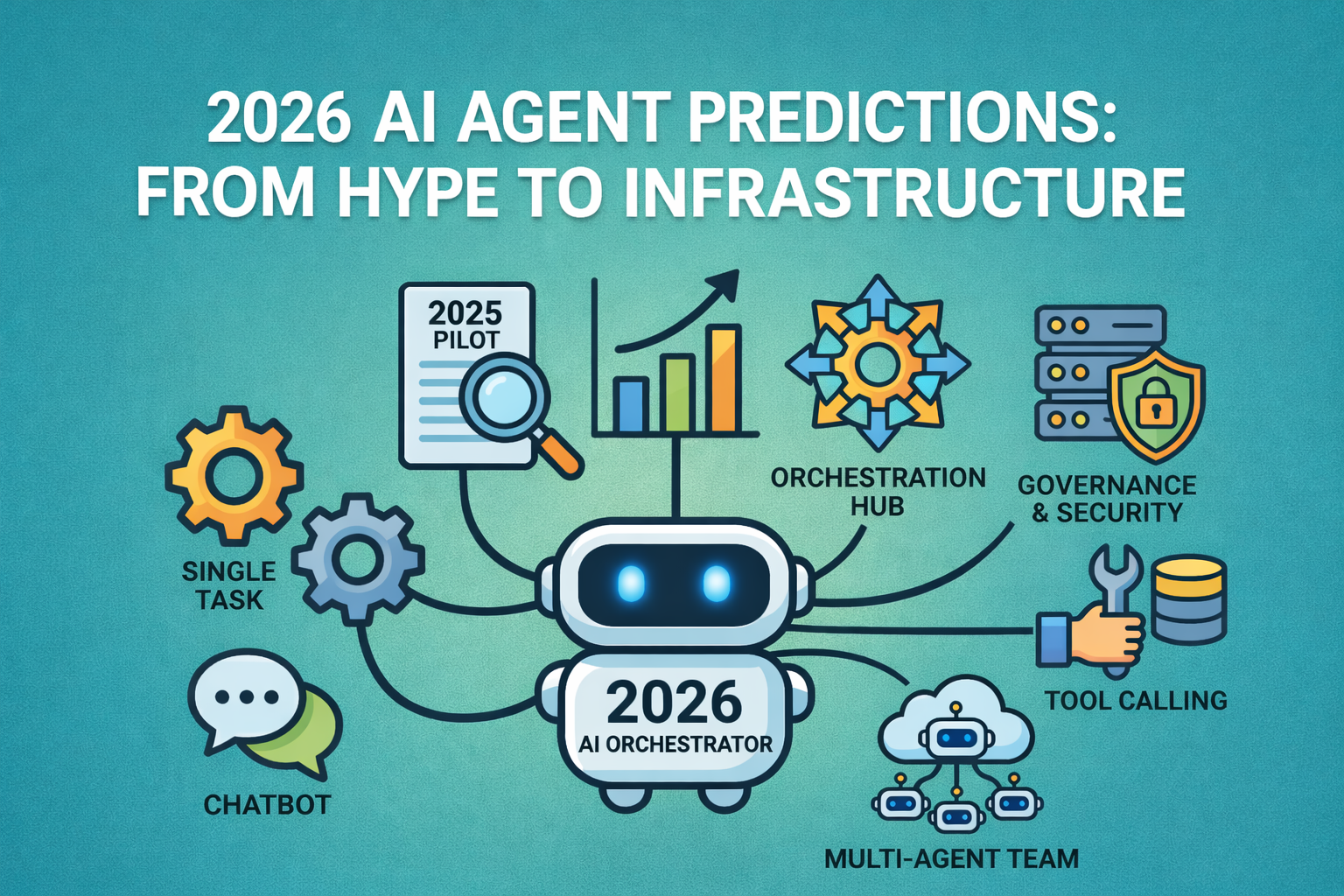
Predictions from Deloitte, Gartner, IBM, and others on why 2026 is the year agents go from experiments to infrastructure.
MachineLearningMastery - Agentic AI Trends
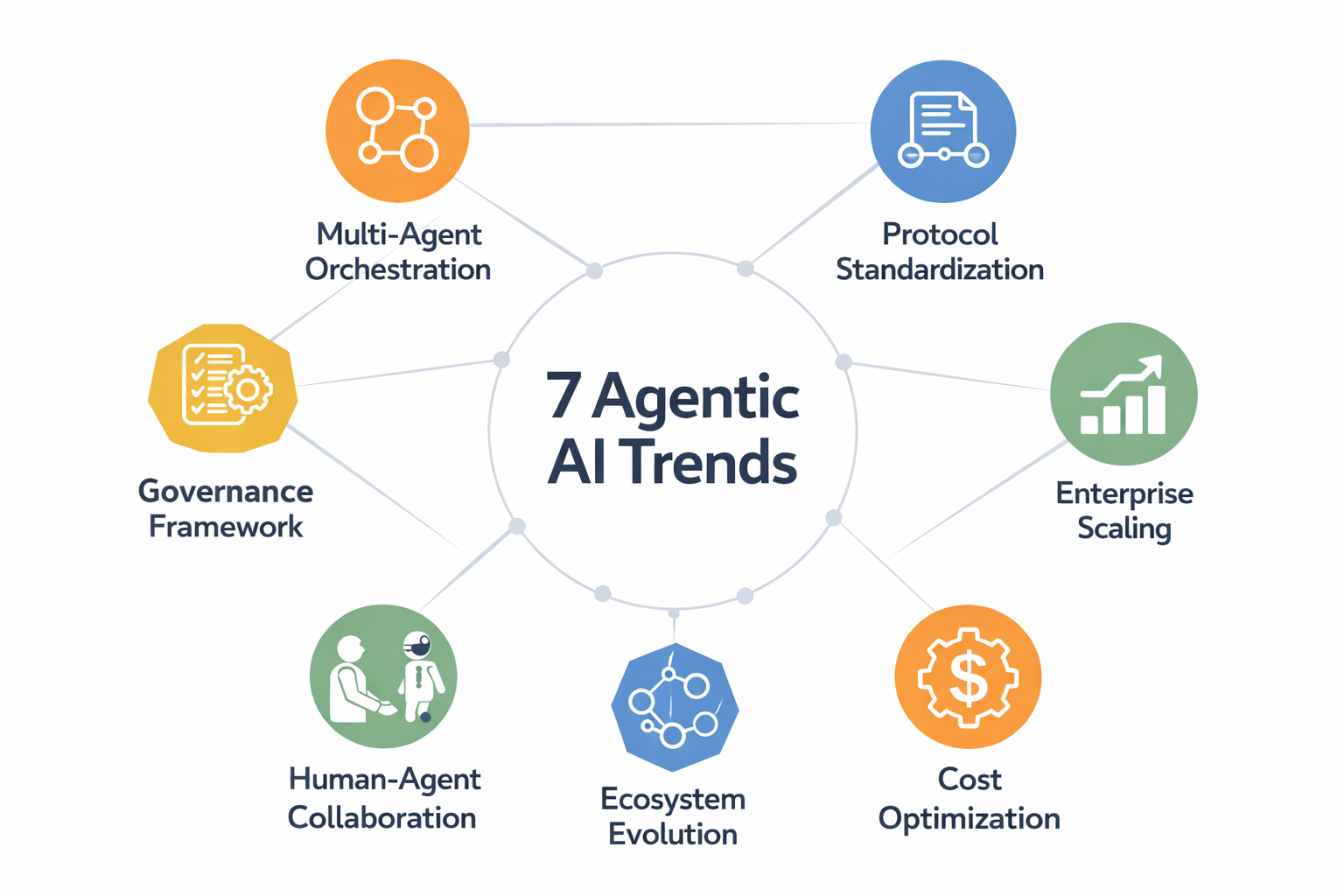
Market projected to surge from $7.8 billion to over $52 billion by 2030, driven by autonomous systems.