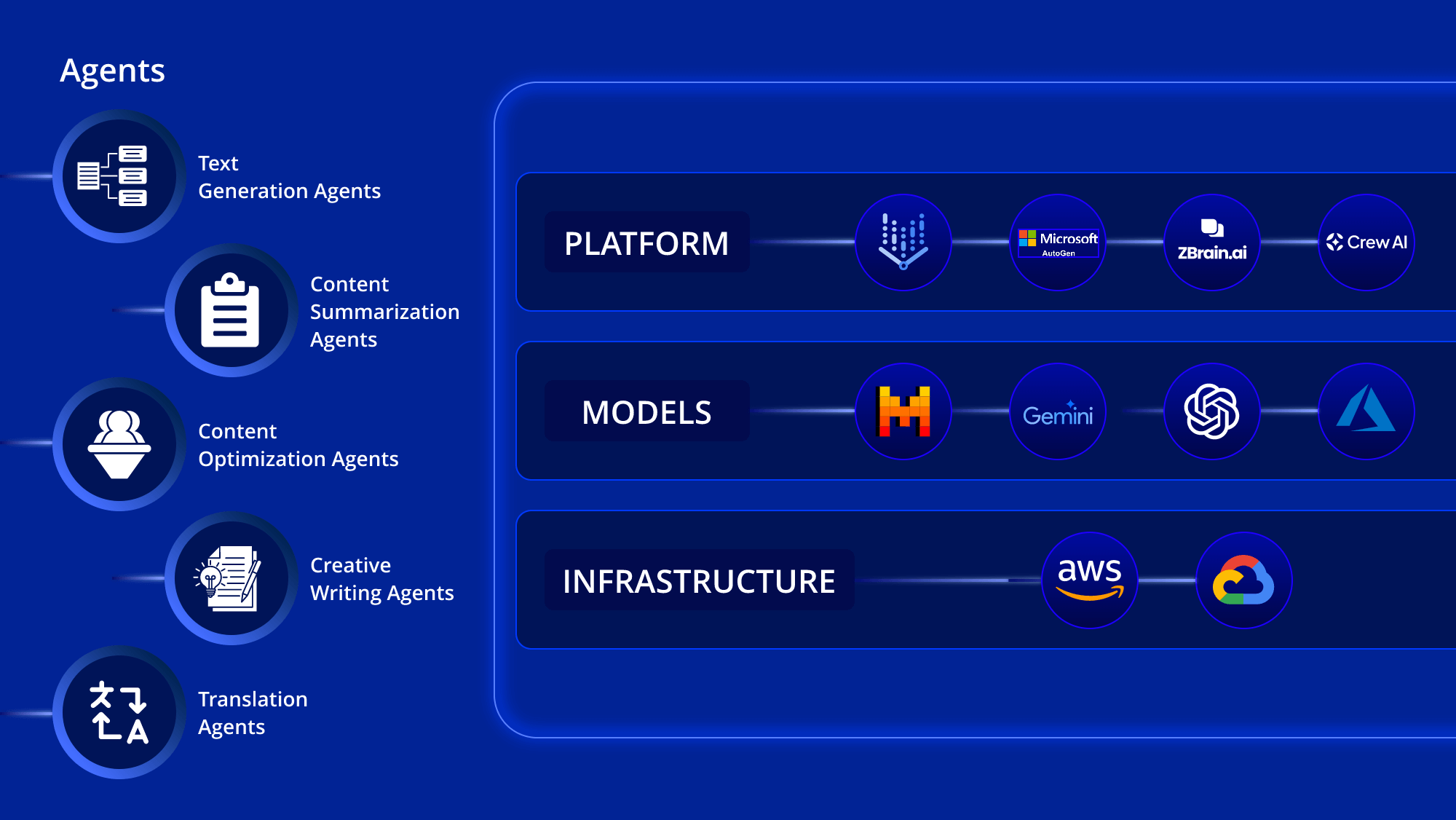
The Rise of AI Agents in 2026
AI Agents and the Future of Automation: How Intelligent Agents and Digital Workers Are Transforming Business
Introduction
AI agents are rapidly becoming one of the most important technologies shaping the future of automation, business operations, and digital transformation. As organizations look for faster, smarter, and more cost-effective ways to complete tasks, intelligent agents and autonomous systems are emerging as powerful tools that can make decisions, execute workflows, interact with software, and support human teams.
Unlike traditional automation tools that follow fixed rules, AI agents can understand goals, analyze information, adapt to changing conditions, and take action with minimal human input. This makes them highly valuable across industries such as healthcare, finance, retail, manufacturing, customer service, education, logistics, and software development.
The rise of digital workers is also changing how companies think about productivity. Instead of relying only on human employees or simple robotic process automation, businesses can now deploy AI-powered agents that handle repetitive, knowledge-based, and even complex decision-driven tasks. These systems are not just tools; they are becoming active participants in the modern workplace.
What Are AI Agents?
AI agents are software systems designed to perceive their environment, process information, make decisions, and perform actions to achieve specific goals. They may operate inside digital platforms, business applications, websites, databases, communication tools, or connected devices.
An AI agent typically has four core capabilities:
- Perception – It can receive information from users, systems, documents, sensors, or online sources.
- Reasoning – It can analyze data, understand patterns, and decide what action to take.
- Action – It can perform tasks such as sending emails, updating records, generating reports, or triggering workflows.
- Learning – It can improve over time based on feedback, results, and new data.
For example, a customer support AI agent can read a customer complaint, understand the issue, search a knowledge base, provide an answer, escalate the case if needed, and update the customer relationship management system. This level of functionality goes far beyond basic chatbots.
Intelligent Agents vs Traditional Automation
Traditional automation depends on predefined rules. If a condition is met, the system performs a specific action. This works well for simple and predictable tasks, such as sending an invoice reminder or moving files between folders. However, traditional automation struggles when tasks require judgment, language understanding, or adaptation.
Intelligent agents are different because they can interpret unstructured information, reason through multi-step problems, and adjust their actions depending on the situation. They can work with emails, PDFs, spreadsheets, web pages, customer conversations, and enterprise systems.
For example, a traditional automation system may only process invoices that follow a fixed format. An intelligent AI agent can read invoices in different formats, identify missing information, compare invoice data with purchase orders, flag suspicious entries, and route exceptions to the right department.
This ability to handle complexity is why intelligent agents are becoming essential to the next phase of digital automation.
The Rise of Digital Workers
Digital workers are AI-powered software agents that perform tasks traditionally handled by human employees. They can work across applications, manage workflows, communicate with users, and complete business processes.
A digital worker may serve as:
- A virtual customer service representative
- A finance operations assistant
- A human resources onboarding agent
- A sales development assistant
- A data entry and reporting specialist
- A legal document review assistant
- A software testing agent
- A supply chain monitoring agent
Digital workers do not replace every part of a human role. Instead, they often take over repetitive, time-consuming, or data-heavy tasks so human employees can focus on strategy, creativity, relationship-building, and decision-making.
For businesses, digital workers offer major benefits. They can operate 24/7, reduce errors, scale quickly, and process large amounts of information. For employees, they can reduce administrative burden and improve job satisfaction by removing low-value manual work.
How AI Agents Are Transforming Business Automation
AI agents are transforming automation by making it more flexible, intelligent, and outcome-driven. Instead of automating isolated tasks, companies can automate entire workflows.
1. Customer Service Automation
AI agents can respond to customer questions, troubleshoot issues, recommend products, process returns, and escalate complex cases. They can also analyze customer sentiment and personalize responses based on previous interactions.
2. Sales and Marketing Automation
In sales, intelligent agents can identify leads, qualify prospects, write personalized outreach emails, schedule meetings, and update CRM records. In marketing, they can analyze campaign performance, generate content ideas, segment audiences, and recommend optimization strategies.
3. Finance and Accounting Automation
Finance departments use AI agents to process invoices, detect fraud, reconcile accounts, generate financial reports, and monitor compliance. These agents can review large volumes of financial data and identify anomalies that might be missed by humans.
4. Human Resources Automation
AI agents can support recruitment, employee onboarding, benefits administration, training recommendations, and internal employee support. For example, an HR digital worker can answer policy questions, schedule interviews, screen resumes, and guide new hires through onboarding steps.
5. IT and Software Development Automation
AI agents are increasingly used in software development and IT operations. They can write code, detect bugs, generate documentation, monitor systems, resolve common technical issues, and assist with cybersecurity alerts.
Autonomous Systems and the Future of Work
Autonomous systems are technologies that can operate independently without constant human control. These systems use artificial intelligence, machine learning, sensors, data analysis, and decision-making models to perform tasks in real time.
Examples include autonomous vehicles, smart warehouse robots, AI-driven cybersecurity platforms, self-optimizing manufacturing systems, automated trading systems, intelligent supply chain platforms, and robotic healthcare assistants.
The future of work will likely involve close collaboration between humans and autonomous systems. Rather than a workplace where machines replace people entirely, the more realistic future is one where humans supervise, guide, and collaborate with intelligent agents.
Future Predictions for AI Agents and Digital Workers
The next decade will likely bring major advances in AI agents, automation, and autonomous systems. Several predictions stand out.
- AI Agents Will Become Standard Business Tools: Just as email, spreadsheets, and cloud software became standard in business, AI agents will become everyday tools for employees.
- Digital Workers Will Handle End-to-End Processes: Today, many AI agents handle specific tasks. In the future, digital workers will manage entire business processes from start to finish.
- Human-AI Collaboration Will Increase: AI agents will not only automate work but also collaborate with humans. Employees may assign goals to agents, review their recommendations, approve actions, and refine outcomes.
- Autonomous Systems Will Become More Reliable: As AI models improve, autonomous systems will become more accurate, safer, and more dependable.
- AI Governance Will Become Essential: As AI agents gain more autonomy, organizations will need stronger governance, including rules for data privacy, security, transparency, accountability, bias prevention, and human oversight.
Conclusion
AI agents, intelligent agents, autonomous systems, and digital workers are reshaping the future of automation. They are helping businesses improve productivity, reduce costs, enhance customer experiences, and make faster decisions. As these technologies become more advanced, they will play an increasingly important role in nearly every industry.
Sources & References
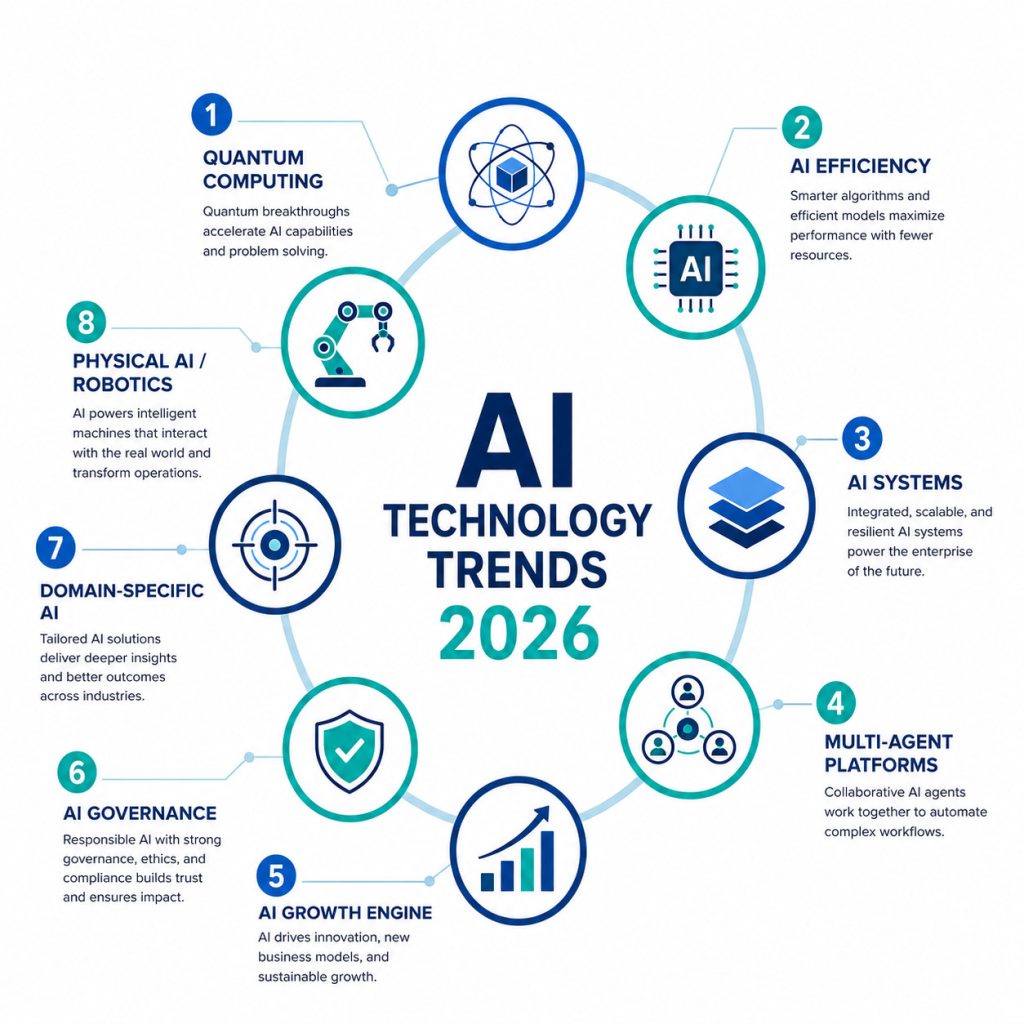
Source: Prolifics - AI Technology Trends 2026
AI Technology Trends 2026: The Strategic Roadmap Every Enterprise Leader Needs. The AI technology trends shaping 2026 are strategic realities your competitors are already acting on.
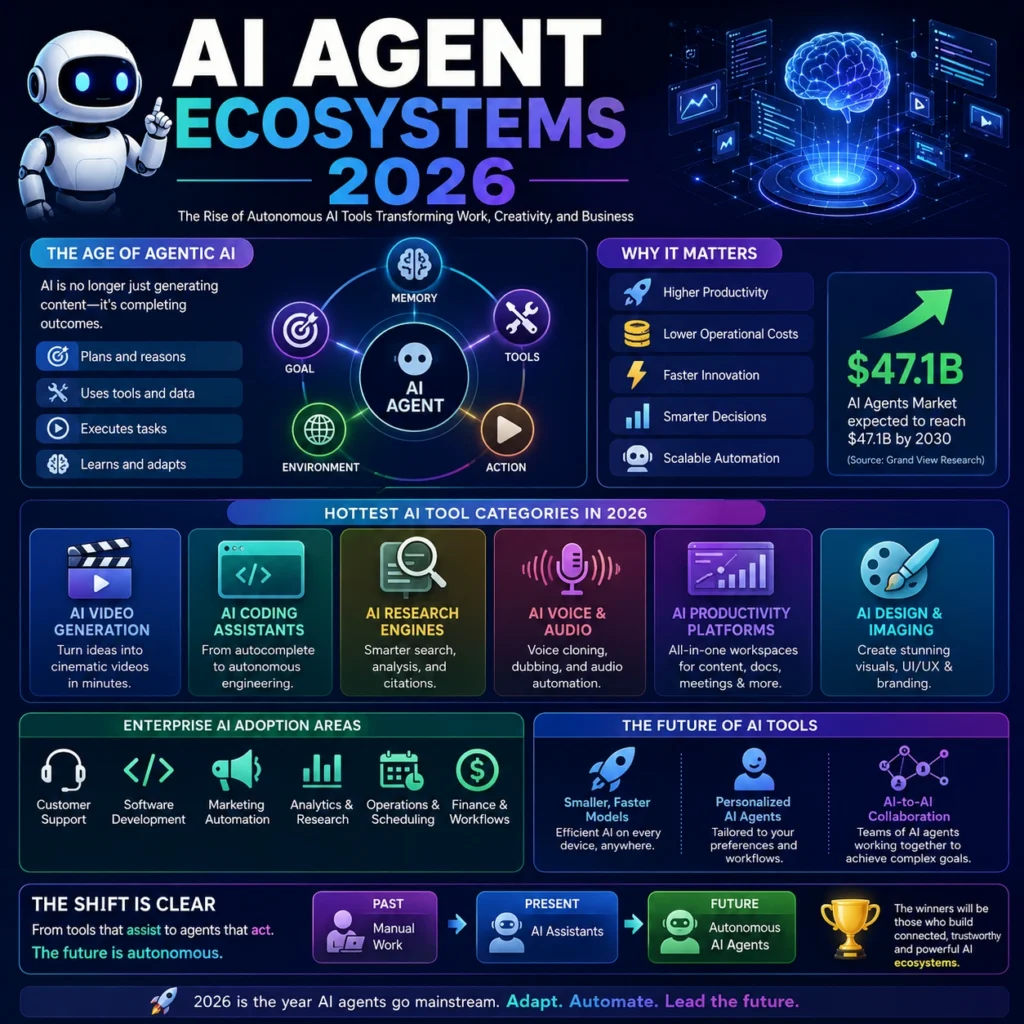
Source: Tacan - AI Agent Ecosystems 2026
The Rise of Autonomous AI Tools and Multimodal Intelligence. 2026 is the beginning of the “agentic AI” era, a transition from AI systems that answer prompts to systems that complete outcomes.

Source: Databricks - 2026 State of AI Agents
Introducing the 2026 State of AI Agents: a new report that examines enterprise AI trends based on usage data from 20,000+ global organizations.
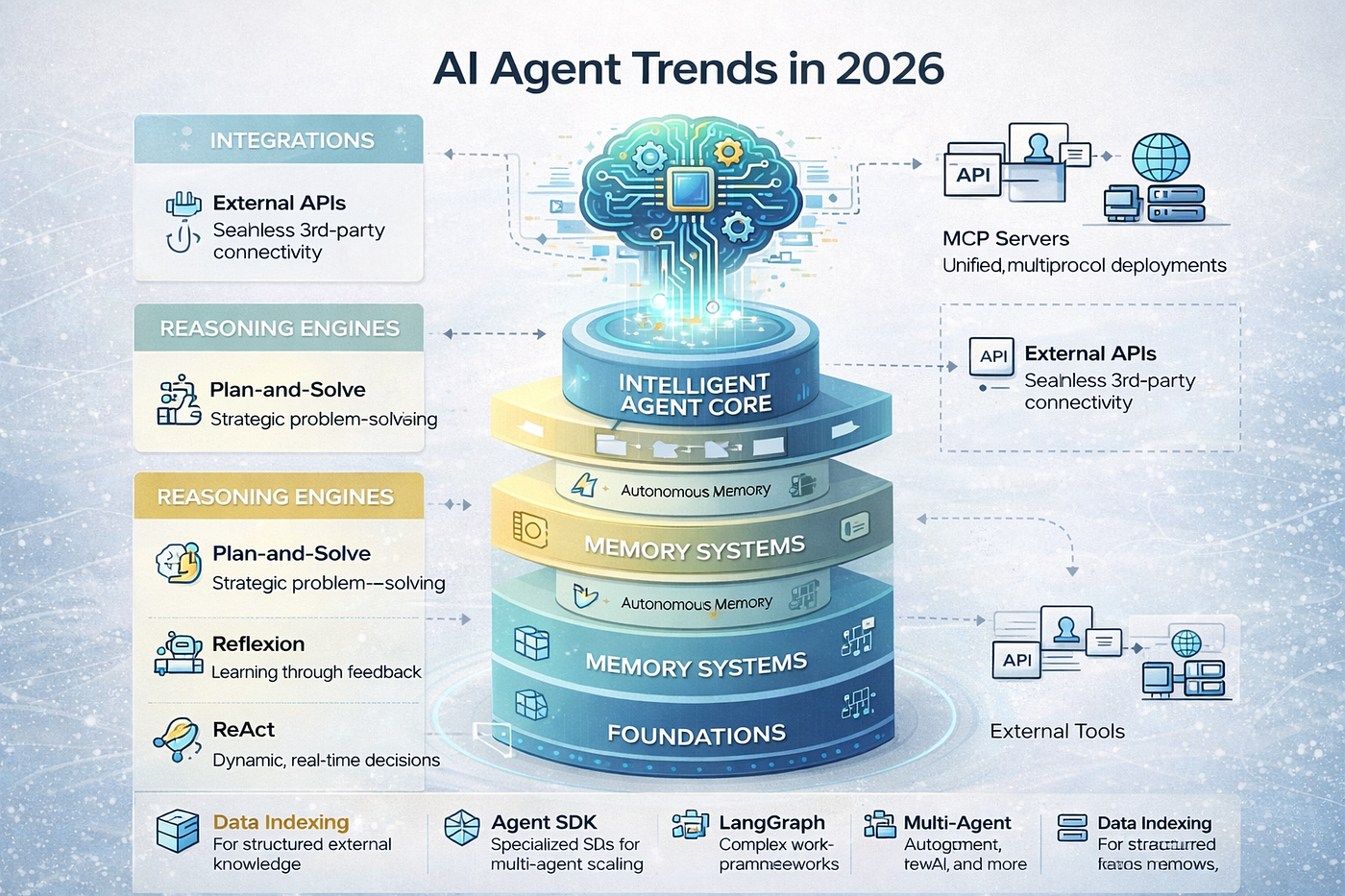
Source: Medium - AI Agent Trends 2026
From Smart Tools to Autonomous Digital Workers. 2026 will be remembered as the year AI agents became operational teammates, defined by persistent memory, goal ownership, and decision authority.
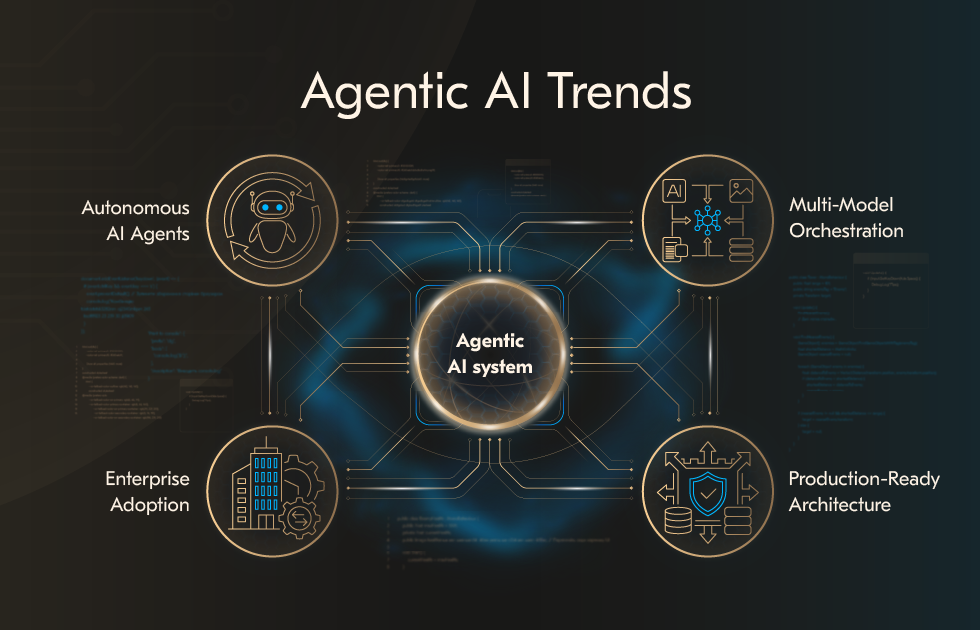
Source: Acropolium - Agentic AI Trends 2026
Future of Autonomous AI Agents. The simplest way to put it: a chatbot answers your question and stops. An AI agent receives a goal and keeps working until it’s done.
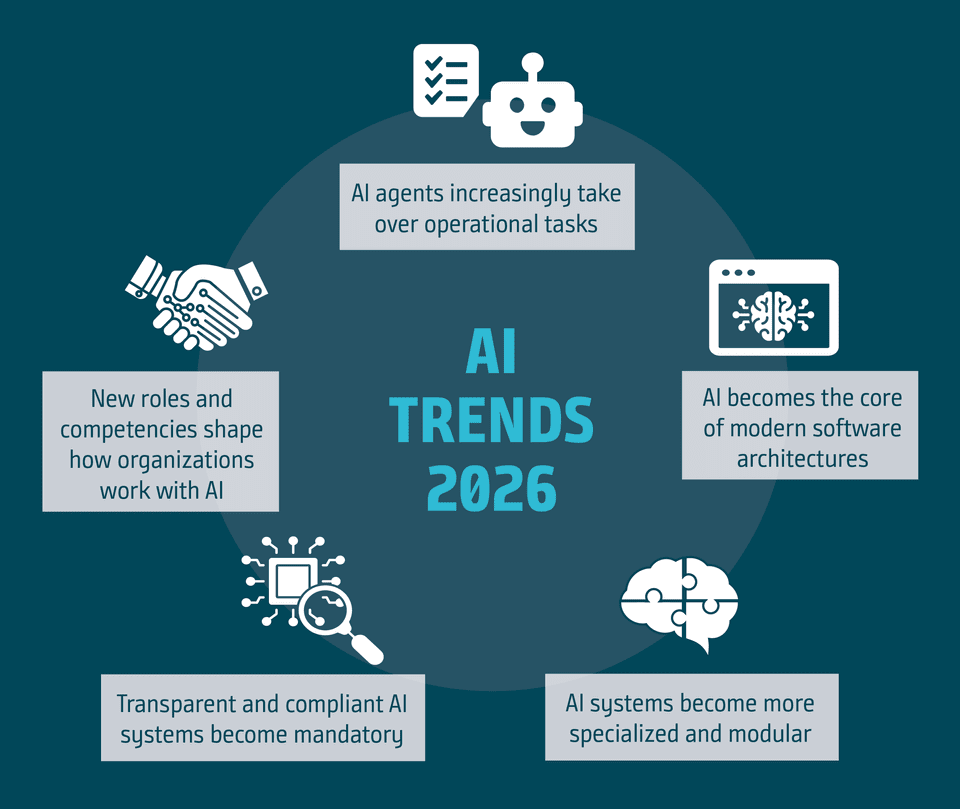
Source: INFORM - AI Trends 2026
What Companies Can Expect in 2026. In 2026, AI agents will play a far greater role in daily operations, monitoring workflows and preparing decisions in real time.