The Impact of AI Agents in Today's Industries

In recent times, Artificial Intelligence (AI) has become a significant force in transforming various industries, changing the way businesses function and deliver services. A key development in AI is the rise of AI agents, which are increasingly vital for improving efficiency and encouraging innovation. This article explores the various uses of AI agents, highlighting their influence on autonomous workflows, healthcare, and generative AI, while also considering the future possibilities for intelligent agents across different fields.
What Are AI Agents?
AI agents are software programs that perform tasks for users with different levels of independence. They can be classified based on their capabilities and autonomy into reactive agents, limited memory agents, theory of mind agents, and self-aware agents. The main functions of AI agents include learning from data, making decisions, and interacting with their surroundings to achieve specific objectives.

Agentic AI and Autonomous Agents
Agentic AI refers to AI systems that have some level of agency, meaning they can make independent choices and work towards achieving set goals. Autonomous agents, a type of agentic AI, function without human oversight. These agents are designed to comprehend their environment, make decisions, and carry out actions that align with their programmed goals.
Automating Workflows with AI
AI agents are essential for automating workflows by simplifying processes and minimizing the need for manual input. Workflow automation involves handling repetitive and time-consuming tasks, which boosts efficiency and reduces mistakes. AI agents can process large volumes of data, optimize operations, and offer insights that inform decision-making.

AI Agents in Healthcare
In the healthcare industry, AI agents are transforming patient care and administrative tasks. These agents can aid in diagnosis, monitor patient health, manage medical records, and even forecast disease outbreaks. By using machine learning and natural language processing, healthcare AI agents improve the accuracy and speed of medical services, ultimately enhancing patient outcomes.
The Function of Generative AI Agents
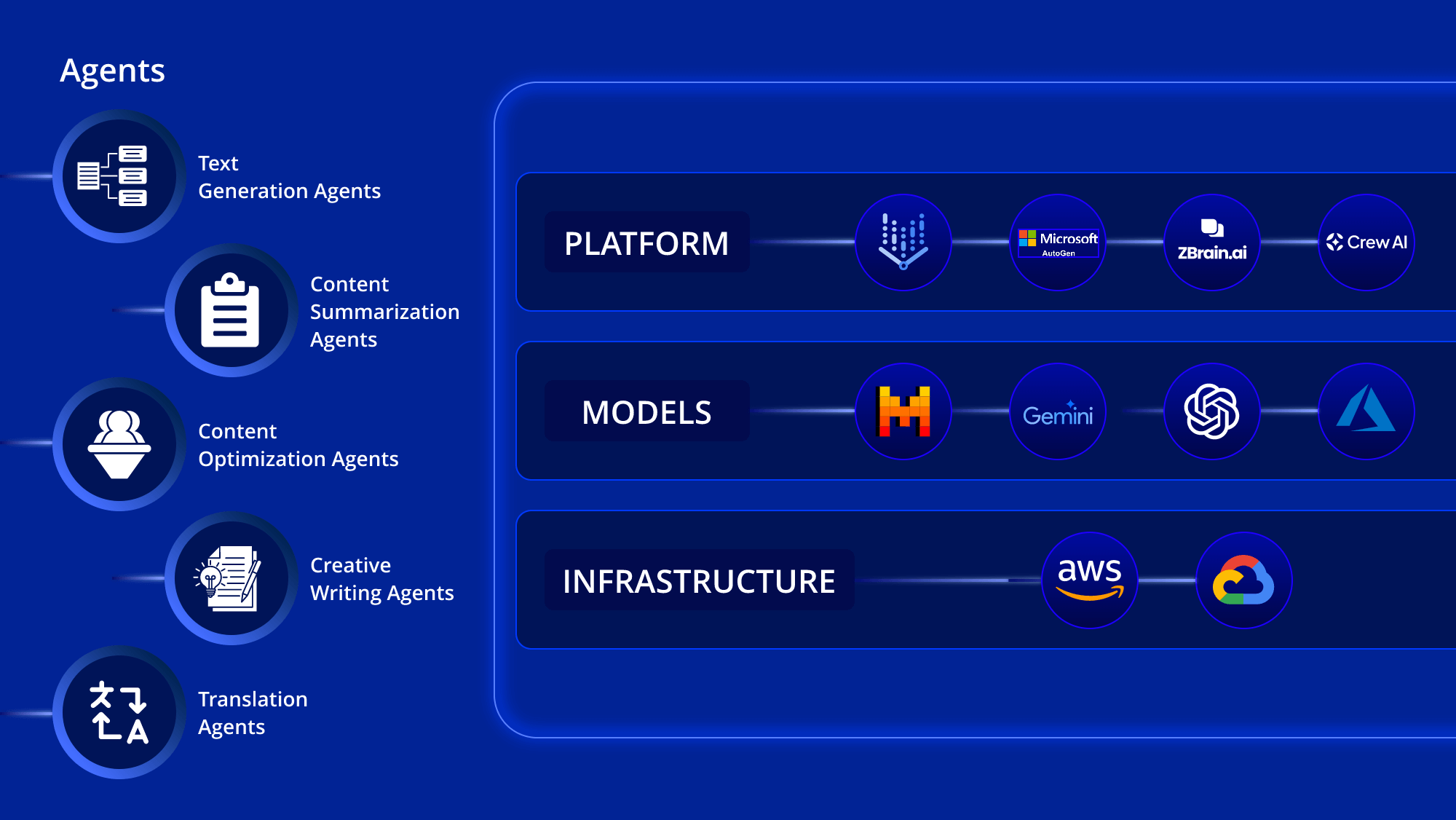
Generative AI agents are a specific type of AI focused on producing new content or data. These agents employ deep learning methods to create text, images, music, and other media forms. In sectors like entertainment, marketing, and design, generative AI agents play a crucial role in generating innovative content, customizing user experiences, and boosting engagement.
Intelligent Agents in Business
Intelligent agents are AI systems that can perceive their environment and take actions to achieve defined goals. In business, these agents are utilized for customer service, data analysis, and decision support. Examples include chatbots, virtual assistants, and recommendation systems, which enhance customer interactions and streamline business processes.
SEO and Content Enhancement
AI agents are also key in optimizing content for search engines. By examining search trends, keywords, and user behavior, AI agents assist businesses in creating SEO-friendly content that increases online visibility and drives traffic. These agents can continuously adapt to evolving algorithms, ensuring that content remains relevant and competitive.
Challenges and Ethical Issues
Despite the significant advantages of AI agents, there are challenges and ethical issues that need to be addressed. These include concerns about privacy, data security, and the risk of bias in AI algorithms. Ensuring transparency, accountability, and fairness in AI systems is crucial for building public trust and maximizing the positive effects of AI agents.
The Future of AI Agents
The outlook for AI agents is bright, with advancements in machine learning, natural language processing, and robotics leading to more sophisticated and capable systems. In healthcare, AI agents are expected to support personalized medicine and telemedicine, making healthcare more accessible and efficient. In business, AI agents will likely continue to transform customer service, supply chain management, and strategic planning.
Conclusion
AI agents are changing industries by automating tasks, improving decision-making, and creating new avenues for innovation. As these agents become more advanced and integrated into various sectors, they have the potential to significantly boost economic growth and enhance quality of life. However, addressing ethical concerns and ensuring responsible AI development is vital for realizing the full benefits of AI agents.