WHAT IS AN AGENT ?

In the swiftly evolving landscape of technology, AI agents stand out as transformative forces driving innovation and efficiency across various sectors. From autonomous decision-making to intelligent automation, AI agents are reshaping how businesses and individuals interact with technology. This article delves into the future of AI agents, exploring their roles in business automation, productivity enhancement, and the broader AI agent ecosystem. We also examine the impact of generative AI agents and the frameworks that support these advancements.
**AI Agents: The Cornerstone of Intelligent Automation**
AI agents are software entities that perform tasks autonomously, utilizing artificial intelligence and machine learning algorithms to make decisions and execute actions. These agents are pivotal in intelligent automation, where they streamline processes, reduce human intervention, and enhance operational efficiency. By learning from data, AI agents can predict outcomes, optimize workflows, and provide insights that drive strategic decisions.
**Autonomous Decision-Making: Empowering Machines to Act**
At the heart of AI agents is their ability to make autonomous decisions. Leveraging vast amounts of data and advanced algorithms, these agents analyze complex scenarios and choose the best course of action. This capability is crucial in sectors like finance, healthcare, and logistics, where timely and accurate decisions are essential. For instance, in healthcare, AI agents can assist in diagnosing diseases and recommending treatment plans, thereby improving patient outcomes.
**The AI Agent Ecosystem: A Collaborative Network**
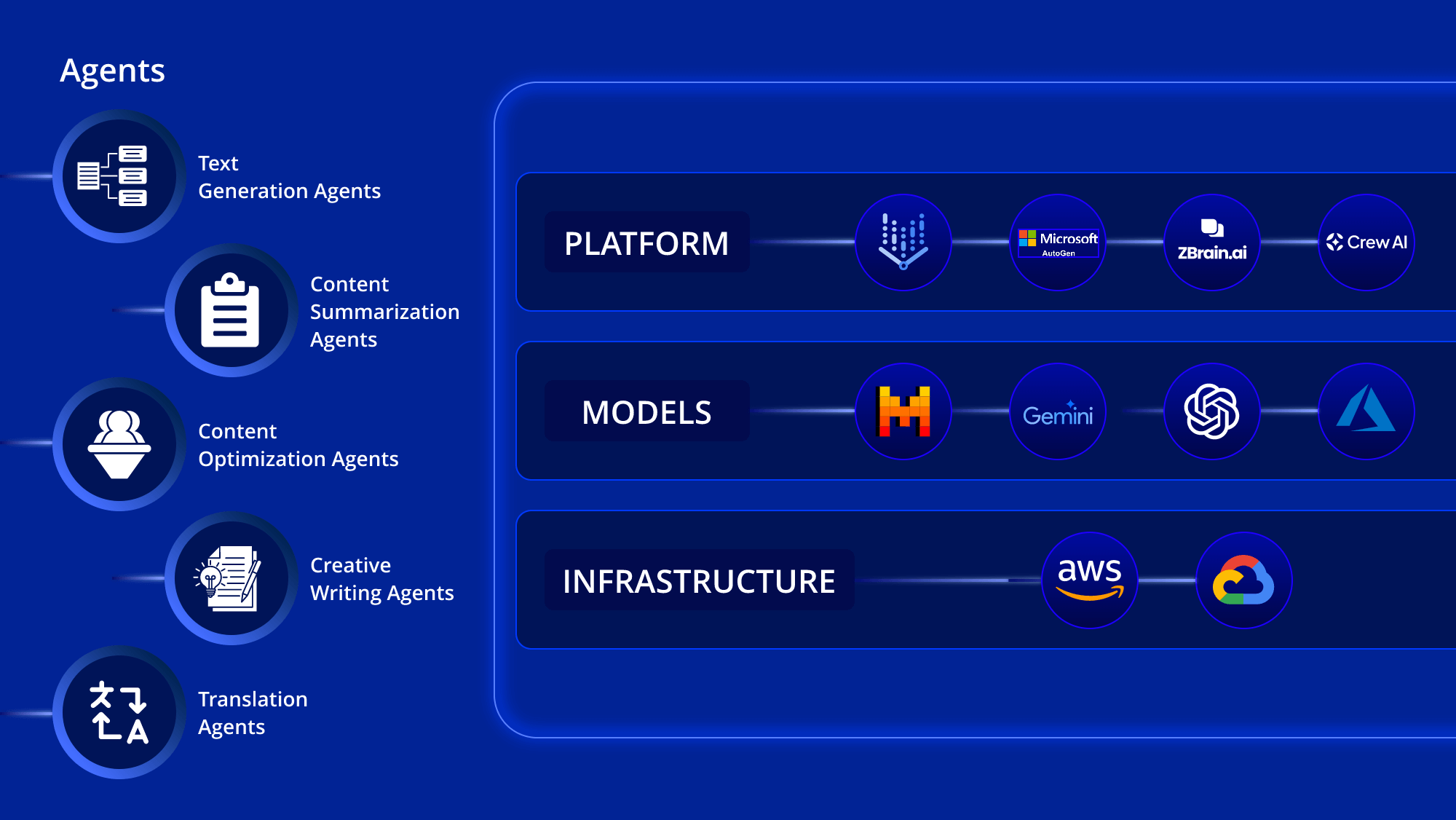
The AI agent ecosystem is a collaborative network of technologies, platforms, and applications that work together to enhance the capabilities of AI agents. This ecosystem includes machine learning frameworks, cloud computing services, and data analytics tools, all of which contribute to the development and deployment of AI agents. As this ecosystem grows, it facilitates the integration of AI agents into various industries, driving innovation and efficiency.
**Generative AI Agents: Creating New Possibilities**
Generative AI agents represent a significant leap forward in AI technology. Unlike traditional agents that perform predefined tasks, generative AI agents can create new content, ideas, and solutions. These agents use techniques like deep learning and neural networks to generate creative outputs, such as art, music, and even software code. In business, generative AI agents can design marketing campaigns, develop product prototypes, and innovate customer experiences.
**AI in Business Automation: Transforming Operations**
AI agents are instrumental in business automation, where they optimize processes, reduce costs, and improve productivity. By automating routine tasks, such as data entry and customer service, AI agents free up human resources for more strategic activities. In manufacturing, AI agents can oversee production lines, ensuring quality control and minimizing downtime. In retail, they personalize customer interactions, enhancing satisfaction and loyalty.
**AI-Driven Innovation: Pioneering New Frontiers**
The integration of AI agents into various sectors fosters AI-driven innovation, where new products, services, and business models emerge. Companies are leveraging AI agents to explore uncharted territories, such as personalized healthcare, smart cities, and autonomous vehicles. This innovation is not only transforming industries but also creating new opportunities for economic growth and societal advancement.
**Enhancing Productivity with AI Agents**
AI agents significantly enhance productivity by automating time-consuming tasks and providing actionable insights. In the workplace, AI agents can manage schedules, organize meetings, and analyze performance metrics, allowing employees to focus on creative and strategic endeavors. By improving efficiency and reducing errors, AI agents contribute to a more productive and dynamic work environment.
**AI Agent Frameworks: Building the Future**
To support the development and deployment of AI agents, robust frameworks are essential. These frameworks provide the tools and infrastructure needed to create, train, and deploy AI agents at scale. Popular frameworks like TensorFlow, PyTorch, and Apache MXNet offer comprehensive libraries and resources for developers to build sophisticated AI models. As these frameworks evolve, they will continue to drive advancements in AI technology, enabling more powerful and versatile AI agents.
**The Road Ahead: Challenges and Opportunities**
While the future of AI agents is promising, several challenges must be addressed to realize their full potential. Issues such as data privacy, ethical considerations, and the need for robust regulatory frameworks are critical. Ensuring that AI agents operate transparently and fairly is essential to gaining public trust and maximizing their benefits.
**Conclusion: Embracing the AI Agent Revolution**
The future of AI agents is bright, with endless possibilities for transforming industries and enhancing human capabilities. As AI agents become more sophisticated and integrated into our daily lives, they will drive significant advancements in autonomous decision-making, intelligent automation, and productivity. By embracing the AI agent revolution, businesses and individuals can unlock new levels of innovation and efficiency, paving the way for a smarter, more connected world.
In conclusion, AI agents are at the forefront of technological progress, reshaping how we live and work. By harnessing their potential, we can create a future where intelligent machines work alongside humans to solve complex problems and improve our quality of life. The journey of AI agents is just beginning, and the road ahead is filled with exciting opportunities for growth and discovery.