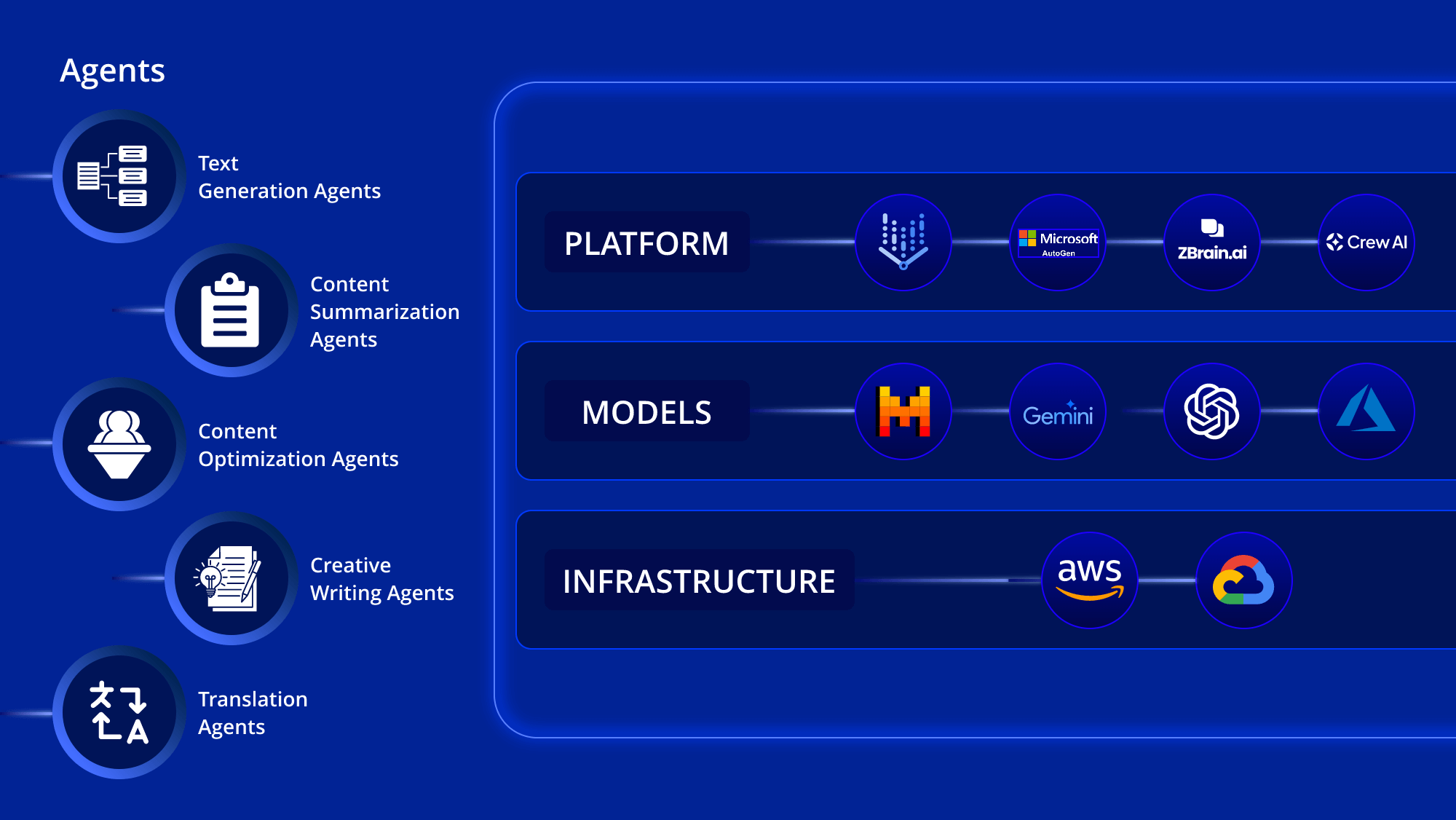
Exploring AI Agents: Revolutionizing the Future with Intelligent Automation
Exploring AI Agents: Revolutionizing the Future with Intelligent Automation
In the rapidly evolving landscape of technology, AI agents have emerged as pivotal tools, transforming how businesses and individuals interact with digital systems. These autonomous software programs, designed to perform specific tasks, have become integral in streamlining operations, enhancing customer experiences, and driving innovation across various sectors. This article delves into the world of AI agents, exploring their functionalities, applications, and the future they promise.
Understanding AI Agents
AI agents are intelligent systems that perceive their environment and take actions to achieve specific goals. They leverage advanced algorithms, machine learning, and data analytics to make informed decisions, often in real-time. Unlike traditional software, which requires explicit instructions for every task, AI agents can learn from data, adapt to new information, and improve their performance over time.
There are several types of AI agents, each designed for distinct purposes:
- Reactive Agents: These agents operate solely based on the current environment, without relying on historical data. They react to immediate stimuli to perform tasks, making them suitable for straightforward applications like basic robotics.
- Model-Based Agents: These agents maintain an internal model of the world, enabling them to plan actions by considering potential future outcomes. They are more sophisticated than reactive agents and are used in complex decision-making scenarios.
- Goal-Based Agents: These agents are designed to achieve specific objectives. They evaluate different strategies to determine the most effective path to their goals, making them ideal for tasks that require strategic planning.
- Utility-Based Agents: These agents assess the desirability of different outcomes and make decisions based on maximizing utility. They are often employed in scenarios where trade-offs are necessary, such as resource allocation.
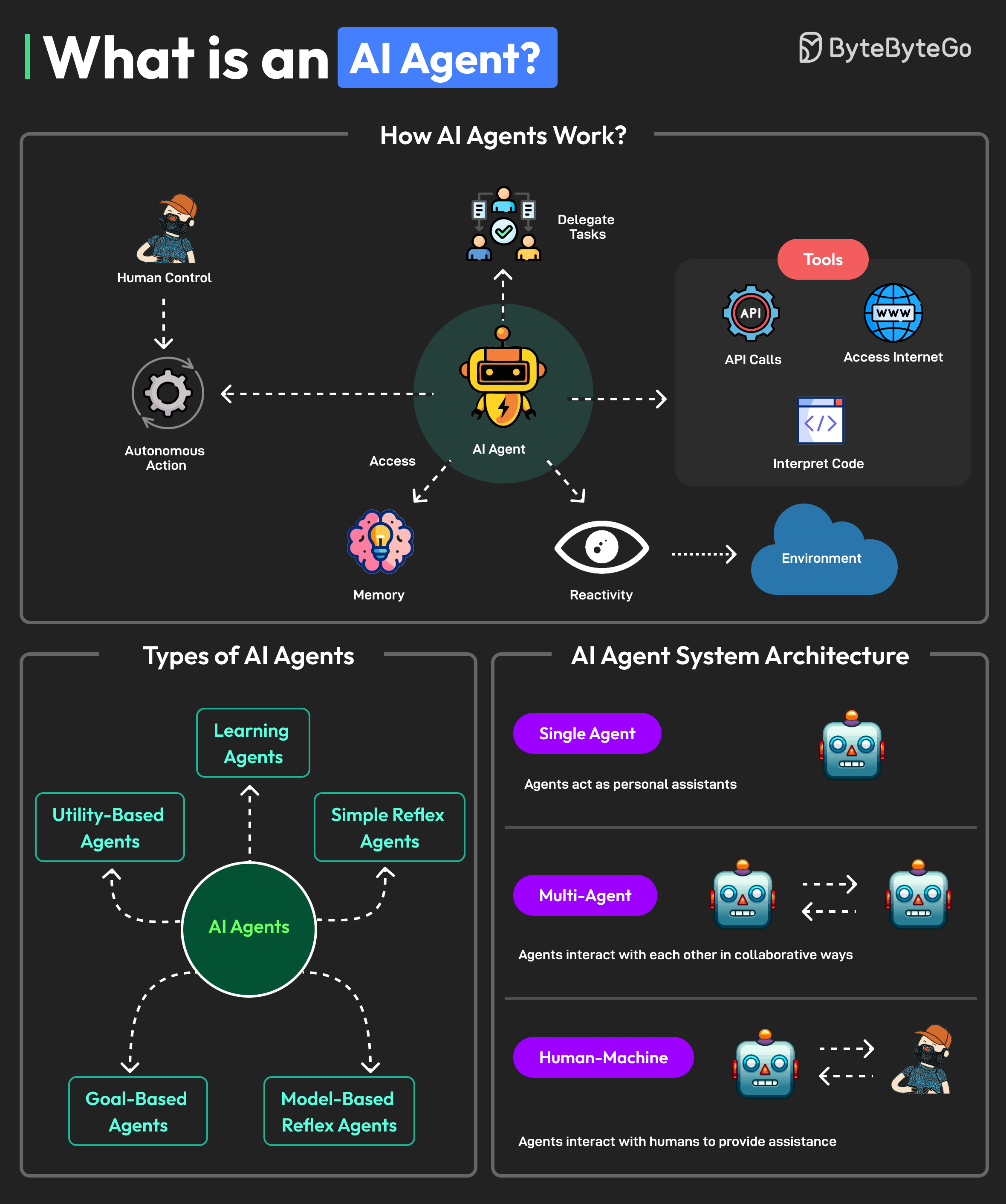
Source: ByteByteGo: What is an AI Agent?
Applications of AI Agents
AI agents are revolutionizing various industries by automating tasks, improving efficiency, and enhancing user experiences. Some notable applications include:
- Customer Service: AI agents, such as chatbots and virtual assistants, are transforming customer service by providing instant, round-the-clock support. They can handle routine inquiries, process transactions, and even resolve complaints, allowing human agents to focus on more complex issues.
- Healthcare: In healthcare, AI agents are used for diagnostics, patient monitoring, and personalized treatment plans. They analyze medical data to identify patterns and make recommendations, improving patient outcomes and reducing the burden on healthcare professionals.
- Finance: AI agents in finance are used for fraud detection, risk assessment, and algorithmic trading. They analyze vast amounts of data to identify anomalies, predict market trends, and make investment decisions, enhancing the accuracy and speed of financial operations.
- Manufacturing: In manufacturing, AI agents optimize production processes, monitor equipment health, and manage supply chains. They enable predictive maintenance, reducing downtime and increasing productivity.
- Transportation: Autonomous vehicles are a prime example of AI agents in transportation. These vehicles use sensors and AI algorithms to navigate safely, reducing accidents and improving traffic flow.
- Entertainment: AI agents personalize content recommendations, generate music and art, and even participate in video game development. They enhance user engagement by providing tailored experiences.

Source: LeewayHertz: AI agents for data analysis
The Future of AI Agents
As technology advances, AI agents are expected to become even more sophisticated and integral to daily life. Several trends are likely to shape the future of AI agents:
- Increased Autonomy: AI agents will gain greater autonomy, enabling them to perform complex tasks with minimal human intervention. This will lead to more efficient operations and new opportunities for innovation.
- Enhanced Human-AI Collaboration: The future will see improved collaboration between humans and AI agents. By augmenting human capabilities, AI agents will empower individuals to make better decisions and achieve more significant outcomes.
- Ethical and Responsible AI: As AI agents become more prevalent, there will be an increased focus on ethical considerations. Ensuring transparency, accountability, and fairness in AI systems will be crucial to building trust and preventing bias.
- Integration with IoT: The integration of AI agents with the Internet of Things (IoT) will create a seamless network of connected devices. AI agents will manage these devices, optimizing energy consumption, improving security, and enhancing user experiences.
- Natural Language Processing (NLP) Advancements: Advances in NLP will enable AI agents to understand and respond to human language more effectively. This will lead to more intuitive interactions and broader adoption of AI-powered solutions.
- Personalization and Customization: AI agents will offer highly personalized experiences, tailoring their actions to individual preferences and needs. This will enhance user satisfaction and drive loyalty in various domains.

Source: Pinecone: LangGraph and Research Agents
Challenges and Considerations
While AI agents offer numerous benefits, their widespread adoption comes with challenges and considerations:
- Data Privacy and Security: AI agents rely on vast amounts of data to function effectively. Ensuring data privacy and security is paramount to prevent unauthorized access and protect sensitive information.
- Bias and Fairness: AI agents can inadvertently perpetuate biases present in training data. Addressing bias and ensuring fairness in AI systems is critical to avoid discriminatory outcomes.
- Job Displacement: The automation of tasks by AI agents may lead to job displacement in certain sectors. Reskilling and upskilling the workforce will be essential to mitigate the impact on employment.
- Regulation and Governance: Developing appropriate regulations and governance frameworks will be necessary to oversee the deployment and use of AI agents. These frameworks should balance innovation with ethical considerations.
- Technical Limitations: Despite advancements, AI agents may encounter technical limitations, such as difficulty understanding complex human emotions or handling ambiguous situations. Continued research and development are needed to overcome these hurdles.
Conclusion
AI agents are transforming the way we interact with technology, offering unprecedented opportunities for automation, efficiency, and innovation. As they continue to evolve, AI agents will play an increasingly vital role in shaping the future, driving progress across industries and enhancing the quality of life for individuals. By addressing challenges and embracing opportunities, we can harness the full potential of AI agents to create a smarter, more connected world.