Exploring AI Agents: Revolutionizing Industries and Boosting Efficiency

Artificial Intelligence (AI) is changing the way companies function, leading to more streamlined processes and better customer experiences. Key areas of AI, such as autonomous agents, agentic AI, generative AI agents, AI workflow automation, and applications in healthcare and customer service, play a vital role in this shift. This article examines these important aspects and how AI is transforming various sectors and enhancing operations.
What Are AI Agents and Their Key Elements?
AI agents are software applications that can perform tasks on their own. These agents can sense their surroundings, make decisions, and take actions to reach specific goals. The main elements of AI agents include perception, reasoning, learning, and action.
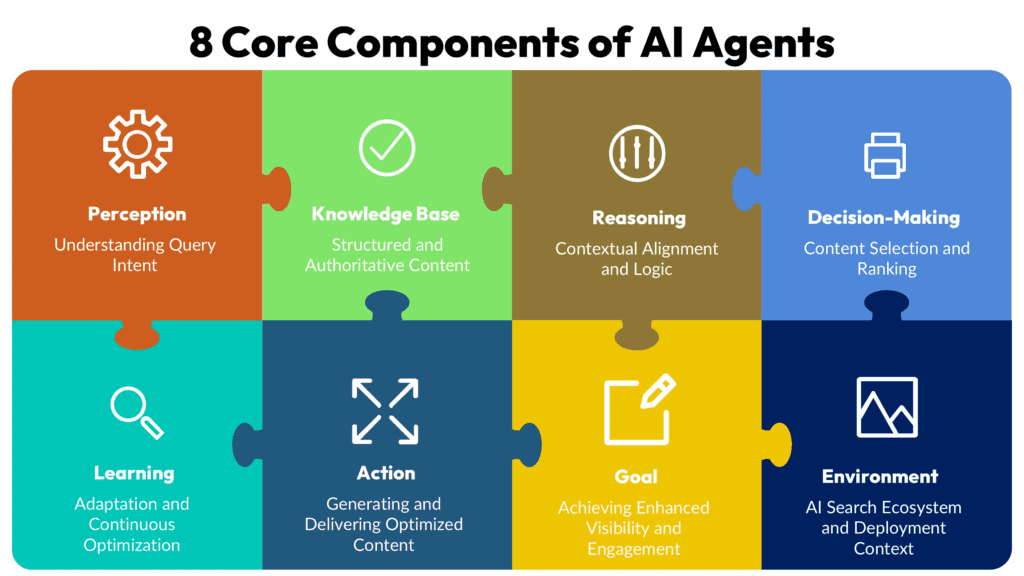
- Perception refers to collecting information from the environment using sensors or input devices.
- Reasoning is the decision-making process based on the gathered information.
- Learning allows agents to adjust to new circumstances by reviewing past experiences.
- Action is the implementation of decisions to achieve the intended results.
Autonomous Agents and Agentic AI
Autonomous agents are built to function independently without human oversight. They can make choices and carry out tasks in changing environments. Agentic AI describes AI systems that can operate autonomously to meet specific goals. This feature is crucial for applications like self-driving vehicles, robotic process automation, and smart personal assistants.
Generative AI Agents
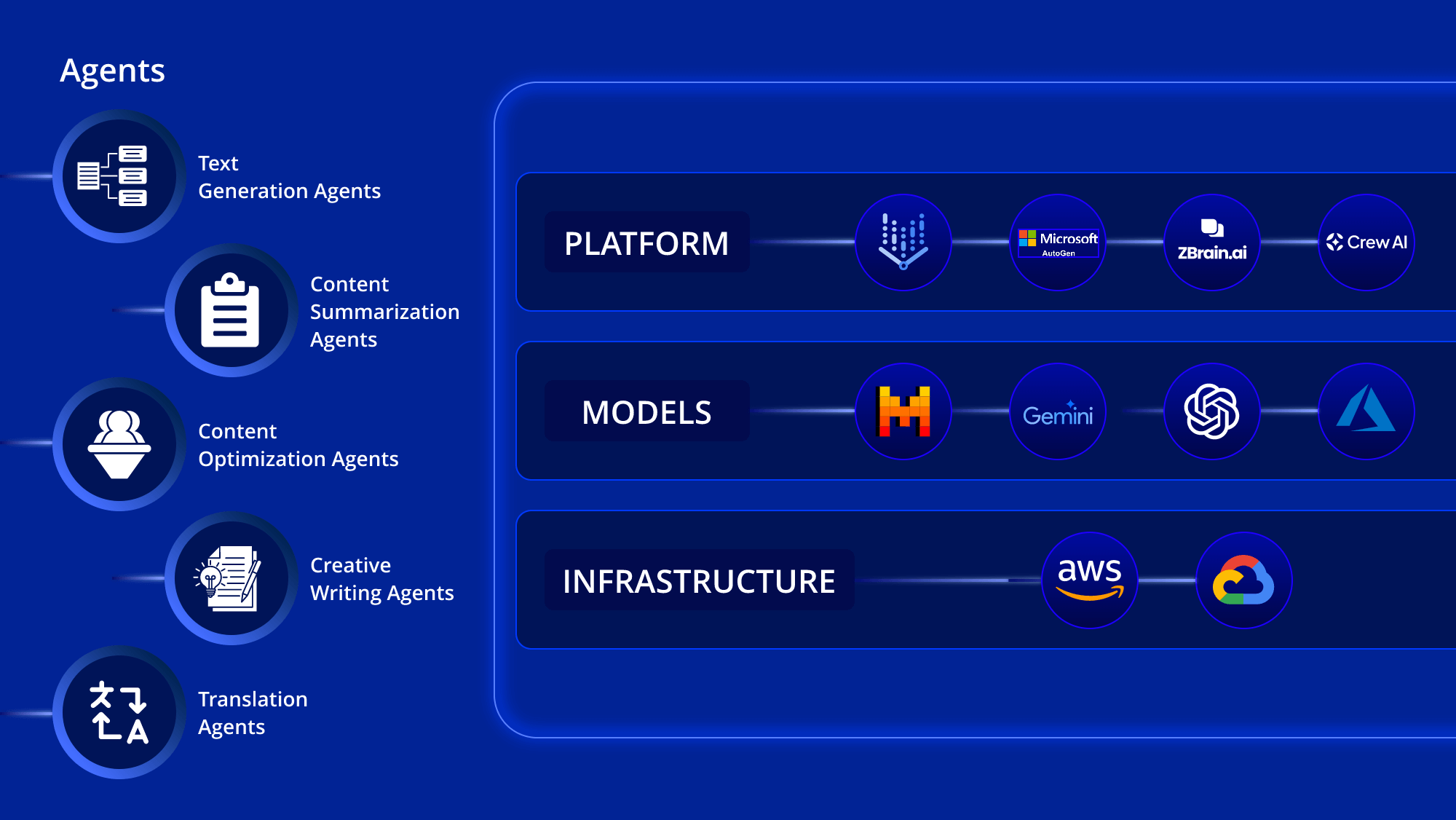
Generative AI agents represent a branch of AI that focuses on content creation instead of just analysis. These agents utilize algorithms to produce text, images, music, and other media types. A well-known example is OpenAI's GPT (Generative Pre-trained Transformer) model, which generates human-like text based on prompts.
AI Workflow Automation
AI workflow automation uses AI technologies to simplify and automate business processes. By incorporating AI into workflows, organizations can lessen manual work, enhance accuracy, and accelerate operations. AI-driven automation tools can manage repetitive tasks like data entry, invoice processing, and customer inquiries, allowing human employees to focus on more strategic roles.

AI in Healthcare
AI is making notable progress in healthcare, providing solutions that enhance patient care, diagnostics, and operational efficiency. AI systems can analyze large volumes of medical data to detect patterns and forecast outcomes, resulting in more precise diagnoses and tailored treatment plans.

Customer Service AI
In customer service, AI agents are improving how businesses engage with customers. Chatbots and virtual assistants, powered by NLP and machine learning, offer immediate support and personalized experiences. These AI agents can comprehend and respond to customer questions, resolve issues, and even suggest products.
Conclusion
AI agents, with their wide range of applications and capabilities, are transforming industries and redefining business practices. From autonomous agents and generative AI to workflow automation and AI in healthcare and customer service, these technologies are improving efficiency, accuracy, and customer satisfaction.
