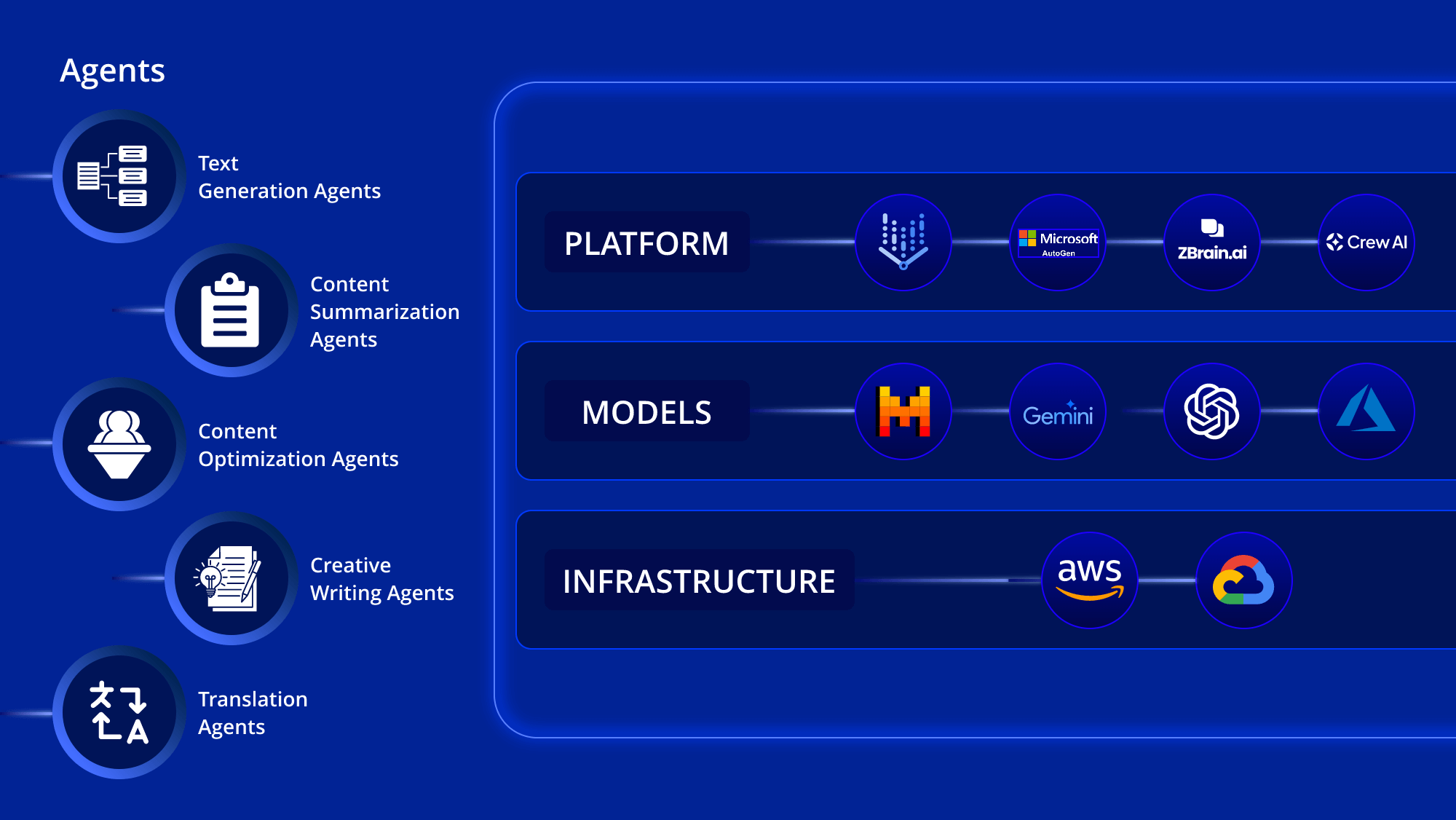
AI Agents: Transforming Industries with Agentic AI

In the fast-changing world of technology, Artificial Intelligence (AI) has become a key driver of innovation across different sectors. One of the most fascinating advancements in AI is the development of AI agents, which include autonomous agents, agentic AI, AI workflow automation, and healthcare AI agents. These agents are changing the way businesses function, improving efficiency, and opening up new opportunities for growth. This article will delve into the main aspects of AI agents, their uses, and their effects on various industries, especially healthcare.
Understanding AI Agents
AI agents are software programs designed to perform tasks on their own. They can sense their surroundings, make choices, and take actions to achieve specific objectives. These agents can range from basic scripts that automate repetitive tasks to advanced systems capable of complex decision-making. The foundation of AI agents consists of algorithms, data, and computing power, which allow them to learn, adapt, and improve over time.
Autonomous Agents: The Power of Independence
Autonomous agents are a type of AI agent known for their ability to function independently without human input. They can evaluate situations, make decisions, and take actions based on established rules or learned experiences. These agents are commonly employed in sectors like finance, manufacturing, and logistics to enhance processes and minimize human error.
Agentic AI: The Next Frontier
Agentic AI refers to AI systems that demonstrate agency, meaning they can set goals, plan actions, and adapt to changing circumstances on their own. This level of intelligence allows AI agents to address complex issues that require long-term planning and strategic decision-making.
AI Workflow Automation: Streamlining Business Processes
AI workflow automation uses AI agents to simplify and optimize business processes. These agents automate routine tasks, reducing the need for human involvement and allowing personnel to focus on more strategic activities. For instance, in customer service, AI chatbots manage common inquiries, enabling human agents to tackle more complicated issues.

Healthcare AI Agents: Revolutionizing Patient Care
The healthcare sector is undergoing a significant transformation with the integration of AI agents. These agents are essential in diagnosing diseases, predicting patient outcomes, and personalizing treatment plans. AI-powered diagnostic tools analyze medical images and patient data to help clinicians make accurate diagnoses.

Generative AI Agents: Creating Content and Solutions
Generative AI agents are a specialized type of AI agent capable of producing content, designs, and solutions. These agents utilize deep learning algorithms to create creative outputs, including artwork, music, architectural designs, and software code.
Core Components of AI Agents
The effectiveness of AI agents relies on several key components:
- Perception: AI agents use sensors and data sources to understand their environment, gathering necessary information for decision-making through visual inputs, audio signals, and data streams.
- Decision-Making: AI agents employ algorithms and models to analyze data and make informed choices, evaluating options and selecting the best actions.
- Learning: Machine learning techniques allow AI agents to learn from their experiences and improve over time.
- Adaptation: AI agents must be able to adjust to changing circumstances and environments.
- Communication: Effective communication is vital for AI agents interacting with humans or other systems.

Conclusion: The Future of AI Agents
AI agents are set to transform industries by improving efficiency, fostering innovation, and creating new opportunities. As technology continues to advance, the capabilities of AI agents will grow, enabling them to address increasingly complex challenges. In healthcare, finance, manufacturing, and beyond, AI agents are changing how businesses operate, leading to a future where intelligent systems collaborate with humans to achieve common goals.