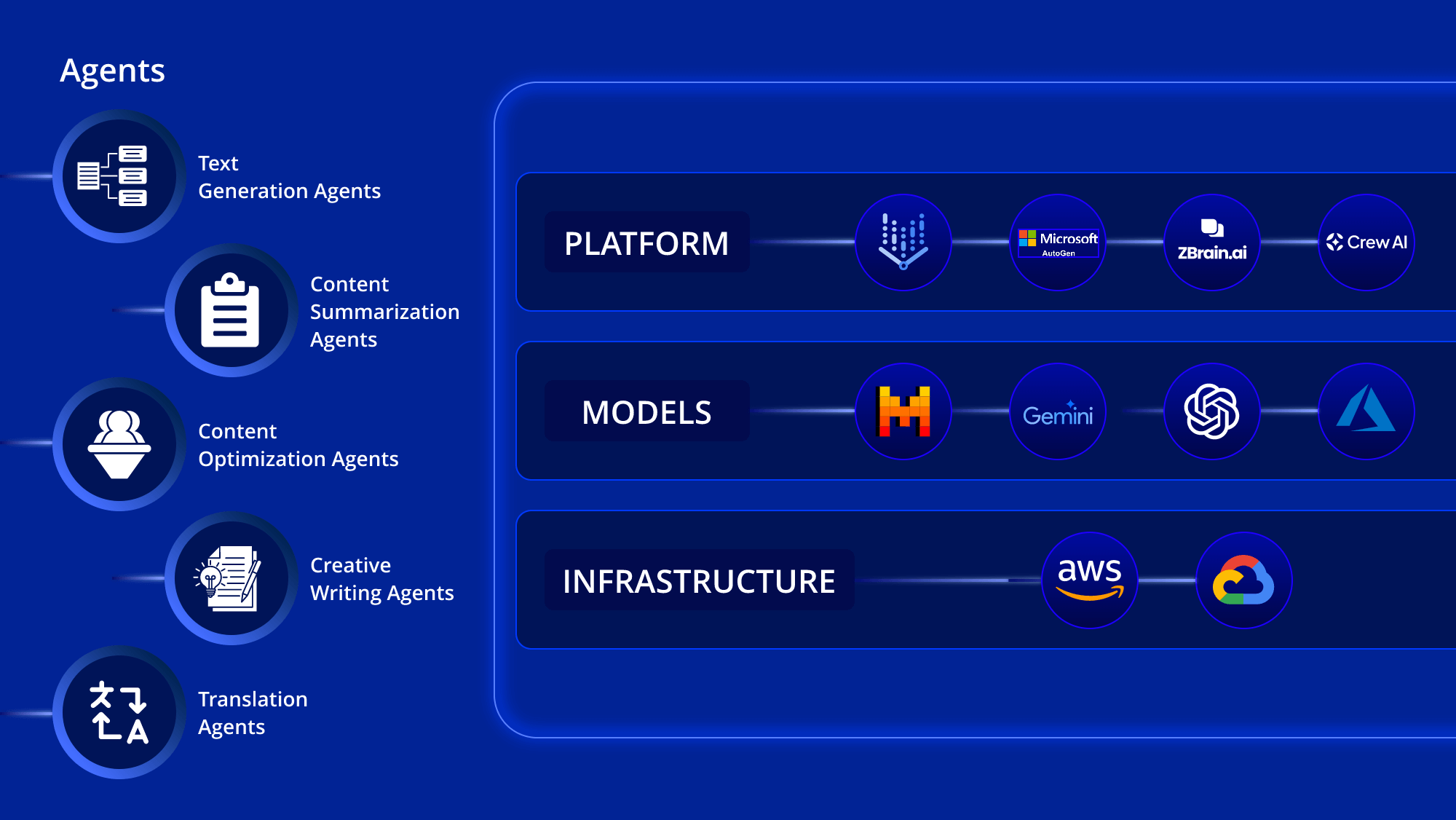
AI Agents: Revolutionizing Modern Automation
AI Agents: Revolutionizing Modern Automation
Introduction
AI agents are at the forefront of technological innovation, transforming industries by automating tasks, improving decision-making, and boosting efficiency. These intelligent systems utilize artificial intelligence to streamline workflows, reduce errors, and enhance productivity across sectors such as healthcare, marketing, finance, and customer service.

What Is an Agent?
In its broadest sense, an agent is an entity capable of performing actions on behalf of another. This can encompass a wide range of applications, from human representatives to autonomous software programs. Agents are designed to carry out tasks, make decisions, and interact with their environment to achieve specific goals.
.webp)
Types of Agents
- Human Agents:
- Real Estate Agents: Assist in buying, selling, or renting properties with market expertise and negotiation skills.
- Travel Agents: Curate travel experiences, offering itineraries, booking services, and destination advice.
- Insurance Agents: Advise on selecting insurance policies tailored to individual and business needs.
- Software Agents:
- Chatbots: Automated programs that engage with users, providing support, information, or entertainment.
- Virtual Assistants: AI-driven applications like Siri or Alexa that perform tasks via voice commands.
- Intelligent Agents: Systems that observe their environment and take actions to achieve objectives, often in AI applications.
- Autonomous Agents:
- Robotic Agents: Machines with sensors and actuators performing physical tasks in manufacturing, exploration, and beyond.
- Autonomous Vehicles: Self-driving cars and drones navigating environments without human intervention.

The Role of Agents in Modern Society
- Enhancing Efficiency: Agents automate routine tasks—like chatbots handling customer inquiries—freeing humans for complex work.
- Facilitating Decision-Making: AI agents analyze vast datasets to deliver insights and recommendations for optimized operations.
- Improving Customer Experience: Personalized interactions and timely assistance via virtual assistants boost satisfaction.
- Enabling Innovation: Autonomous agents, such as drones, revolutionize agriculture, logistics, and emergency response.

Challenges and Considerations
- Ethical Concerns: Address privacy, accountability, and job displacement by establishing clear guidelines and regulations.
- Reliability and Security: Ensure agents are robust and secure to prevent data breaches and operational disruptions.
- Human-Agent Collaboration: Design systems that leverage the strengths of both humans and agents for optimal performance.
Future Prospects
Advancements in AI and robotics promise more sophisticated agents. From smart homes to healthcare, agents will be integral to daily life, offering new opportunities and challenges.
Conclusion
AI agents are transforming how we interact with technology and conduct business. By understanding their roles and capabilities, organizations can harness their power to drive innovation and efficiency. As this field evolves, AI agents will remain at the heart of progress, shaping the future of society.