AI Agents in 2026: Transforming Automation with Agentic AI and Autonomous Systems
A Deep Dive into AI Agents: Understanding Agentic AI, Autonomous Agents, and Multi-Agent Systems
In the fast-paced world of technology today, artificial intelligence (AI) has emerged as a key driver of change, revolutionizing various sectors and altering our interactions with technology. A notable area of focus within AI is the development of AI agents, agentic AI, autonomous agents, and multi-agent systems. These elements are essential for creating intelligent systems that can function independently, collaborate, or navigate complex scenarios. This article examines these AI concepts, highlighting their definitions, roles, and real-world applications.

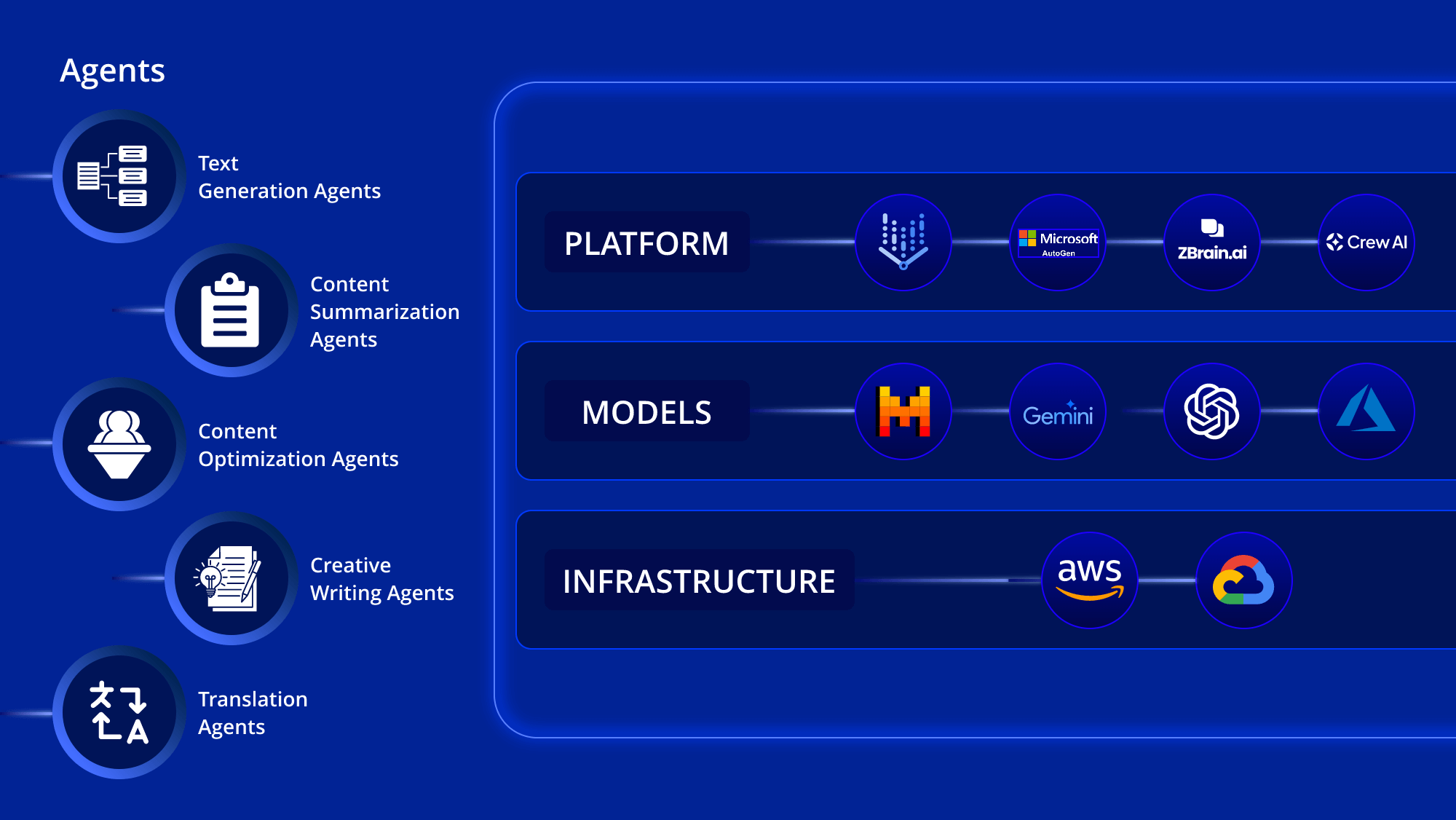
Image source: AI Agents & Agentic AI - AI Agents are autonomous software entities designed to perform specific tasks.
Defining AI Agents
An AI agent is a software program that observes its surroundings using sensors and interacts with that environment through actuators. These agents are engineered to carry out tasks autonomously and make decisions aimed at achieving defined objectives. They are distinguished by their capacity to learn from experiences, adapt to changes, and demonstrate intelligent behavior.
Agentic AI: Fostering Independence
Agentic AI refers to the ability of AI systems to make autonomous decisions and take actions without human input. These systems possess a level of agency that enables them to function independently. Agentic AI is crucial for creating intelligent systems that can tackle complex challenges, optimize processes, and improve user experiences.
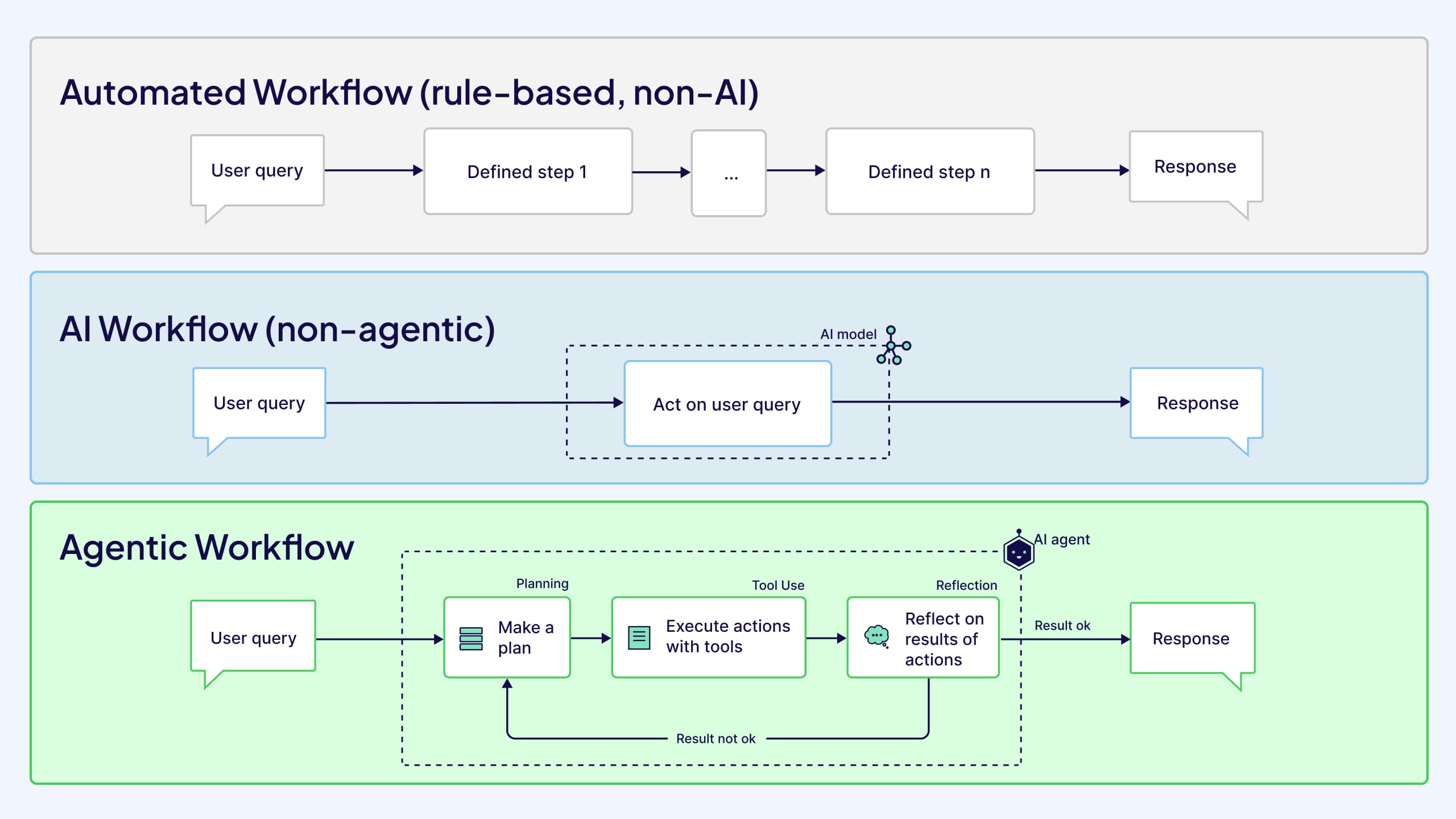
Image source: What Are Agentic Workflows? - Understanding agentic workflows and AI agents components.
The main benefit of agentic AI is its ability to manage dynamic environments. By analyzing real-time data and adjusting strategies as needed, these agents can achieve the best possible results.
Autonomous Agents: Operating Independently
Autonomous agents represent a category of AI agents that work independently to accomplish specific tasks.
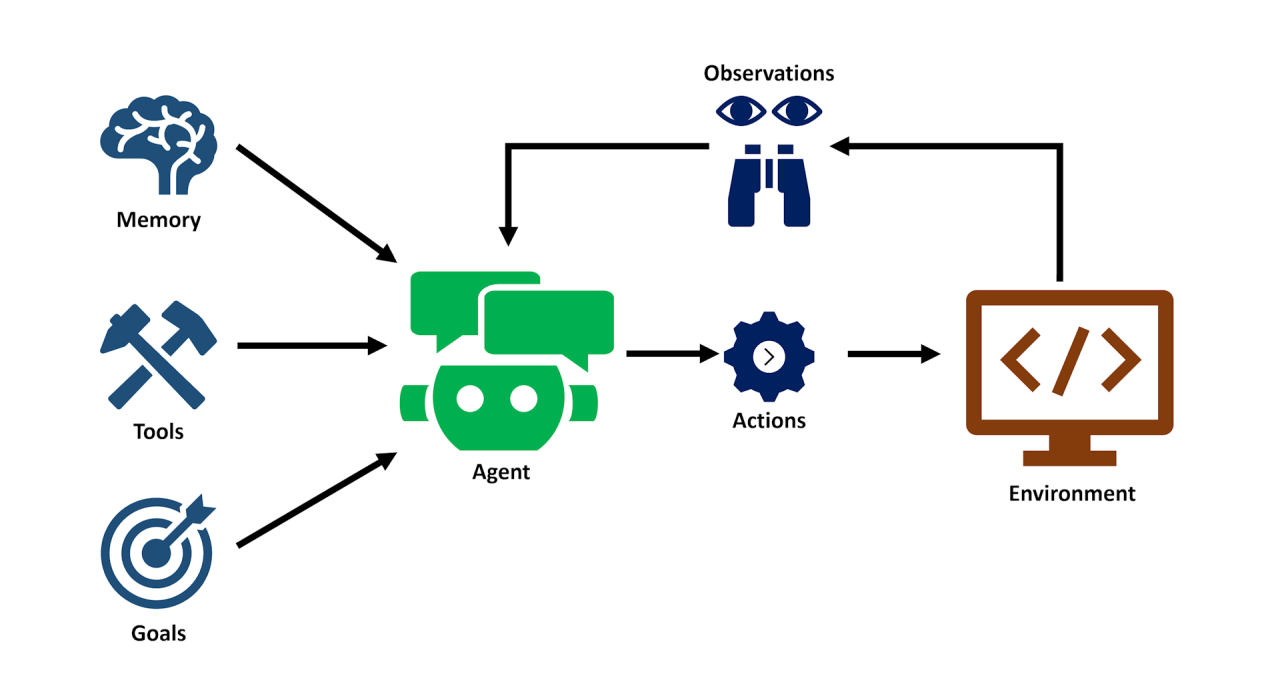
Image source: Agentic AI: A deep dive - The future of automation with agentic AI.
Multi-Agent Systems: Enhancing Collaboration
While individual AI agents are effective, multi-agent systems elevate intelligence through collaboration.
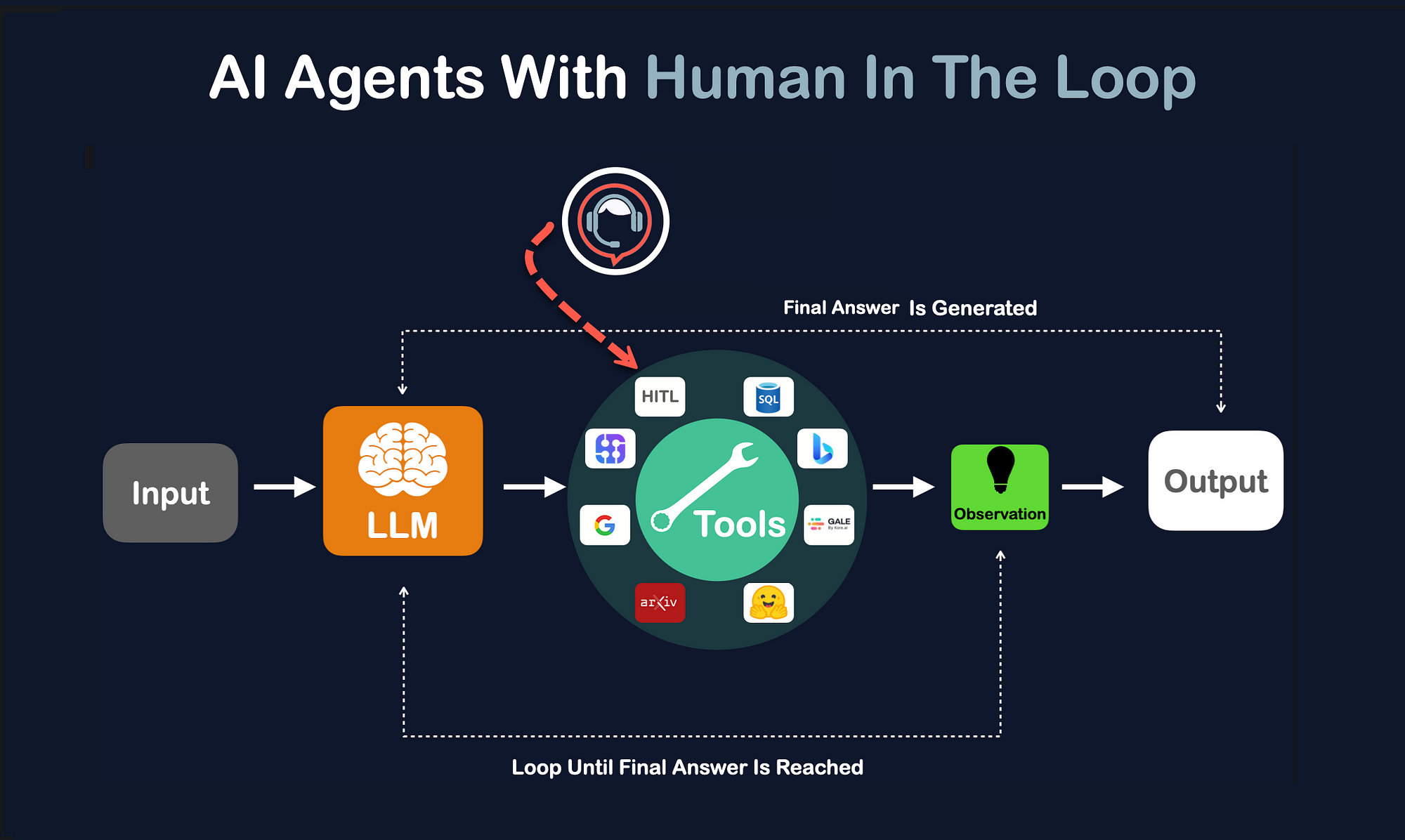
Image source: AI Agents With Human In The Loop - Agentic applications with human oversight.
Agent Workflows: Boosting Productivity
AI agents are structured to execute specific tasks through clearly defined workflows.
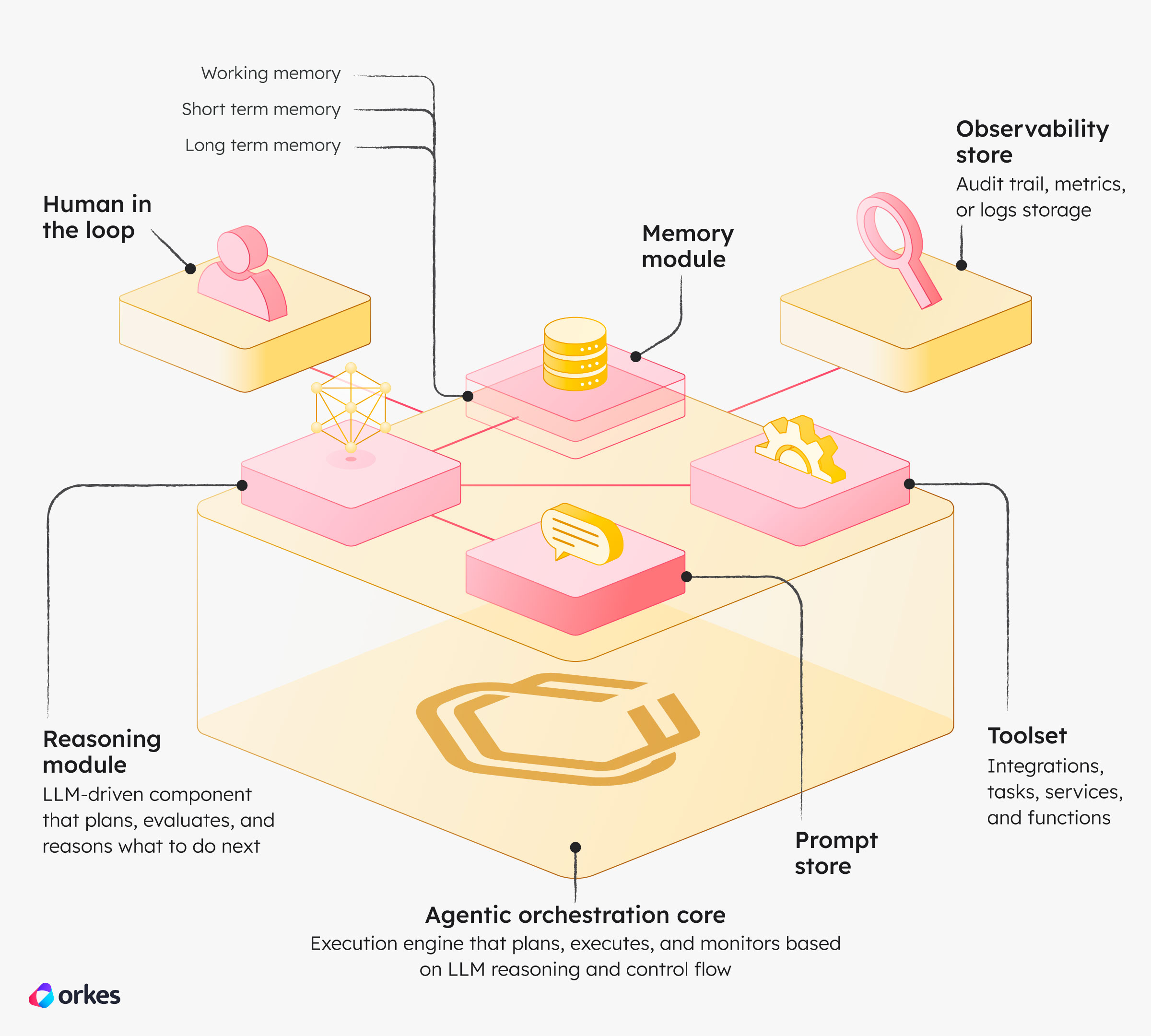
Image source: Agentic AI Explained: Workflows vs Agents - Agentic workflows layer.
Applications of AI Agents Across Industries
- Healthcare: AI agents are revolutionizing healthcare by assisting in diagnosis, treatment planning, and patient monitoring. Virtual health assistants provide personalized health advice, while autonomous agents analyze medical images to detect anomalies.
- Finance: In the financial sector, AI agents are employed for algorithmic trading, fraud detection, and customer service. These agents analyze market trends, execute trades, and respond to customer inquiries, ensuring seamless operations.
- Manufacturing: Autonomous agents are used in manufacturing to optimize production processes, monitor equipment health, and ensure quality control.
- Transportation: Autonomous vehicles, powered by AI agents, are transforming transportation.
- Retail: In the retail industry, AI agents enhance customer experiences by personalizing recommendations.
Challenges and Future Prospects
While AI agents offer numerous benefits, they also pose challenges that require careful consideration. Ensuring data privacy, addressing ethical concerns, and maintaining transparency in decision-making are critical aspects that must be addressed as AI agents become more prevalent.
The future of AI agents holds exciting possibilities. As technology advances, these agents will become more sophisticated, capable of understanding human emotions, and engaging in natural language conversations.
Conclusion
AI agents, agentic AI, autonomous agents, and multi-agent systems are driving the evolution of intelligent systems that are transforming industries and improving lives. From empowering autonomy to facilitating collaboration, these AI paradigms are shaping the future of technology.