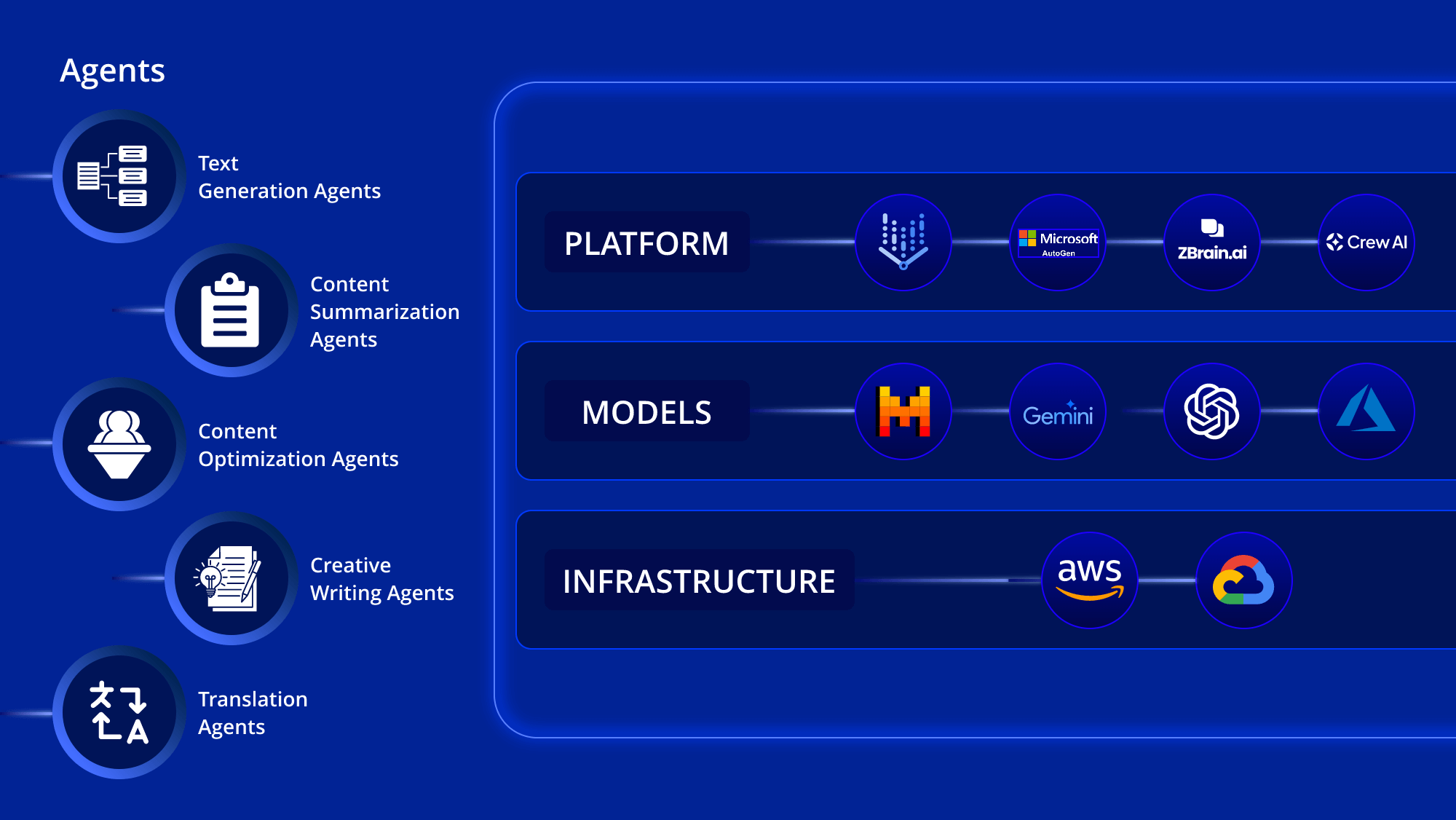
AI Agents: Catalysts of Digital Transformation

AI Agents: Catalysts of Digital Transformation
AI agents are revolutionizing the digital landscape, driving automation, efficiency, and innovation across various industries.
Understanding AI Agents
AI agents are advanced software programs that autonomously perform tasks using machine learning and data analytics. They analyze environments, process information, and make decisions, proving invaluable across various sectors.
Key Applications of AI Agents
- Customer Support: AI agents provide real-time assistance, enhancing customer satisfaction by resolving inquiries and delivering personalized experiences.
- Healthcare: AI agents assist in diagnostics, manage patient data, and recommend treatments, improving accuracy and efficiency.
- Finance: These agents automate trading, manage risks, and detect fraud, ensuring secure and optimized financial operations.
- Marketing: By analyzing consumer behavior, AI agents help tailor marketing strategies, boosting engagement and driving business growth.

Benefits of AI Agents
- Efficiency: Automate repetitive tasks, freeing human resources for strategic initiatives.
- Accuracy: Minimize errors through precise data analysis and decision-making.
- Scalability: Seamlessly adapt to increased workloads without compromising performance.
- Cost-Effectiveness: Streamline processes and reduce operational costs.
Challenges and Ethical Considerations
Despite their advantages, AI agents pose challenges such as data privacy concerns and potential biases in algorithms. Ensuring transparency, fairness, and accountability in AI deployment is crucial for sustainable integration.
The Future of AI Agents
The future of AI agents is promising with advancements in natural language processing, predictive analytics, and human-agent collaboration that will offer more personalized and efficient services across industries.

Conclusion
AI agents are reshaping the technological landscape and will continue to drive transformative innovation in various industries. Their role in automating complex tasks and enhancing operational efficiency paves the way for a smarter, more connected future.