AI Agents and Agentic AI: The Future of Intelligent Automation
AI Agents and Agentic AI: The Future of Intelligent Automation
Introduction
Artificial intelligence is moving beyond simple chatbots and rule-based automation. The next major evolution is the rise of AI agents, also known as agentic AI—intelligent systems capable of understanding goals, making decisions, taking actions, and adapting to changing environments with limited human supervision. As businesses search for faster, smarter, and more scalable ways to operate, AI agents are becoming central to the future of intelligent automation.
Traditional automation follows fixed instructions. It performs repetitive tasks well but struggles when conditions change. AI agents, however, can plan, reason, use tools, access data, communicate with other systems, and improve workflows dynamically. This makes them especially powerful for industries such as finance, healthcare, software development, logistics, customer service, marketing, cybersecurity, and enterprise operations.
What Are AI Agents?
AI agents are software-based intelligent systems designed to perceive information, analyze situations, make decisions, and perform actions to achieve specific goals. Unlike basic AI tools that respond to one prompt at a time, AI agents can operate across multiple steps.
For example, an AI agent can be asked to “research competitors and prepare a market summary.” Instead of simply generating a generic response, an advanced agent may search relevant sources, compare companies, extract insights, organize findings, create a report, and even send it to a team member.
An AI agent typically includes several core capabilities:
- Perception: It gathers information from data sources, applications, sensors, websites, or user inputs.
- Reasoning: It evaluates information and decides what action should be taken.
- Planning: It breaks large goals into smaller tasks and sequences them logically.
- Action: It uses tools, APIs, software, or robotic systems to complete tasks.
- Learning: It improves performance based on feedback, outcomes, and changing conditions.
This combination makes AI agents more flexible than traditional automation systems.
What Is Agentic AI?
Agentic AI refers to artificial intelligence systems that act with a degree of autonomy. These systems are not merely reactive; they are goal-driven. They can initiate actions, make decisions, adjust strategies, and complete workflows without needing constant human input.
The term “agentic” comes from the idea of agency—the ability to act independently and purposefully. In the context of AI, agentic systems can work toward objectives rather than simply respond to commands.
For example, a traditional AI assistant might answer a customer’s question. An agentic AI system could identify the customer’s issue, check account details, initiate a refund, update the CRM, notify the support team, and create a follow-up reminder.
AI Agents vs. Traditional Automation
Traditional automation is rule-based. It works best when tasks are predictable, structured, and repetitive. Examples include invoice processing, email routing, data entry, or scheduled report generation. While useful, these systems often fail when they encounter exceptions.
AI agents are different because they can handle ambiguity. They can evaluate multiple options, choose appropriate tools, and adapt their actions based on real-time information.
| Feature | Traditional Automation | AI Agents / Agentic AI |
|---|---|---|
| Task Type | Repetitive and rule-based | Complex and goal-oriented |
| Flexibility | Limited | High |
| Decision-Making | Predefined rules | Dynamic reasoning |
| Human Input | Often required for exceptions | Reduced supervision |
| Learning Ability | Minimal | Can improve over time |
| Workflow Scope | Single-task focused | Multi-step execution |
Why AI Agents Matter for the Future of Intelligent Automation
AI agents are important because they expand what automation can do. Instead of automating only isolated tasks, organizations can automate entire processes. This creates major opportunities for productivity, cost reduction, speed, and innovation.
1. End-to-End Workflow Automation
AI agents can manage full workflows across departments and software platforms. For example, in sales operations, an AI agent could identify leads, enrich contact data, personalize outreach, schedule follow-ups, update CRM records, and generate pipeline insights.
2. Faster Decision-Making
Modern businesses generate massive amounts of data. AI agents can analyze that data quickly and recommend or execute decisions. In finance, an AI agent might monitor market trends, detect unusual transactions, assess risk, and alert analysts.
3. Improved Customer Experience
Customer expectations are increasing. People want fast, accurate, and personalized service. Agentic AI can improve customer experience by resolving issues more efficiently.
4. Scalable Business Operations
Hiring more people is not always the most efficient way to scale. AI agents allow businesses to expand operations without increasing headcount at the same rate.
5. Continuous Optimization
AI agents can monitor outcomes and suggest improvements. For example, a marketing AI agent may test email subject lines, analyze engagement rates, adjust campaign timing, and recommend better audience segmentation.
Key Use Cases of AI Agents and Agentic AI
AI agents are already being applied across many industries. Their value comes from their ability to combine reasoning, automation, and action.
- Customer Support: Handle common support requests, troubleshoot problems, process refunds.
- Software Development: Write code, debug errors, generate documentation, run tests.
- Marketing and Sales: Generate content ideas, analyze SEO, manage campaigns, qualify leads.
- Finance and Accounting: Automate invoice review, expense categorization, fraud detection.
- Healthcare: Assist with appointment scheduling, patient communication, medical record summarization.
- Cybersecurity: Monitor network activity, detect suspicious behavior, prioritize threats.
- Supply Chain and Logistics: Optimize inventory, forecast demand, monitor shipments.
Autonomous Systems and the Evolution of AI Agents
AI agents are part of a broader movement toward autonomous systems. These systems can operate independently in digital or physical environments. Examples include autonomous vehicles, warehouse robots, smart manufacturing systems, drone delivery networks, and self-optimizing IT infrastructure.
The connection between AI agents and autonomous systems is important. AI agents provide the intelligence layer that allows systems to make decisions. Robotics, sensors, cloud platforms, and connected devices provide the execution layer.
Benefits of AI Agents for Businesses
- Increased Productivity: Reduce time on repetitive tasks, allowing focus on strategy.
- Cost Efficiency: Automate complex workflows to reduce operational costs.
- Better Accuracy: Improve accuracy by validating information and flagging inconsistencies.
- Greater Agility: Respond faster to market changes by monitoring data and identifying trends.
- Enhanced Innovation: Free employees from repetitive work to focus on creative problem-solving.
Challenges of Agentic AI
Despite its potential, agentic AI also presents challenges. Businesses must address these carefully to ensure safe and effective adoption.
- Trust and Reliability: AI agents must be accurate, predictable, and aligned with business goals.
- Data Privacy and Security: Strong security controls and compliance policies are essential.
- Ethical Concerns: Businesses must ensure AI agents are fair, transparent, and accountable.
- Integration Complexity: AI agents need to connect with business tools and databases effectively.
- Human Workforce Impact: AI agents will change job roles; reskilling is necessary.
The Future of AI Agents and Intelligent Automation
The future of AI agents will be defined by greater autonomy, better reasoning, and deeper integration with business systems. Instead of using AI as a separate tool, companies will embed agentic AI into everyday operations.
- Multi-agent systems: Multiple AI agents will collaborate to solve complex problems.
- Personal AI assistants: Individuals will use personal agents to manage schedules and productivity.
- Enterprise AI workers: Businesses will deploy specialized agents for HR, finance, legal, and IT.
- Human-AI collaboration: AI agents will work alongside people, not simply replace them.
How Businesses Can Prepare for Agentic AI
To prepare for the future of intelligent automation, organizations should begin with a practical strategy:
- Identify workflows that are repetitive, time-consuming, or data-heavy.
- Ensure data is clean, accessible, and secure.
- Start with controlled pilot projects to test value.
- Establish governance for AI operations.
- Train employees to work effectively with AI agents.
Conclusion
AI agents, agentic AI, and autonomous systems represent the next stage of intelligent automation. They move beyond simple task execution and introduce goal-driven, adaptive, and action-oriented intelligence into business processes. The future of intelligent automation will be shaped by the collaboration between humans and AI agents. Businesses that understand this shift and adopt agentic AI responsibly will be better positioned to compete, innovate, and grow.
Sources & References
MachineLearningMastery
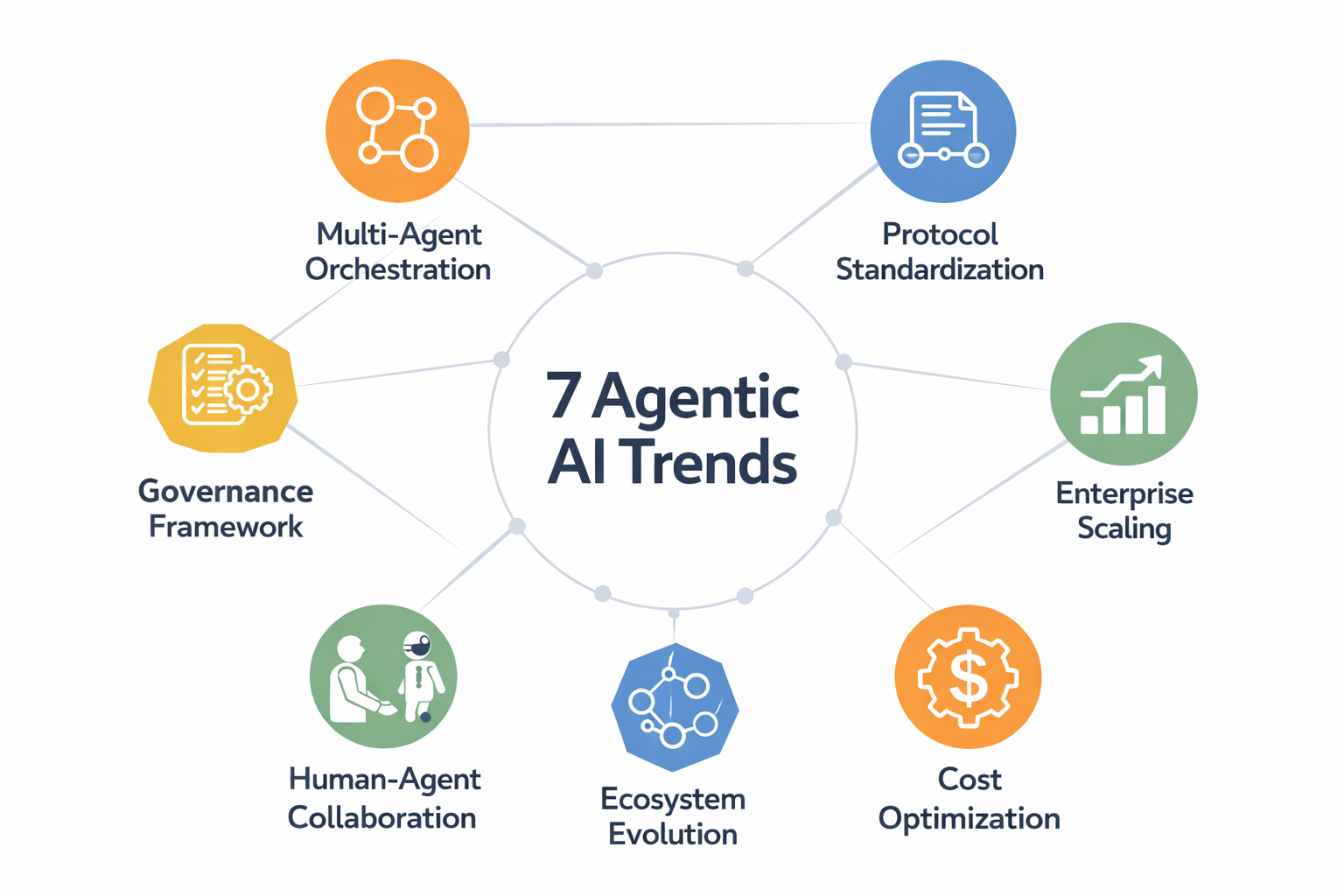
7 Agentic AI Trends to Watch in 2026: The agentic AI field is moving from experimental prototypes to production-ready autonomous systems.
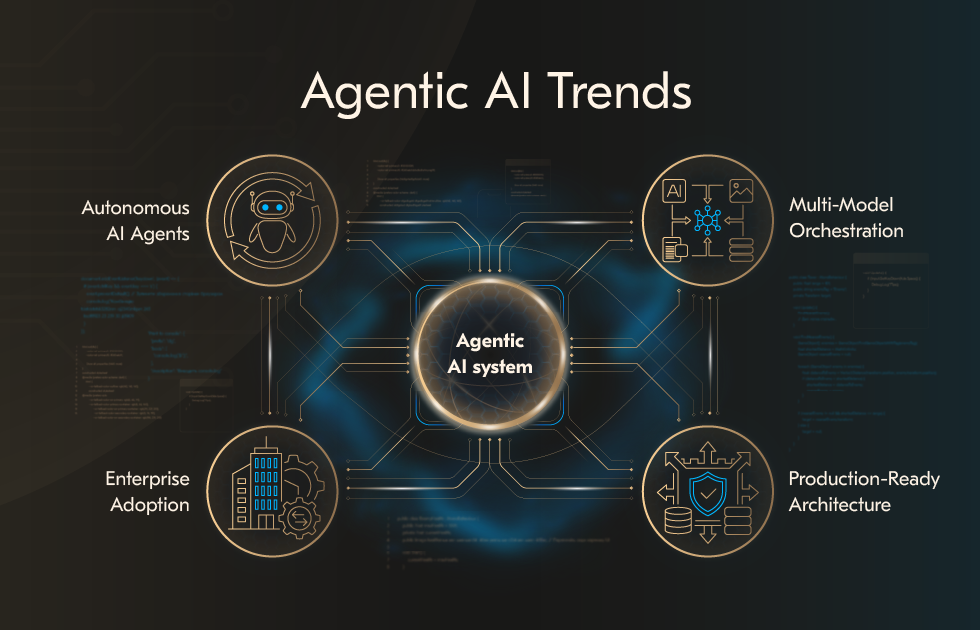
Acropolium
Agentic AI Trends 2026: Future of Autonomous AI Agents. The enterprises pulling ahead in 2026 are the ones that quietly moved from pilots to production.
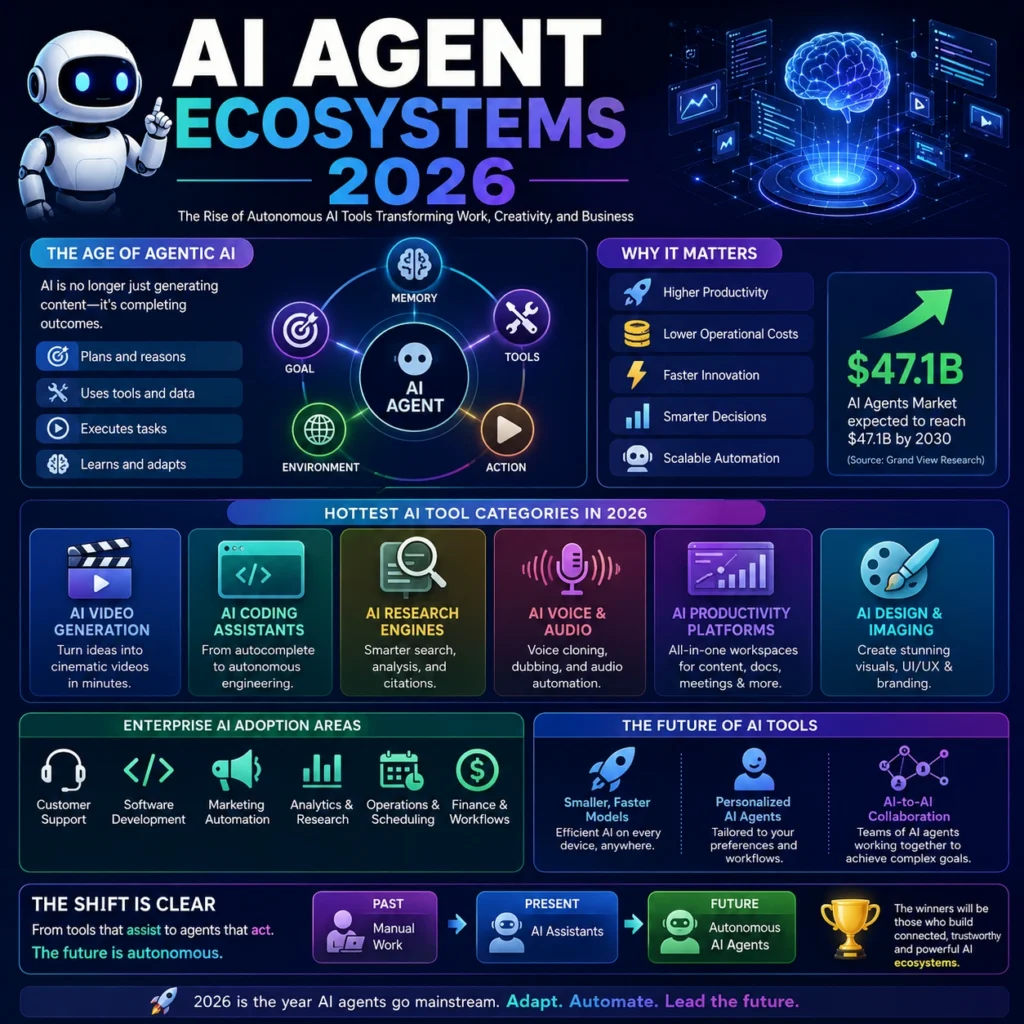
Tacan
AI Agent Ecosystems 2026: The Rise of Autonomous AI Tools and Multimodal Intelligence. The biggest shift is the rise of autonomous AI agents.
Novelvista
Agentic AI Trends 2026: Future of Autonomous AI. 2026 is shaping up to be a turning point with 40% of enterprise apps embedding AI agents.

Searchunify
Top 7 Agentic AI trends for 2026. Expected increase in revenue and cost savings up to $450 billion in economic value by AI agents.
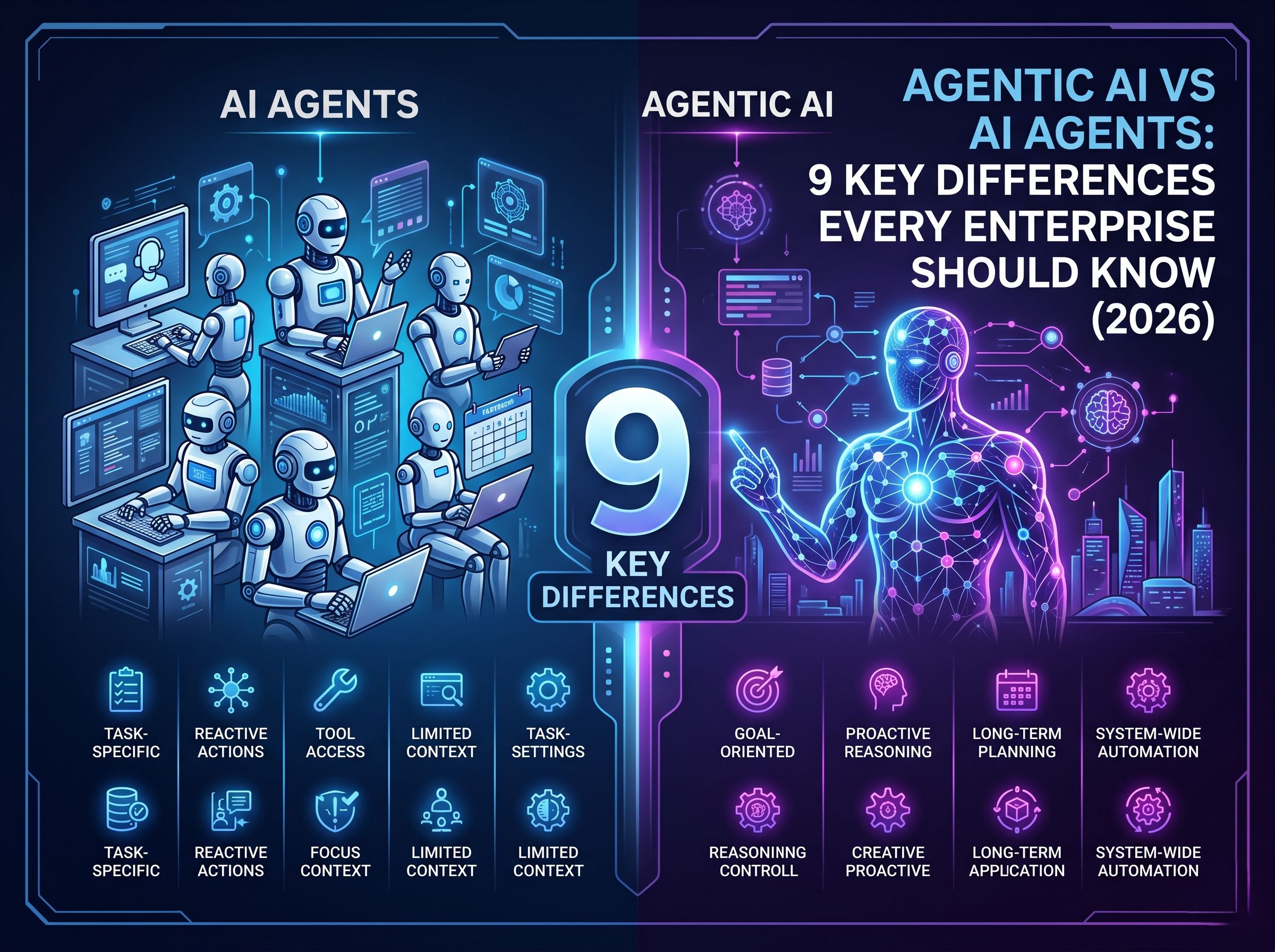
Ampcome
Agentic AI vs AI Agents: 9 Key Differences. Understanding the distinction is crucial for enterprise deployments in 2026.
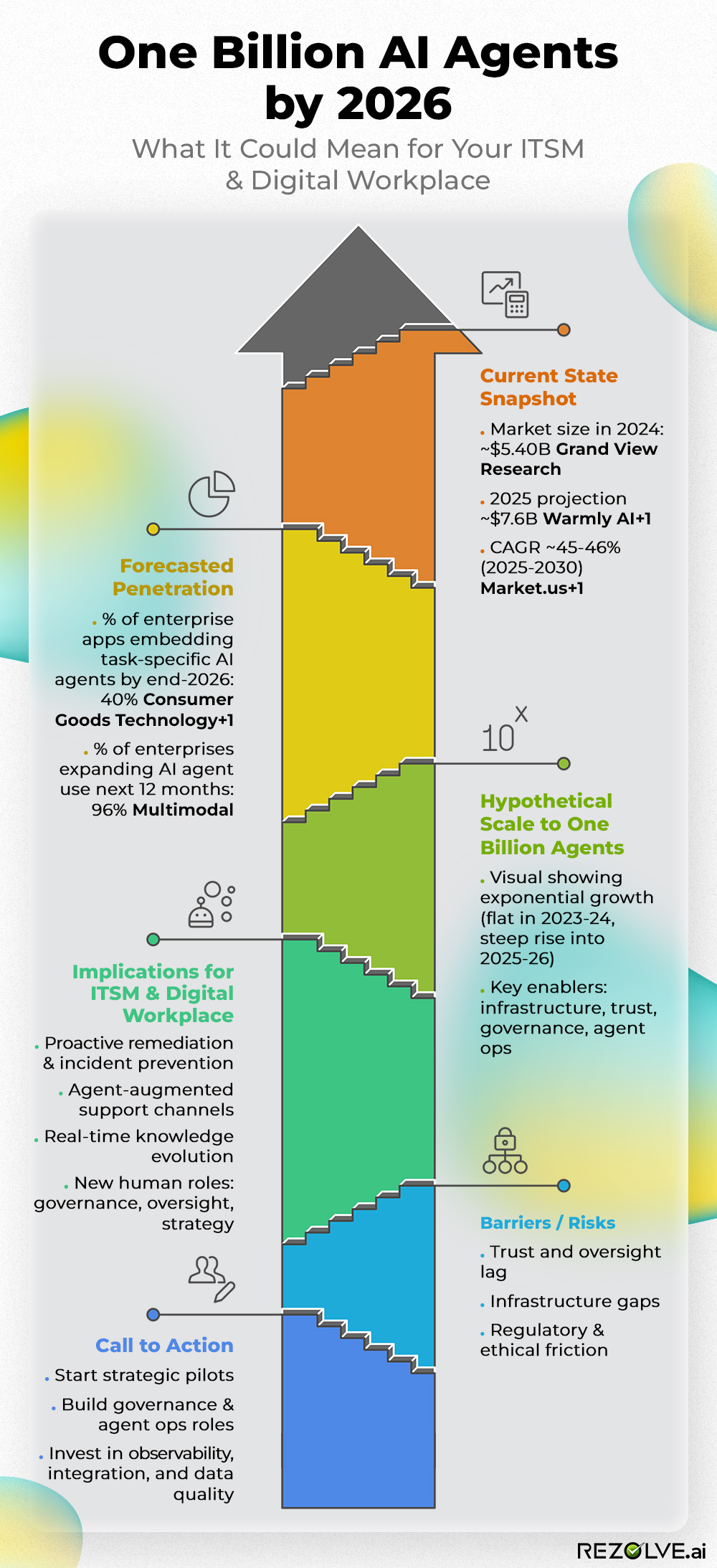
Rezolve.ai
One Billion AI Agents by 2026: More than a billion AI agents will be actively operating across multiple domains and industries.
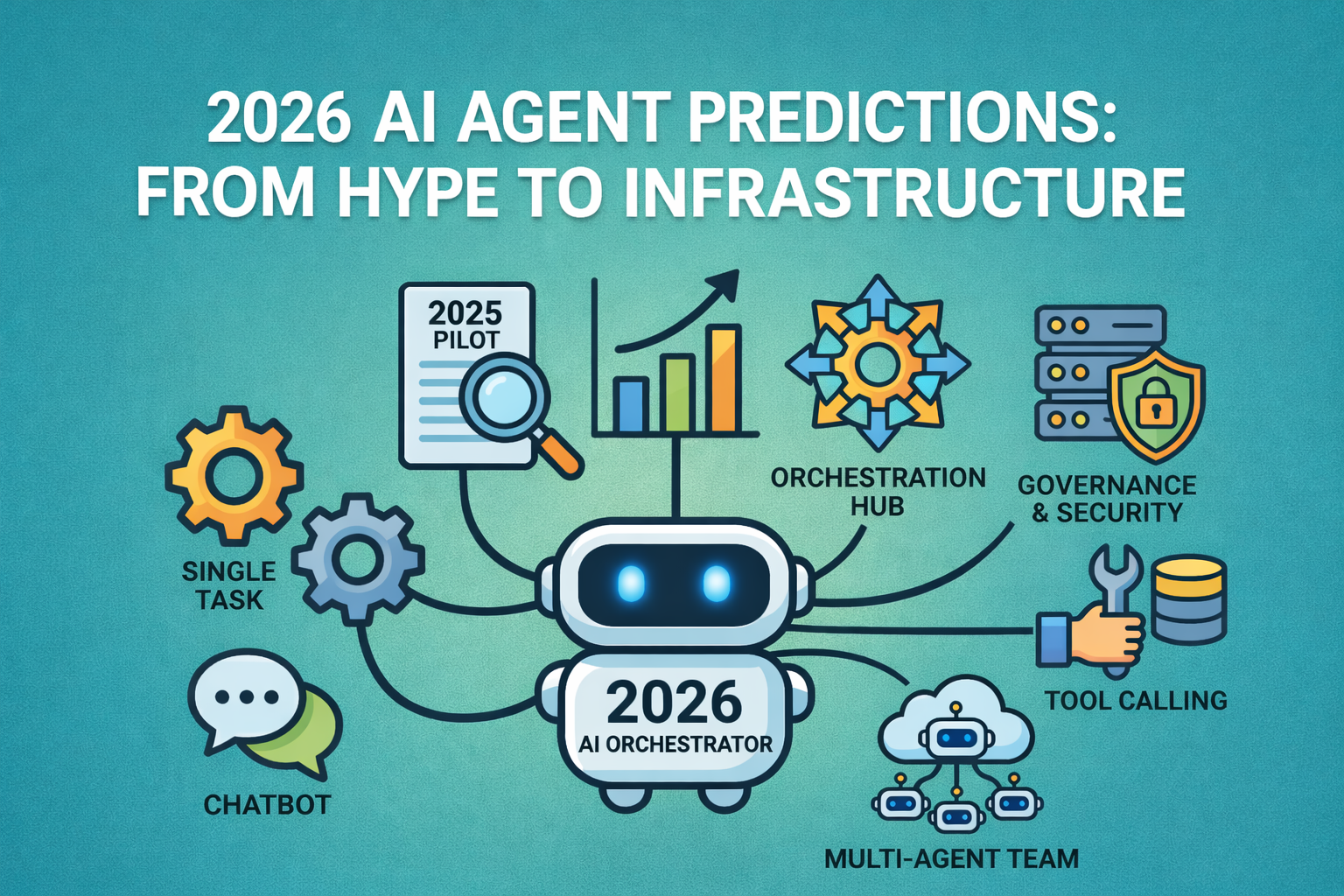
Palma.ai
2026 AI Agent Predictions Roundup: Every major analyst agrees: 2026 is the year AI agents go from experiments to infrastructure.

Analytics Vidhya
15 AI Agents Trends to Watch in 2026: Enterprises are shifting from testing AI agents to letting them run entire workflows.
Unified AI Hub
Agentic AI and Autonomous Systems in 2026: Agentic AI shifts systems from simple responders to independent problem-solvers.