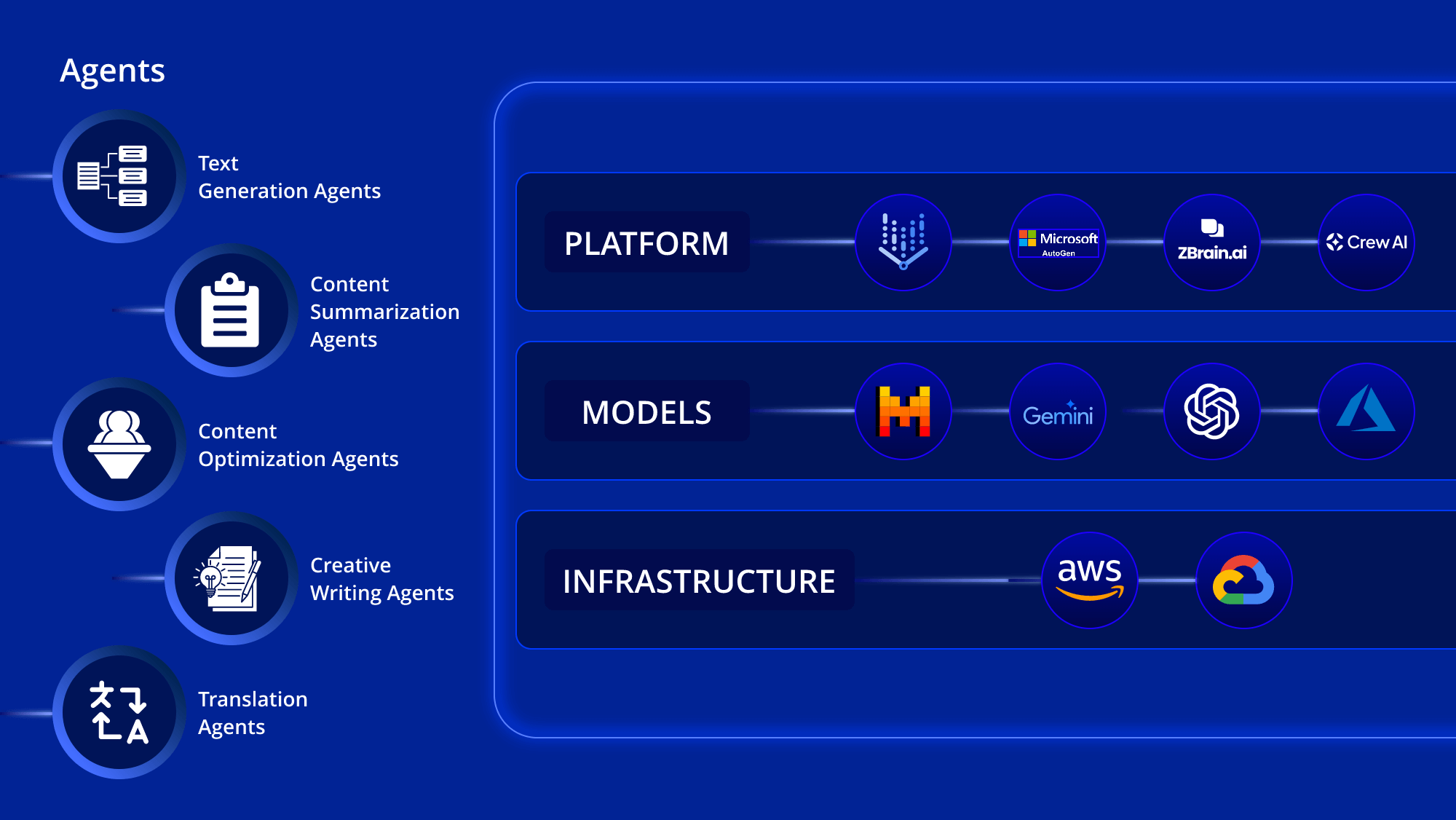
AI Agents 2026: Agentic Revolution | OnDemand Guide 2026-03-24
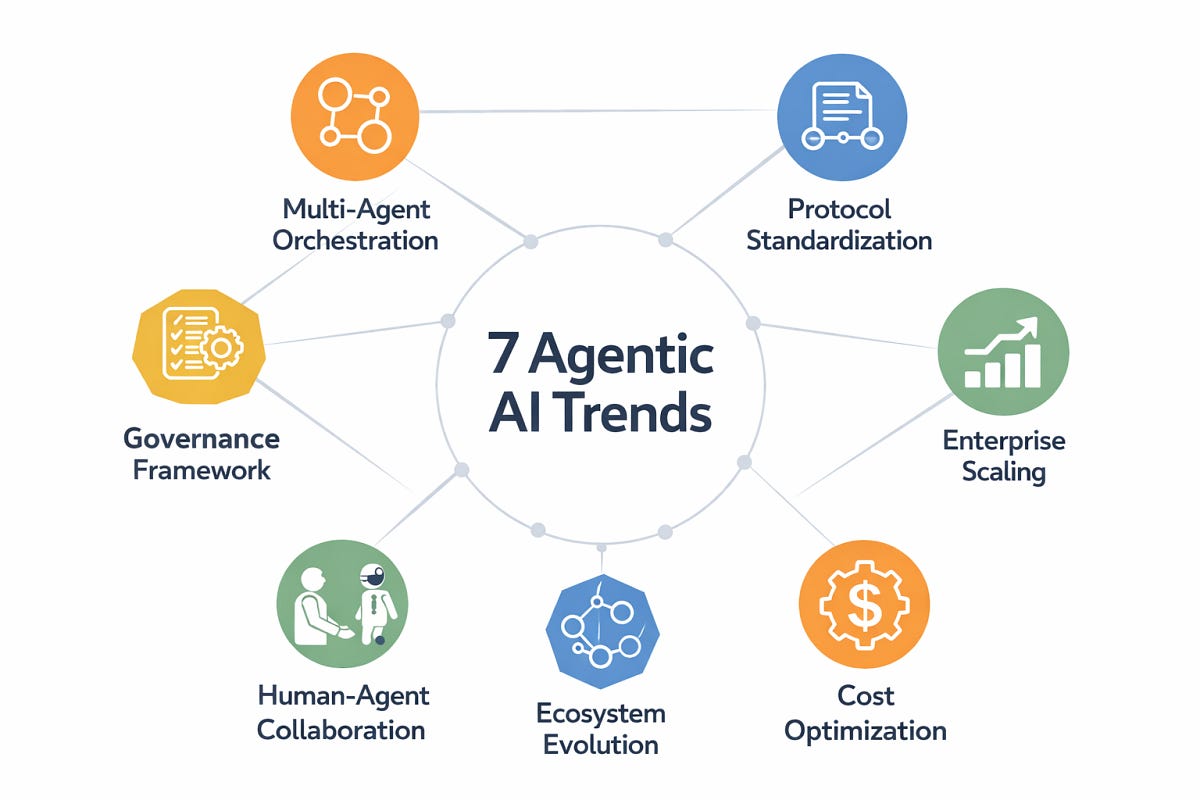
**Title: The Future of AI Agents in 2026: Trends in Multi-Agent Systems and Autonomous Agents**\n\nAs we approach 2026, the field of Artificial Intelligence (AI) is advancing quickly, particularly in the areas of agent-based AI and multi-agent systems. AI agents, which can operate both independently and in collaboration with others, are becoming essential across various industries. This article examines the upcoming trends and potential effects of these systems, providing a detailed perspective on what lies ahead.\n\n### What Are AI Agents and Multi-Agent Systems?\n\nAI agents are software programs created to carry out specific tasks on their own. They can sense their surroundings, analyze information, and take action to meet set objectives. Multi-agent systems consist of several AI agents that work together, either cooperatively or competitively, to tackle complex challenges.\n\n### The Growth of Autonomous Agents by 2026\n\nBy 2026, we can expect autonomous agents to become more advanced, with improved decision-making and learning abilities. These agents will likely utilize advancements in machine learning and deep learning to enhance their understanding and interactions with their environments. Sectors like healthcare, transportation, and finance are anticipated to undergo significant changes as a result.\n\n### Major Trends in AI Agent Technology\n\n#### 1. Improved Collaboration and Communication\n\nA key trend is the enhancement of collaboration and communication among AI agents. With the creation of advanced communication protocols, agents will be able to exchange information more effectively, leading to better coordination in multi-agent systems.\n\n#### 2. Greater Autonomy and Adaptability\n\nAI agents are expected to gain increased autonomy, allowing them to adjust to new situations without needing human input. This will be especially useful in rapidly changing environments, such as during disaster response.\n\n#### 3. Integration with IoT and Edge Computing\n\nThe combination of AI agents with the Internet of Things (IoT) and edge computing is poised to transform data processing and usage. By analyzing data closer to its source, agents can make quicker decisions, enhancing the efficiency of systems in smart cities and industrial automation.\n\n#### 4. Ethical and Transparent AI\n\nWith the rise of AI agents, there is a growing focus on ensuring these systems are ethical and transparent. Establishing frameworks for accountability and transparency will be vital for building trust among users and stakeholders.\n\n#### 5. Collaboration Between Humans and Agents\n\nBy 2026, the partnership between humans and AI agents is expected to improve significantly. Agents will not only handle tasks but also aid humans in decision-making, boosting productivity and creativity across various sectors.\n\n### AI Agent Applications in 2026\n\n#### Healthcare\n\nIn healthcare, AI agents will be crucial for personalized medicine, patient monitoring, and administrative duties. They will assist in diagnosing illnesses, suggesting treatments, and managing patient information more accurately and efficiently.\n\n#### Transportation\n\nIn the transportation industry, AI agents will be key to developing autonomous vehicles, traffic management systems, and logistics operations, contributing to safer and more efficient transport networks.\n\n#### Finance\n\nIn finance, AI agents will enhance fraud detection, risk management, and customer service. They will provide real-time analysis and insights, facilitating better decision-making for financial institutions and their clients.\n\n### Challenges and Considerations\n\nDespite the promising developments, implementing AI agents comes with challenges. Issues like data privacy, security, and ethical concerns must be addressed to ensure these technologies are used responsibly. Additionally, creating robust frameworks for testing and validating AI agents is essential for ensuring their reliability and safety.\n\n### Conclusion\n\nAs we near 2026, the development of AI agents and multi-agent systems is set to transform various industries, driving innovation and efficiency. The key trends of improved communication, greater autonomy, integration with IoT, ethical AI, and human-agent collaboration underscore the potential of these technologies. However, tackling the associated challenges will be critical to unlocking their full potential. By balancing technological progress with ethical considerations, AI agents can become a powerful force for the future.\n\n## 📱 RELEVANT CONTEXT FROM PERPLEXITY SOURCES (Top 5 Embedded):\n\n1. **7 Agentic AI Trends Redefining the “Year of the Proof” in 2026** \n \n*Link:* https://pub.towardsai.net/7-agentic-ai-trends-redefining-the-year-of-the-proof-in-2026-83661449ede4 \n*Description:* Multi-Agent Orchestration, 95% AI pilots failed production in 2025, shift to empirical results.\n\n2. **One Billion AI Agents by 2026** \n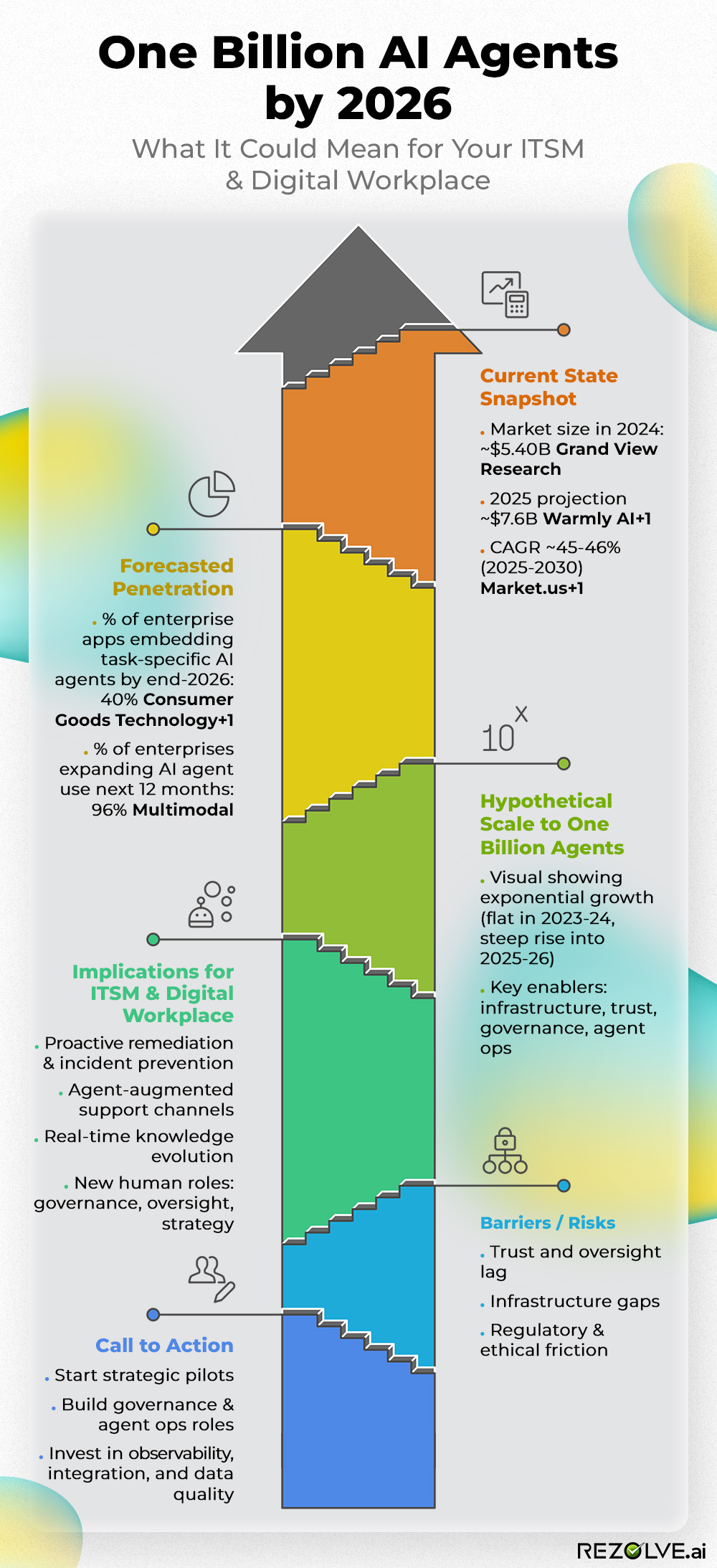 \n*Link:* https://www.rezolve.ai/blog/one-billion-ai-agents-by-2026 \n*Description:* AI agents in ITSM, 40% enterprise apps by 2026, autonomous decision-making.\n\n3. **AI Agents 2026: Agentic Revolution Guide** \n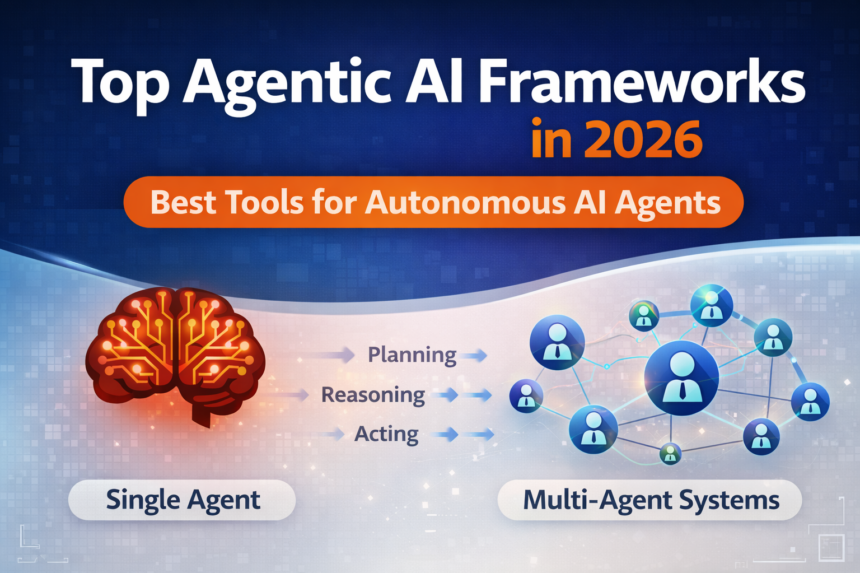 \n*Link:* https://blog.on-demand.io/ai-agents-2026-agentic-revolution-ondemand-guide-2026-03-17/ \n*Description:* Autonomous agents, multi-agent systems, trends to 2026.\n\n4. **15 AI Agents Trends to Watch in 2026** \n \n*Link:* https://www.analyticsvidhya.com/blog/2026/01/ai-agents-trends/ \n*Description:* Workflow orchestration, multi-agent default, agent OS.\n\n5. **Agentic AI Trends 2026** \n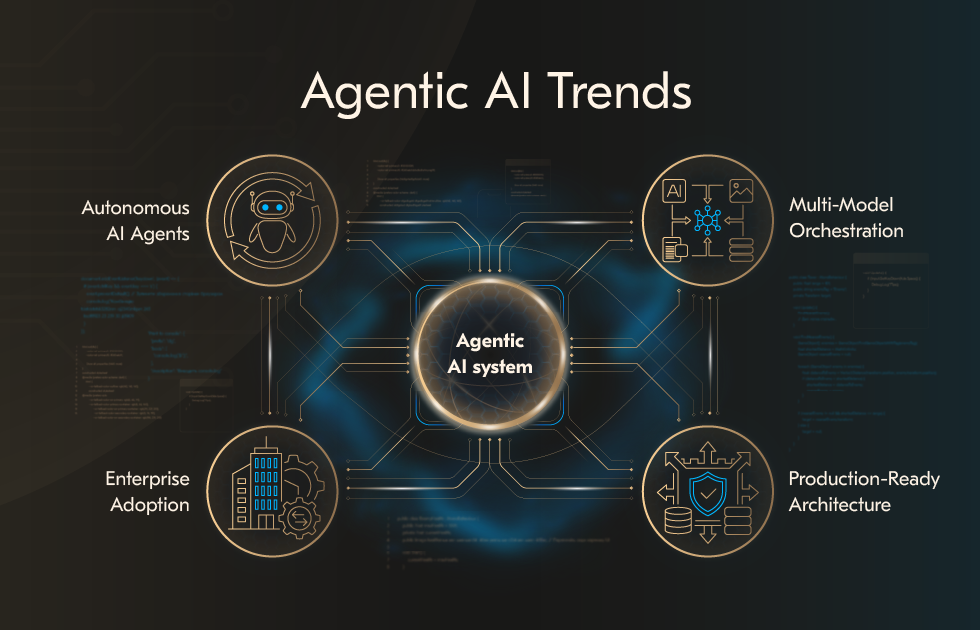 \n*Link:* https://acropolium.com/blog/agentic-ai-trends/ \n*Description:* 11% pilots to production, agentic workflows for enterprises.