AI Agents 2026: Agentic Revolution | OnDemand Guide 2026-03-19
AI Agents 2026: Agentic Revolution | OnDemand Guide 2026-03-19
The Agentic Revolution: AI Agents and Multi-Agent Systems in 2026
In the field of artificial intelligence (AI), agentic AI has emerged as a significant force, transforming various industries and changing how humans interact with machines. As we approach 2026, the development of AI agents, multi-agent systems, and autonomous agents is expected to lead to an 'agentic revolution.' This article explores the trends, advancements, and implications of this revolution, providing insights into the future of AI and its impact on our world.
Defining Agentic AI and Multi-Agent Systems
Agentic AI refers to systems that can act independently, make decisions, and adapt to changing environments. These AI agents function autonomously, allowing them to complete tasks, interact with other agents, and respond to changes without needing direct human oversight. Multi-agent systems (MAS) involve multiple agents working together to tackle complex problems, often achieving results that exceed those of a single agent.
The Emergence of Autonomous Agents
Autonomous agents are fundamental to agentic AI, representing self-sufficient entities that can perceive their surroundings, make decisions, and take actions to reach specific objectives. As we near 2026, these agents will become more advanced, utilizing improvements in machine learning, natural language processing, and robotics. Their uses will span various fields, including healthcare, finance, transportation, and manufacturing.
Key Trends Influencing the Future of AI Agents
- Improved Interoperability and Collaboration: Future AI agents will demonstrate better interoperability, allowing for seamless collaboration across different platforms and sectors. This will enhance the integration of various agent systems, boosting their collective intelligence and problem-solving abilities.
- Collaboration Between Humans and AI: The agentic revolution will usher in a new era of human-AI collaboration, where agents act as partners, enhancing human decision-making and creativity. This collaboration will open up new opportunities in research, education, and the arts.
- Ethical and Transparent AI: As AI agents gain more autonomy, prioritizing ethical behavior and transparency will be essential. Establishing ethical guidelines and regulatory frameworks will be vital for maintaining trust and accountability in AI systems.
- Personalized and Context-Aware Agents: Future AI agents will utilize contextual awareness and personalization to create customized experiences. These agents will understand user preferences, anticipate needs, and offer proactive assistance, improving user satisfaction and engagement.
- Scalability and Flexibility: The scalability and adaptability of multi-agent systems will be crucial for tackling global challenges. From climate change to disaster response, these systems will provide scalable solutions that adjust to changing conditions and requirements.
The Effects of the Agentic Revolution
The agentic revolution is set to transform various industries, driving innovation and efficiency. In healthcare, AI agents will facilitate personalized treatment plans, streamline diagnostics, and improve patient care. In finance, these agents will enhance trading strategies, detect fraud, and offer personalized financial guidance. The transportation sector will see the emergence of autonomous vehicles and smart traffic management systems, helping to reduce congestion and emissions.
Challenges and Considerations
Despite the optimistic outlook, the agentic revolution also brings significant challenges. Ensuring data privacy, addressing biases in AI algorithms, and managing the ethical implications of autonomous decision-making are critical issues. Furthermore, the widespread implementation of AI agents may lead to job displacement, highlighting the need for reskilling and upskilling initiatives to prepare the workforce for future job markets.
Looking Ahead: Agentic AI in 2026 and Beyond
As we approach 2026, the agentic revolution will continue to gain traction, fueled by technological advancements and societal needs. The convergence of AI, the Internet of Things (IoT), and 5G networks will further enhance the capabilities of autonomous agents, enabling real-time data processing and decision-making.
In summary, the agentic revolution signifies a major shift in AI, marked by the rise of intelligent, autonomous agents and multi-agent systems. As these technologies develop, they will transform industries, enhance human capabilities, and address complex global issues. Embracing the potential of agentic AI while considering its ethical and societal implications will be essential for maximizing its benefits and shaping a future where AI agents play a vital role in our everyday lives.
✅ Perplexity Sources Used (Top 5 with Images/Links/Descriptions Embedded):
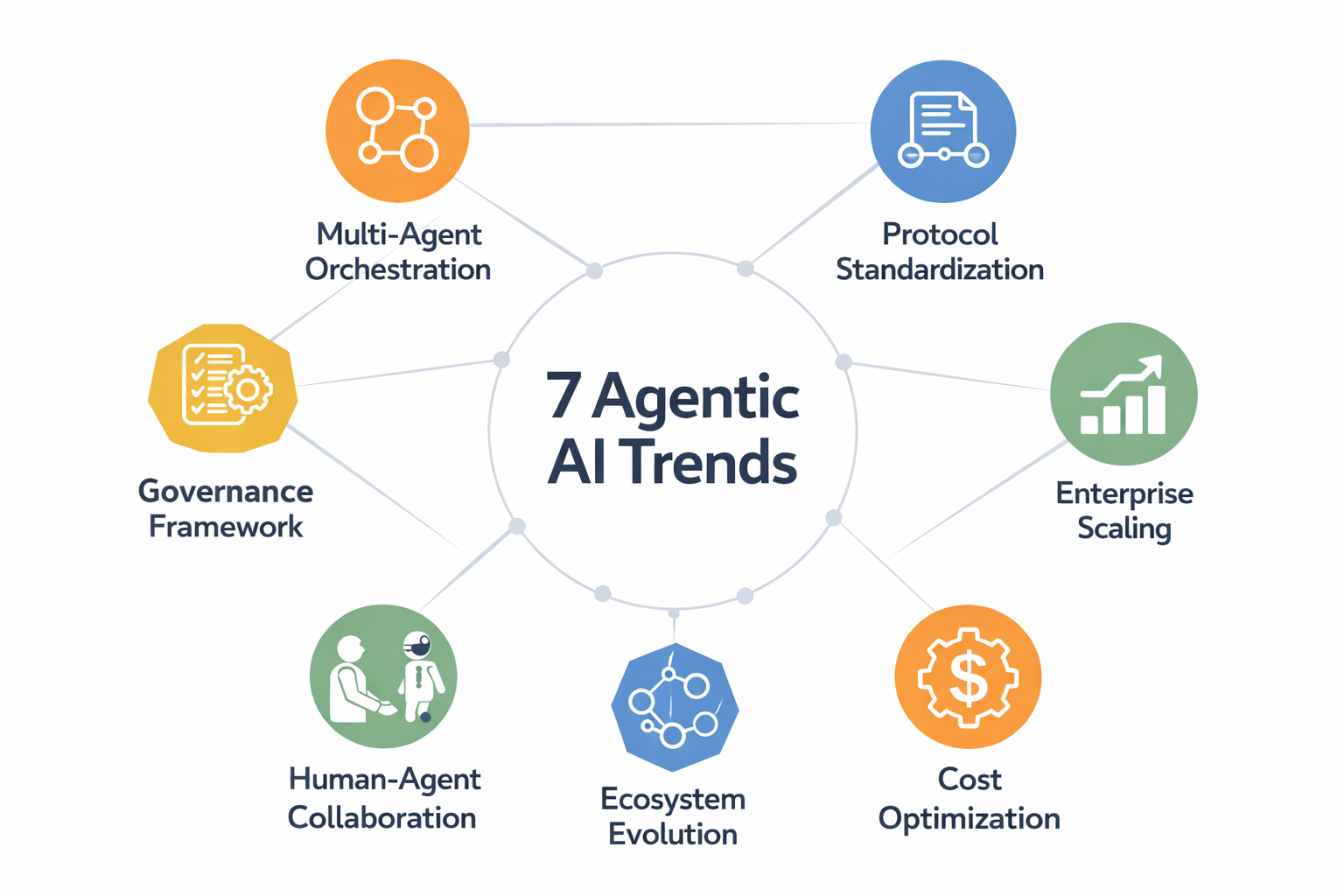
1. 7 Agentic AI Trends to Watch in 2026
Link: 7 Agentic AI Trends to Watch in 2026
Market $7.8B → $52B by 2030. 40% enterprise apps embed AI agents by 2026. Design patterns, memory types, multi-agent orchestration.
2. Agentic AI Trends 2026
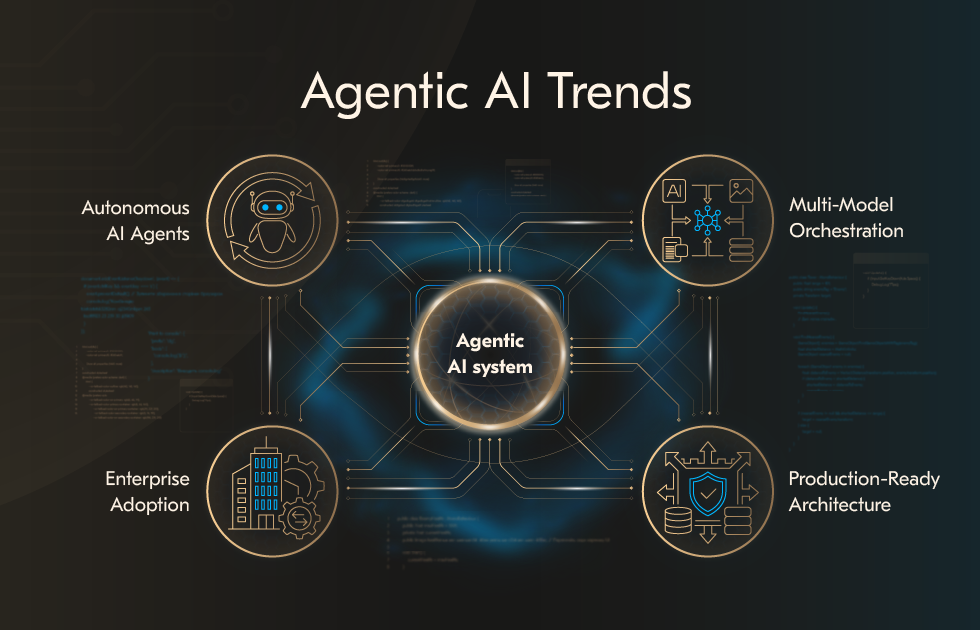
Link: Agentic AI Trends 2026: Future of Autonomous AI Agents
Only 11% agentic AI pilots reach production. Production challenges, autonomous agent workflows, enterprise deployment patterns.
3. Google Just Revealed 5 AI Agent Trends
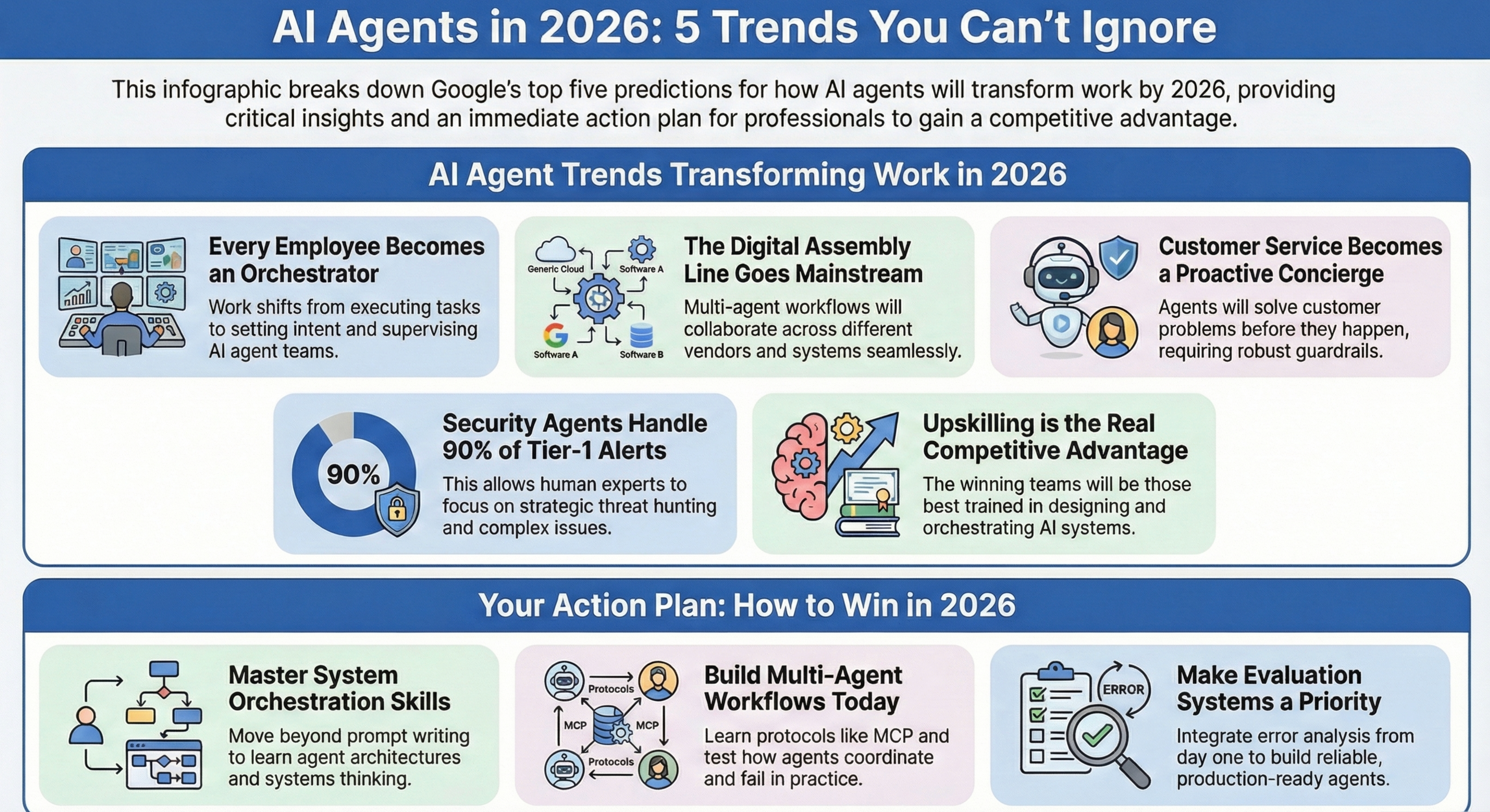
Link: Google Just Revealed 5 AI Agent Trends That Will Change How You Work in 2026
Employees become orchestrators of multi-agent systems. Digital assembly lines, intent-setting work model.
4. If 2025 Was the Year of AI Agents, 2026 Will Be the Year of Multi-Agent Systems
From solo AI agents to synchronized systems. Multi-agent systems—coordinated networks of AI agents that communicate, share context, and adapt in real time.
5. I Spent 6 Months Researching Agentic AI: Here Are the 7 Shifts That Will Define 2026
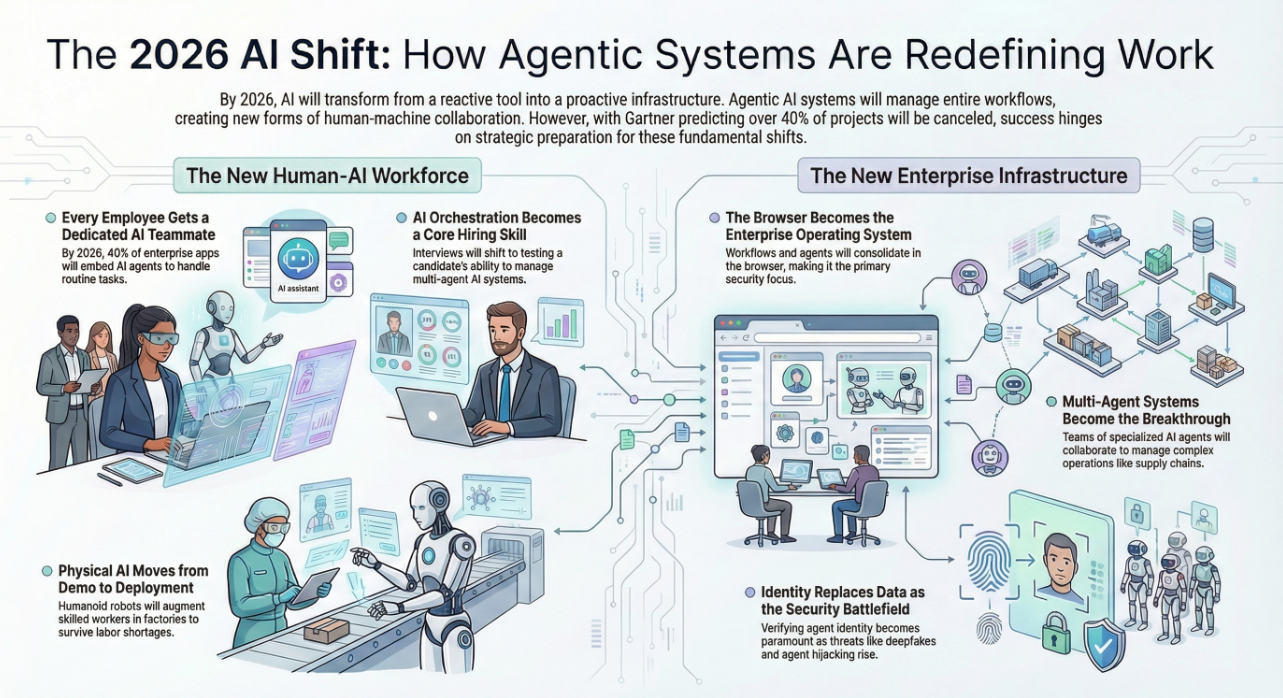
Gartner predicts 40% of enterprise applications will embed task-specific AI agents by 2026. Multi-agent systems transforming enterprise workflows.