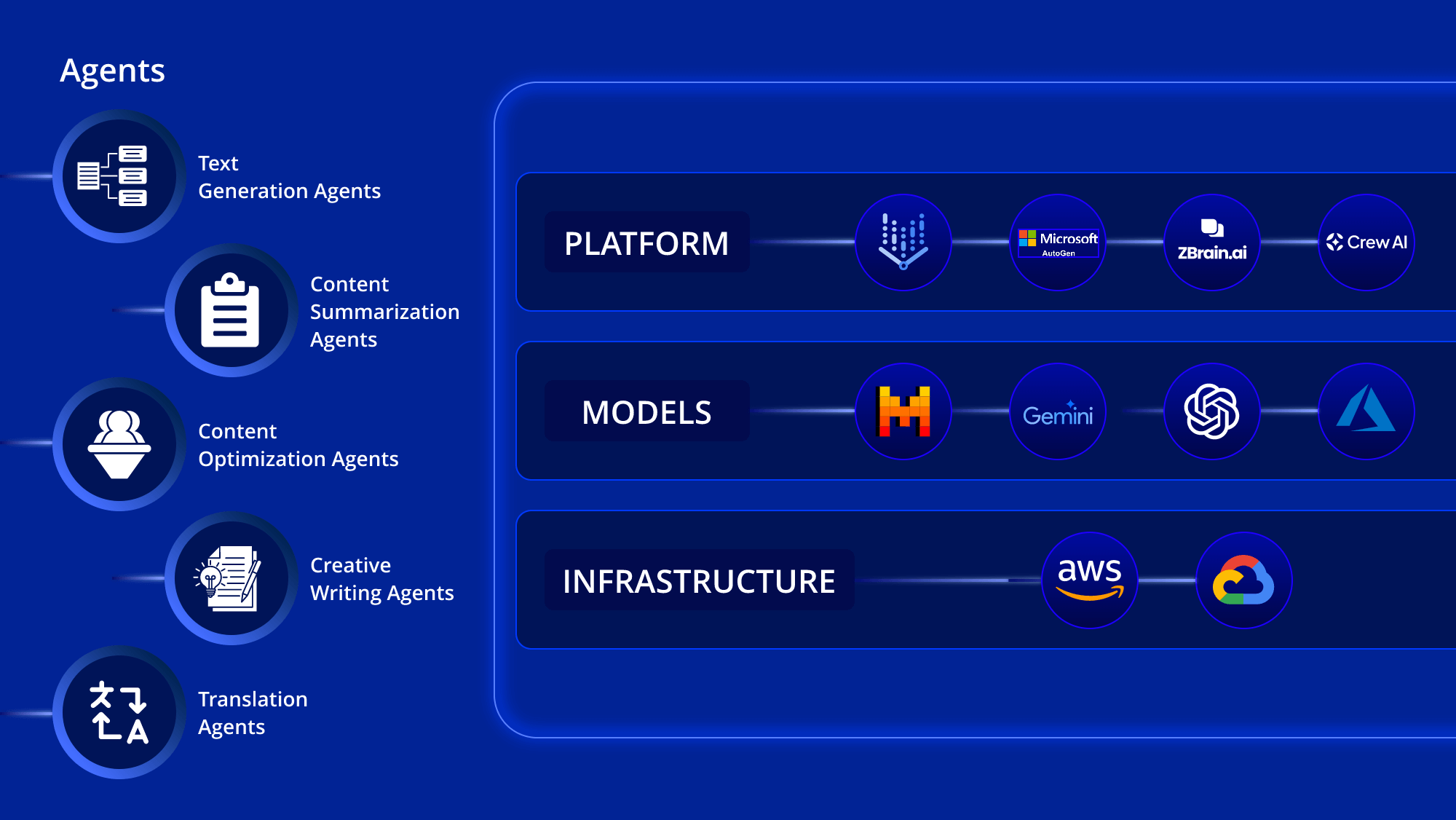
AI Agents 2026: Agentic Revolution | OnDemand Guide 2026-03-03
AI Agents 2026: Agentic Revolution | OnDemand Guide 2026-03-03
Key Sources & Insights on AI Agents
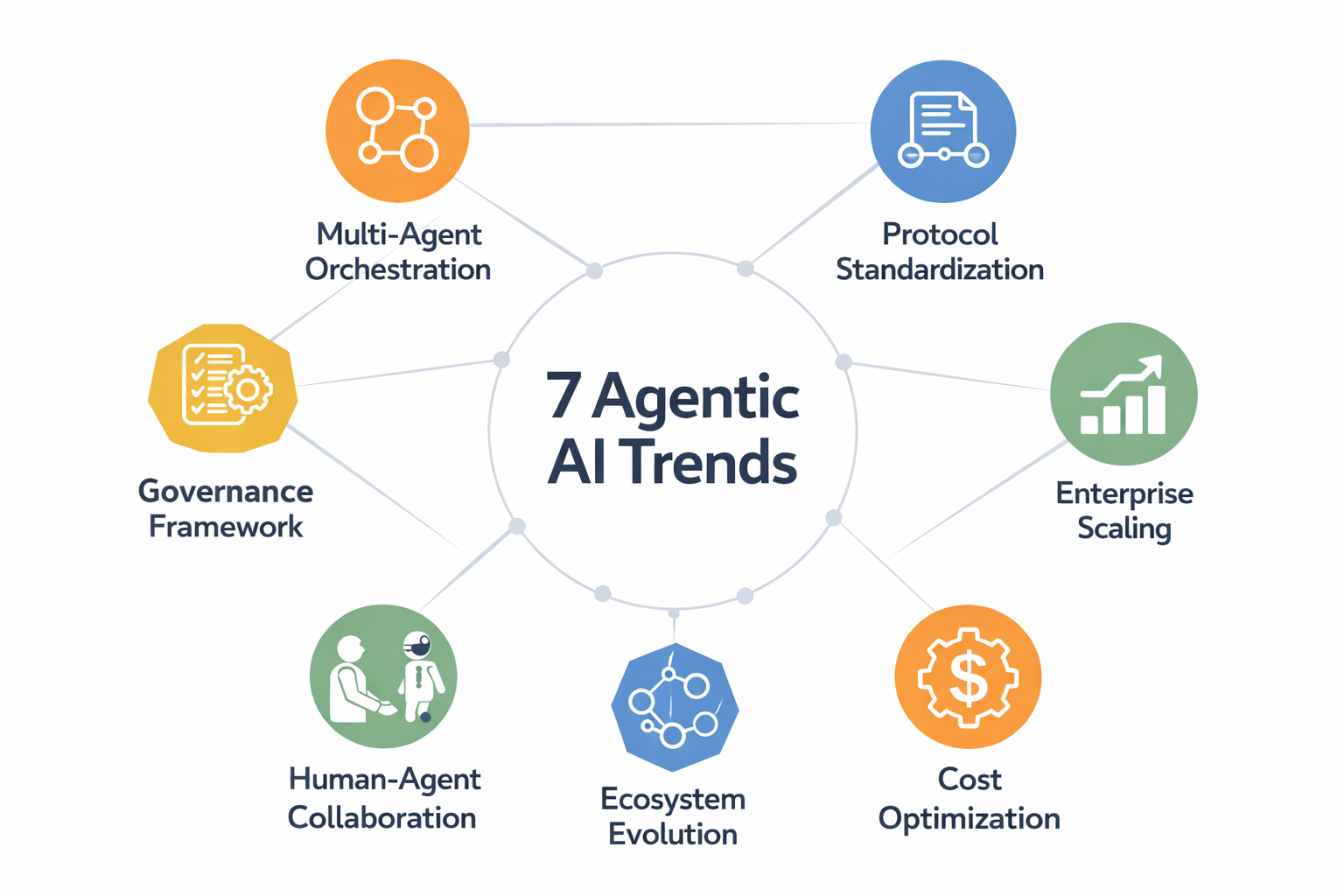
7 Agentic AI Trends to Watch in 2026
Market $7.8B → $52B by 2030. 40% enterprise apps embed AI agents by 2026. Multi-agent orchestration surges.
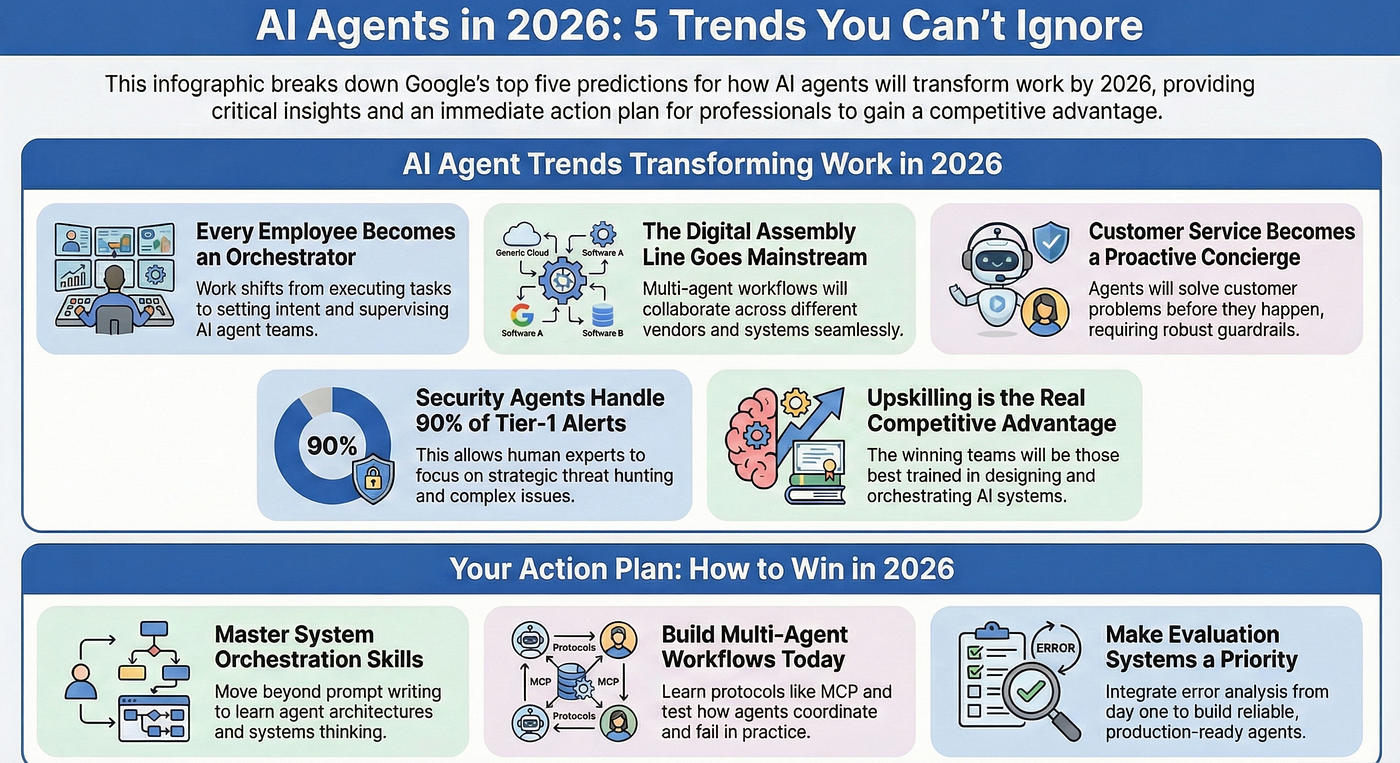
Google Just Revealed 5 AI Agent Trends
Employees orchestrate multi-agent systems. Digital assembly lines emerge for autonomous workflows.

Top 7 Agentic AI Trends for 2026
Multiagent systems for autonomous coordination. Domain-specific LLMs powering specialized agents.
The Future of Agentic AI and Multi-Agent Systems
In recent years, artificial intelligence has undergone a notable transformation. Leading this change are agentic AI and multi-agent systems, which promise to introduce autonomous solutions that could revolutionize various sectors. These agent systems aim not only to enhance computational abilities but also to create entities capable of acting independently, making decisions, and interacting smoothly with humans and other machines.
What is Agentic AI?
Agentic AI refers to AI systems that function independently, making decisions based on predefined rules or learned experiences. These agents can perceive their surroundings, process information, and take actions with minimal human involvement. The main objective is to develop systems that can replicate human-like decision-making, allowing them to carry out complex tasks effectively.
A crucial aspect of agentic AI is the autonomy in decision-making. This is made possible through advanced algorithms that enable agents to learn from their environment, adapt to new scenarios, and optimize their actions for better results.
The Emergence of Multi-Agent Systems
Multi-agent systems (MAS) are a branch of agentic AI, where multiple autonomous agents interact within a shared environment. These agents can collaborate, compete, or operate independently to achieve individual or shared objectives.
Applications of Agentic AI
In robotics, finance, healthcare, agentic AI agents transform operations with autonomous decision-making and multi-agent collaboration.
Trends Influencing Agentic AI Agents
- Integration with IoT: Agents control smart environments.
- Improved Learning Algorithms: Reinforcement learning for smarter agents.
- Ethical AI: Frameworks for fair agent decisions.
- Human-Agent Collaboration: Boosting productivity.
- Scalability: Interoperable multi-agent systems.
Challenges
Complexity, security, ethics in agentic AI deployment.
Conclusion
The advancement of agentic AI agents and multi-agent systems redefines AI possibilities, optimized for 2026 trends.