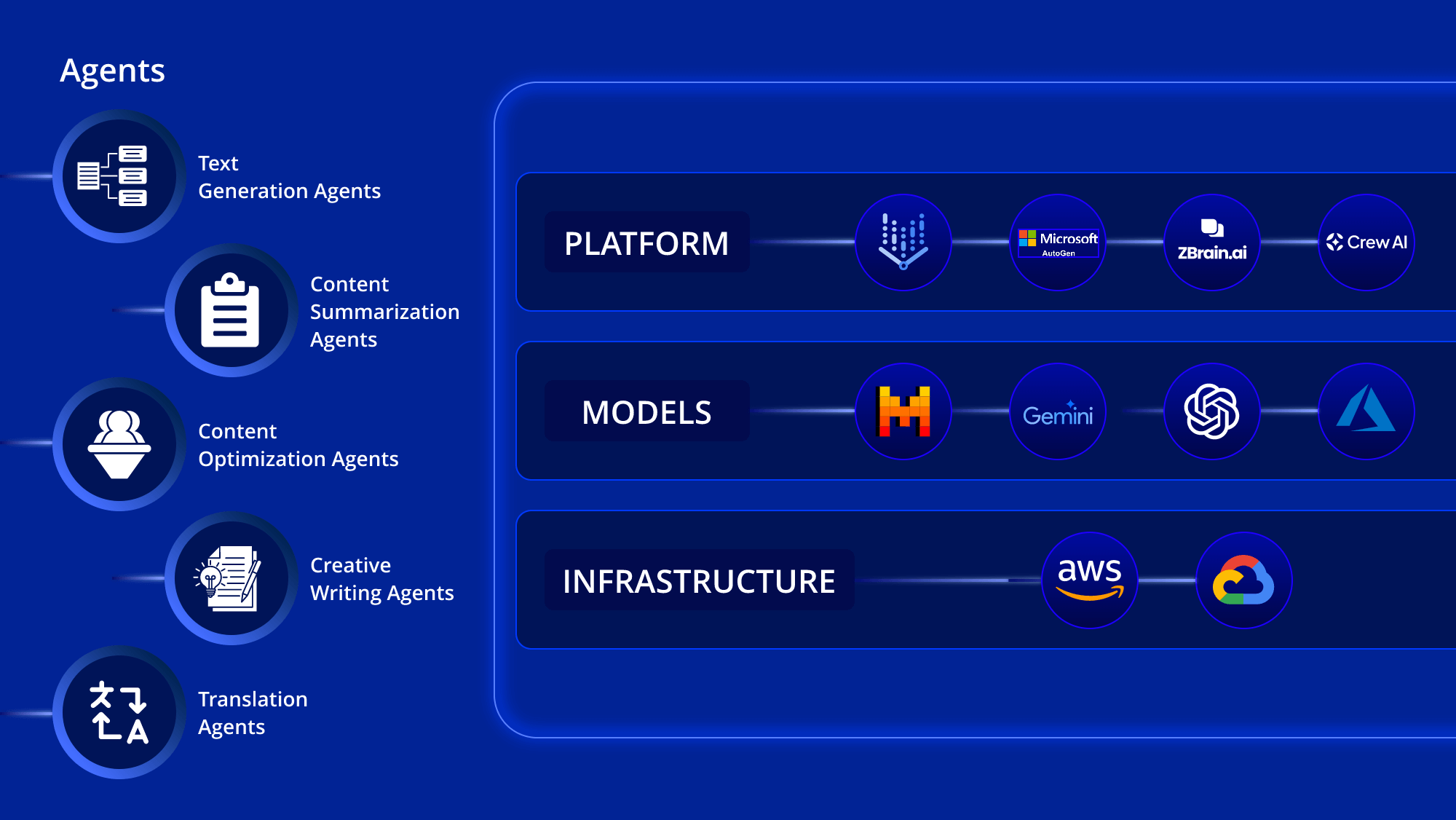
AI Agents 2026: Agentic Revolution | OnDemand Guide 2026-02-26
AI Agents 2026: Agentic Revolution | OnDemand Guide 2026-02-26
The Evolution of AI Agents: Paving the Way to 2026
In the ever-evolving landscape of artificial intelligence, AI agents stand out as pivotal components driving innovation across industries. As we approach 2026, these intelligent agent systems are not only transforming businesses but also reshaping the way humans interact with technology. This article delves into the trends, uses, and future of AI agents, highlighting the agentic revolution and the rise of multi-agent systems.
Understanding AI Agents and Agentic AI
AI agents are autonomous entities capable of perceiving their environment, making decisions, and taking actions to achieve specific goals. These agents can range from simple bots performing repetitive tasks to sophisticated systems capable of complex problem-solving. The concept of agentic AI refers to the ability of these agents to operate independently, displaying characteristics akin to human-like agency.
Trends in AI Agents Leading to 2026
- Enhanced Autonomy: By 2026, AI agents are expected to achieve higher levels of autonomy. This means they will require less human intervention, enabling faster decision-making processes.
- Integration with IoT: The integration of AI agents with the Internet of Things (IoT) is set to revolutionize various industries.
- Multi-Agent Systems: Multi-agent systems, where multiple AI agents collaborate to achieve a common goal, are gaining traction.
- Ethical AI Agents: As AI agents become more autonomous, ethical considerations are paramount.
- Agentic Revolution in Business: The agentic revolution is transforming business processes.
Use Cases of AI Agents
- Customer Service: AI agents in the form of chatbots are revolutionizing customer service.
- Healthcare: In healthcare, AI agents assist in patient monitoring, diagnostics, and personalized treatment plans.
- Finance: AI agents in finance are automating trading, fraud detection, and risk assessment.
- Education: Educational platforms leverage AI agents to provide personalized learning experiences.
- Transportation: Autonomous vehicles, powered by AI agents, are transforming transportation.
The Future of AI Agents: Autonomous Agents by 2026
By 2026, autonomous agents are expected to become more commonplace across industries.
Challenges and Considerations
Despite the promising future of AI agents, several challenges need addressing.
Conclusion
As we look towards 2026, AI agents are poised to become integral components of our daily lives. The agentic revolution is transforming industries, enhancing productivity, and fostering innovation.
✅ Perplexity Sources Used (Key Sources with Images):
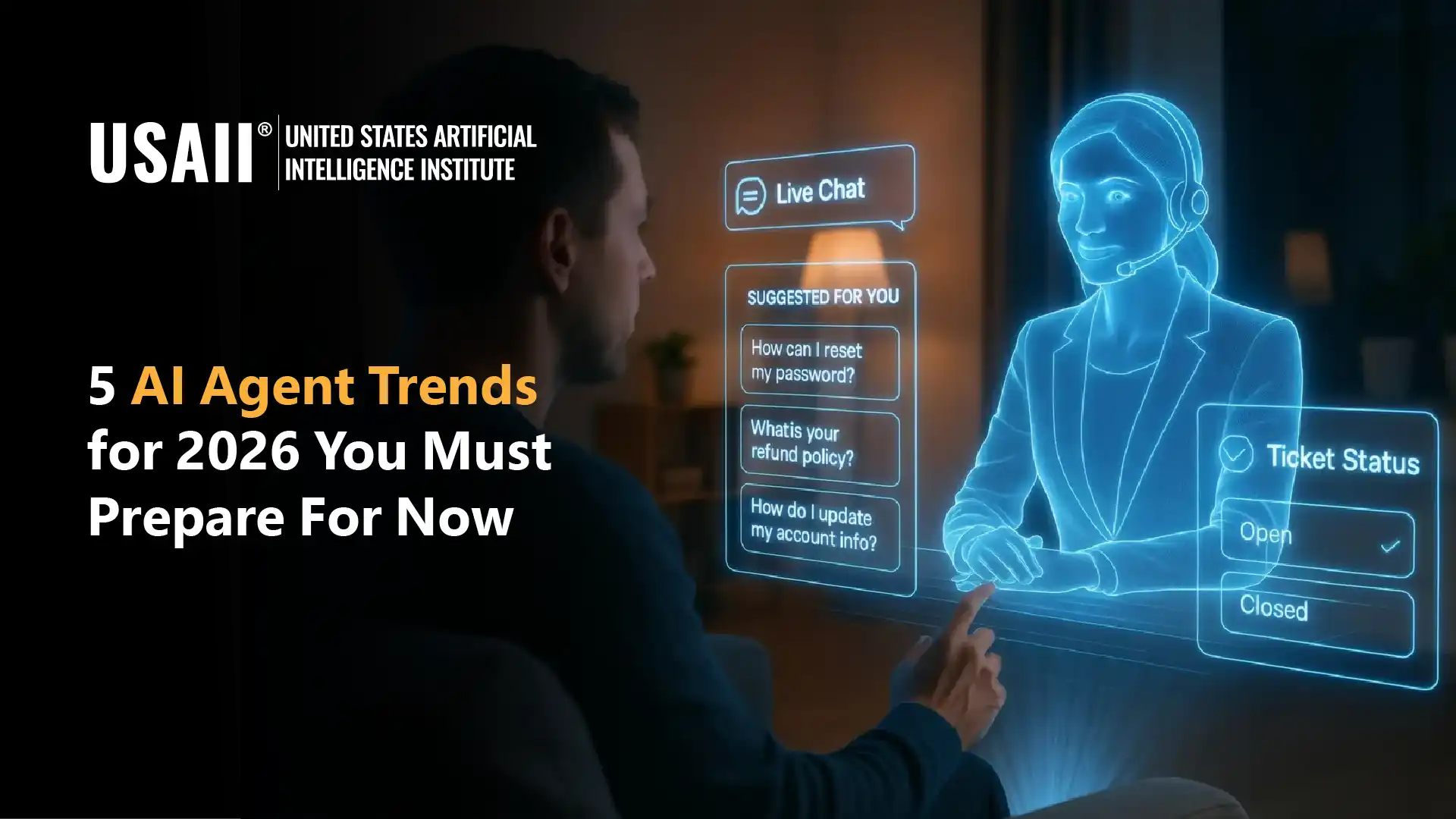
Link: Top 5 AI Agent Trends for 2026Description: AI agent market 46.3% CAGR to $52.62B by 2030. 35% organizations broad adoption. AI Agents: Towards Autonomy.
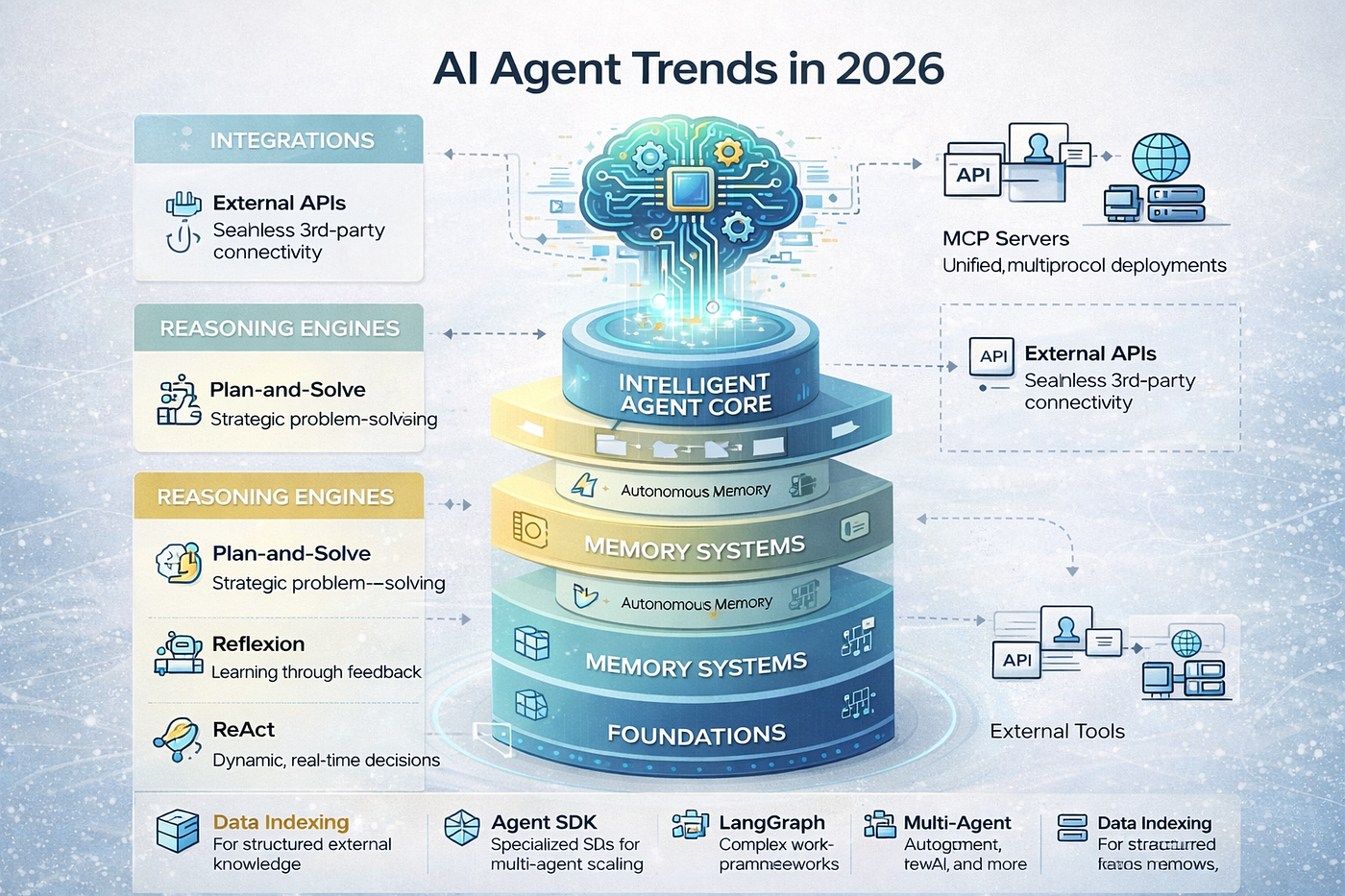
Link: AI Agent Trends 2026: From Smart Tools to Autonomous Digital WorkersDescription: Shift to multi-agent systems, outcome-driven agents, persistent memory. From Single Agents to Multi-Agent Systems.
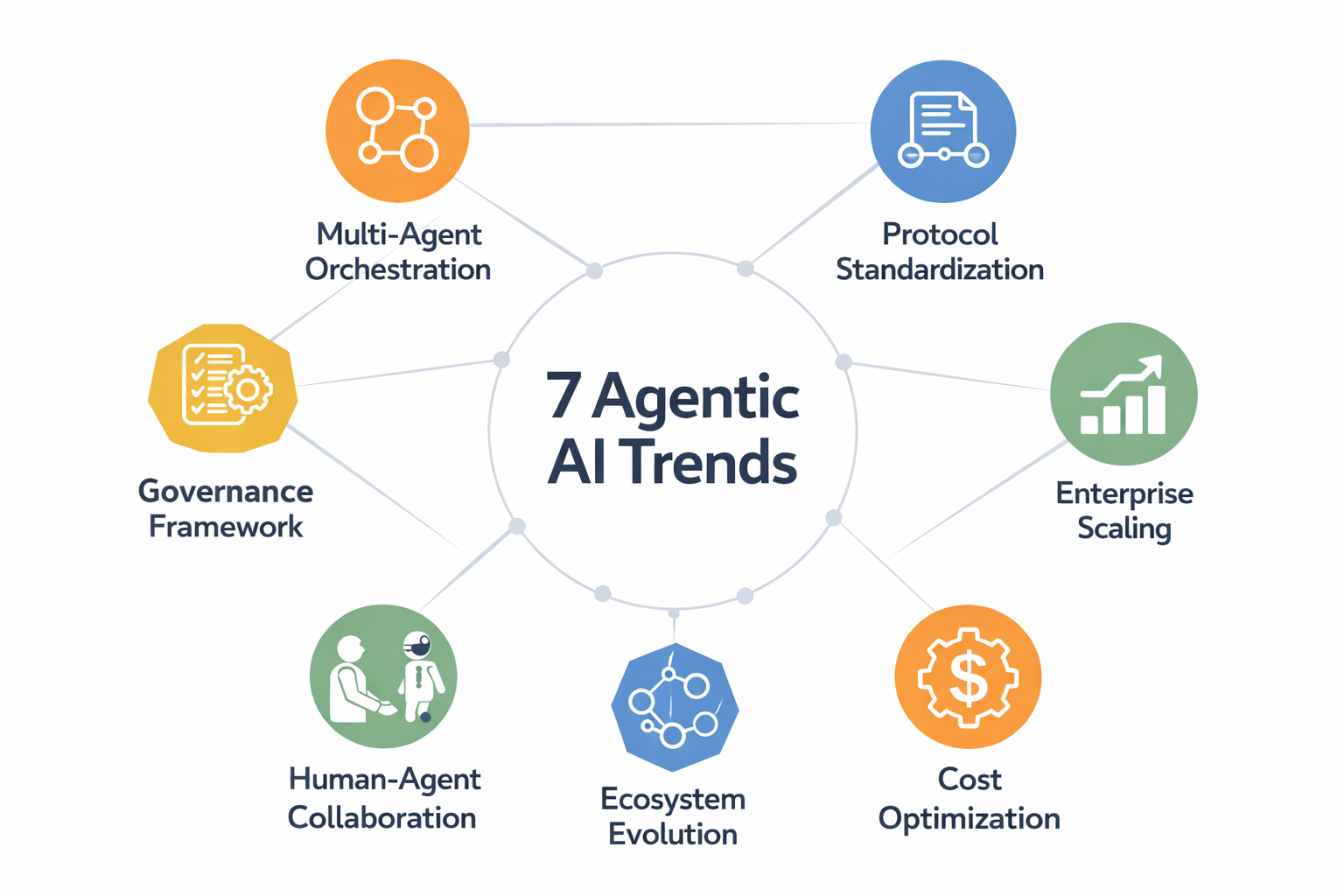
Link: 7 Agentic AI Trends to Watch in 2026Description: Agentic AI market $7.8B → $52B by 2030. 40% enterprise apps embed agents by 2026. The agentic AI field is moving from experimental prototypes to production-ready autonomous systems.
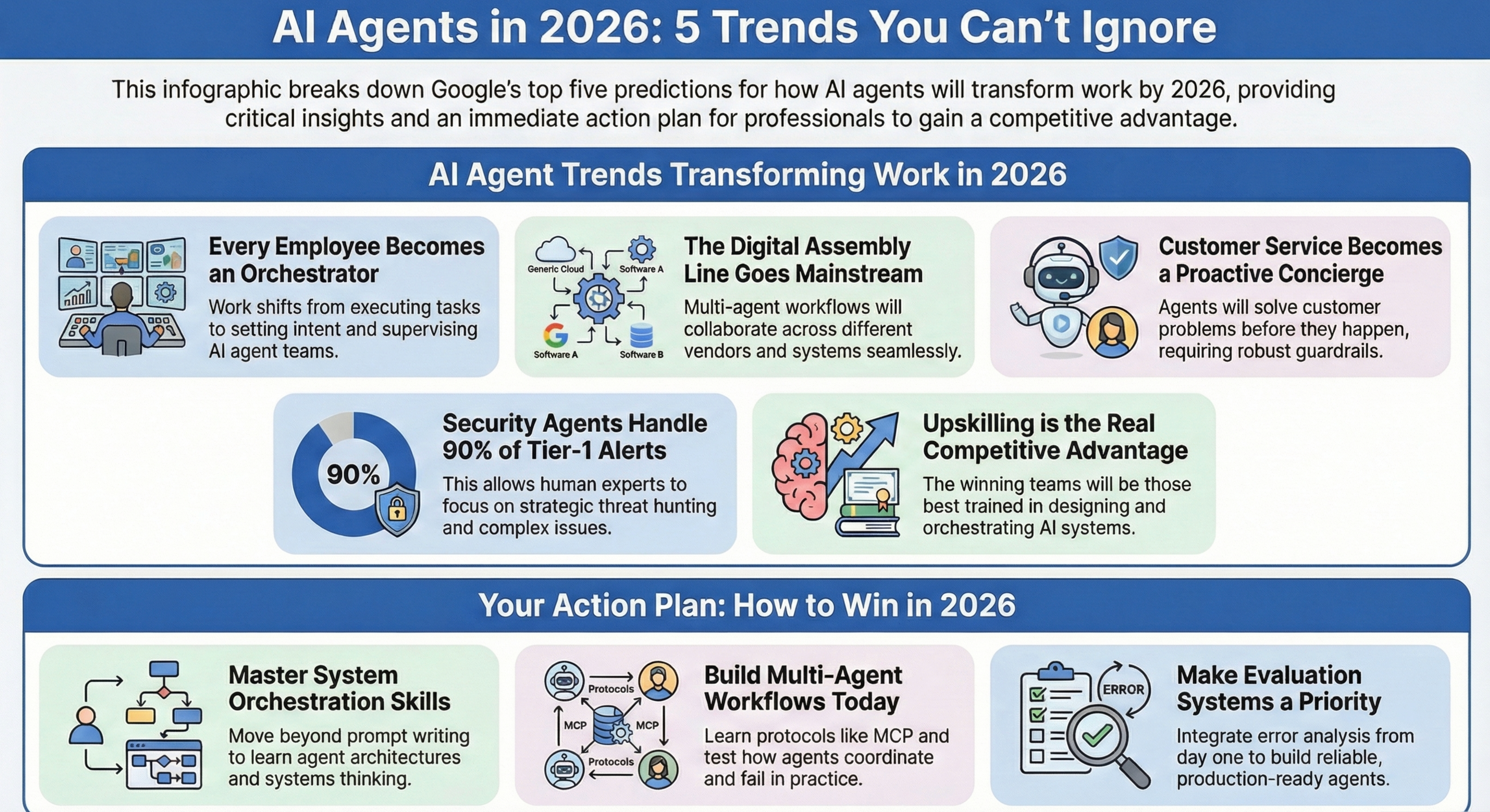
Link: Google Just Revealed 5 AI Agent Trends That Will Change How You Work in 2026Description: Employees become orchestrators of multi-agent systems. Orchestration skills critical. Trend 1 - Every Employee Becomes an Orchestrator.