Understanding AI Agents: The Future of Automation and Intelligent Systems

Understanding AI Agents: The Future of Automation and Intelligent Systems
In the rapidly evolving landscape of technology, AI agents, intelligent agents, and automation agents stand out as pivotal components driving innovation and efficiency. These agents, powered by artificial intelligence, are transforming industries by automating complex processes, enhancing decision-making capabilities, and facilitating seamless interactions between humans and machines.

What are AI Agents?
AI agents are software entities that perform tasks on behalf of users with a certain degree of autonomy. They possess the ability to perceive their environment, process information, and take actions to achieve specific goals. These agents are designed to learn from data, adapt to changing conditions, and improve their performance over time.
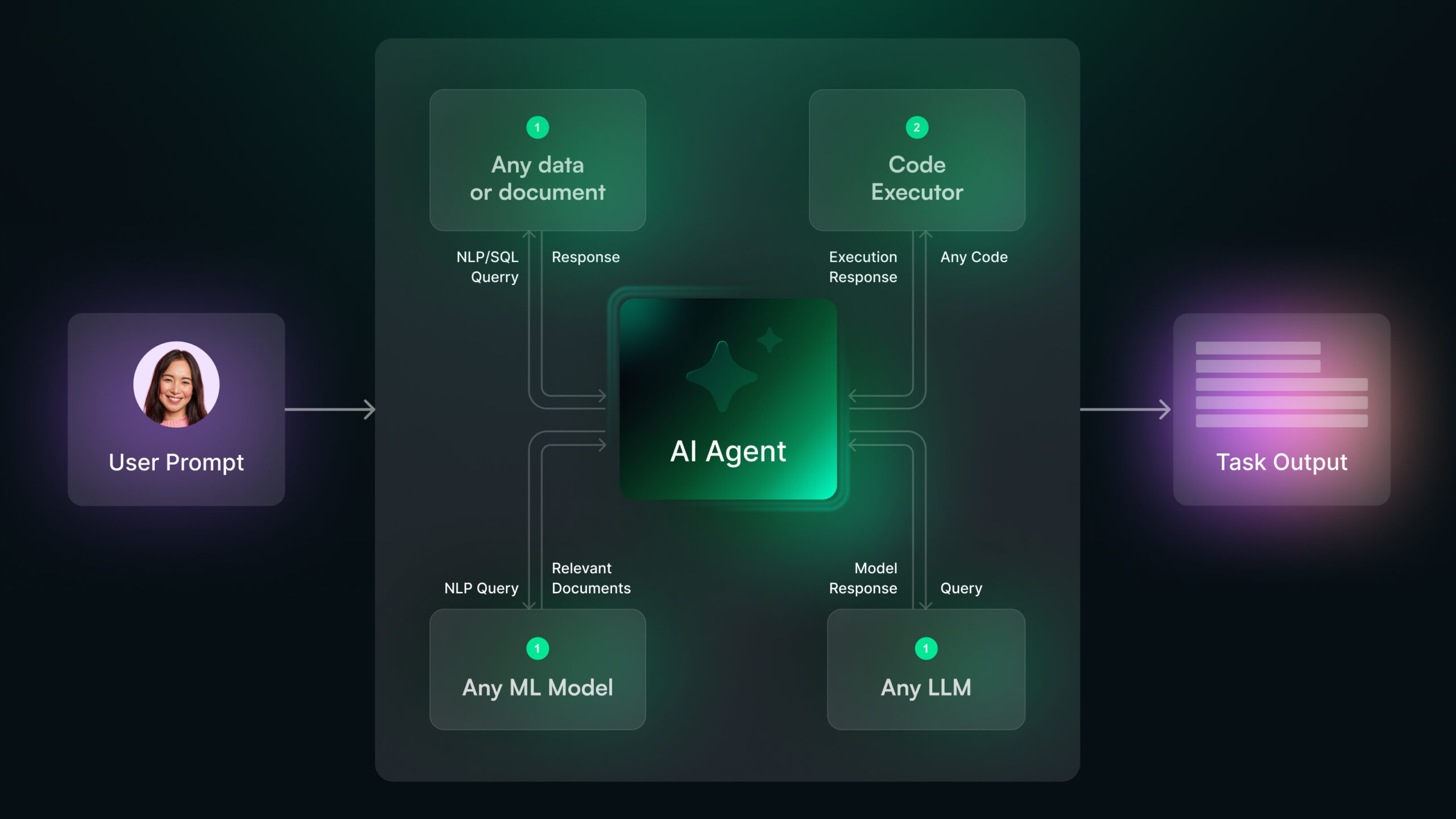
Types of AI Agents
- Reactive Agents: Operate based on the current state without historical data.
- Deliberative Agents: Use a model of the world to plan and predict outcomes.
- Hybrid Agents: Combine reactive and deliberative features for complex tasks.
- Learning Agents: Improve over time via machine learning techniques.

Applications of AI Agents
AI agents have found applications across a wide range of industries, revolutionizing the way businesses operate and interact with customers:
Customer Service: Virtual assistants and chatbots provide 24/7 support, handle routine queries, and enhance customer satisfaction.
Healthcare: Agents assist in diagnosing diseases, recommending treatments, and managing patient records.
Finance: Agents help in risk assessment, fraud detection, and algorithmic trading.
Manufacturing: Automation agents manage supply chains, predict equipment failures, and optimize production schedules.
The Role of Automation Agents
Automation agents perform repetitive, time-consuming tasks without human intervention:
Robotic Process Automation (RPA): Automates rule-based tasks like data entry and invoice processing.
Supply Chain Automation: Manages inventory, tracks shipments, and forecasts demand.
IT Operations: Monitors systems, detects anomalies, and performs maintenance tasks.
Challenges and Ethical Considerations
While AI agents offer numerous benefits, they also present challenges:
- Data Privacy: Safeguarding sensitive information is crucial.
- Bias and Fairness: Ensuring unbiased decision-making processes.
- Job Displacement: Addressing the social impact of automation.
- Accountability: Defining responsibility for autonomous actions.
The Future of AI Agents
Advancements will lead to even more sophisticated systems:
IoT Integration: Seamless device communication in smart environments.
Natural Language Processing: Enhanced human-agent interactions.
Personalization: Context-aware experiences based on real-time data.
Collaborative AI: Human-agent partnerships for complex problem solving.
Conclusion
AI agents and automation agents are revolutionizing industries by automating tasks, improving decision-making, and driving innovation. Embracing these technologies today positions organizations for success in a smarter, more connected world.